

Maddy summaryThis Senate resolution commemorates the seventh anniversary of journalist Jamal Khashoggi's murder in 2018 and calls on Saudi Arabia to ensure accountability for those responsible. It specifically urges Saudi authorities to release individuals wrongfully detained - including Nourah al-Qahtani, Abdulrahman al-Sadhan, and others - and to respect freedoms of press, assembly, and association. The resolution acknowledges U.S. sanctions against 17 Saudis linked to Khashoggi's killing but does not impose new legal requirements, serving as a formal statement of U.S. policy.
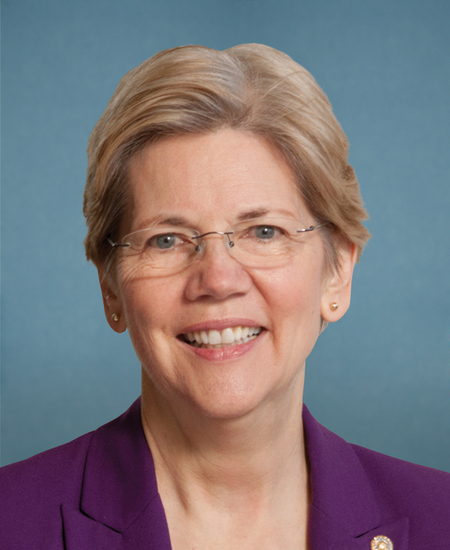
Sen. Elizabeth Warren
Sponsored bills
Maddy summarySRES 475 is a symbolic Senate resolution designating November 1, 2025 (the first Saturday of November) as "National Bison Day." It directly affects all Americans by officially recognizing this date for public observance. The resolution acknowledges bison's historical, cultural, and economic significance, particularly to Native American tribes and rural communities, and builds on an existing annual tradition celebrated since 2012. The Senate encourages the public to observe the day with appropriate ceremonies and activities, though the resolution contains no new laws or funding.
Maddy summaryThis bill ensures uninterrupted access to SNAP (food stamps) and WIC benefits during government funding gaps in fiscal year 2026. It authorizes the Treasury to provide emergency funds if Congress fails to pass full-year appropriations for the Department of Agriculture by September 30, 2025, covering all missed benefits retroactively from September 30, 2025. State agencies administering these programs would be reimbursed for costs incurred during the funding lapse. The funding automatically terminates once Congress passes 2026 appropriations or by September 30, 2026.
Maddy summaryThis bill provides temporary student loan relief for federal employees and their supporting contractors during government shutdowns. If a shutdown lasts 14+ days in 2026 or later, the Secretary of Education must suspend all federal student loan payments for these "covered individuals," halt interest accrual, and count the suspended months toward loan forgiveness eligibility. It also requires credit reporting agencies to treat suspended payments as if made on time and allows refunds for payments made during qualifying shutdowns. The relief applies retroactively from September 2025.
Maddy summarySRES 471 is a Senate resolution calling on Congress, schools, and state/local education agencies to acknowledge dyslexia's significant educational impact. It designates October 2025 as "National Dyslexia Awareness Month" to promote recognition of dyslexia as a common learning disability affecting up to 1 in 5 people. The resolution emphasizes the need for early screening, evidence-based interventions, and accommodations to support students with dyslexia in achieving reading fluency and academic success. This is a non-binding awareness measure, not a funding or policy change.
Maddy summaryS 3068 (FARM Act) requires farm equipment manufacturers (OEMs) to provide owners and independent repair shops with necessary parts, tools, documentation, and equipment data on "fair and reasonable terms." It prohibits OEMs from imposing unnecessary restrictions, such as requiring repair shops to become authorized dealers or restricting access to security features needed for repairs. The bill mandates that replacement parts must be installable using commonly available tools or tools provided fairly by the manufacturer. Violations would be enforced by the FTC with escalating daily penalties, up to $5,000 per day for repeat offenses.
Maddy summaryS 3067, the Innovation Fund Act, establishes a competitive grant program administered by the Department of Housing and Urban Development (HUD) to help eligible cities, counties, and tribes increase local housing supply. The program provides annual grants (ranging from $250,000 to $10 million) to entities that have demonstrated improved housing supply growth, with priority given to innovative zoning reforms and initiatives that expand "attainable housing" (housing serving households at 60-120% of area median income). Grants can fund activities like revising parking requirements, eliminating restrictive zoning, streamlining permitting, and creating mixed-income developments. The bill authorizes $200 million annually (adjusted for inflation) for fiscal years 2027-2031 and explicitly states it does not override local zoning laws or affect existing housing program requirements.
Maddy summaryThis bill changes how Social Security cost-of-living adjustments (COLAs) are calculated for seniors, directly affecting beneficiaries aged 62 and older who receive Social Security benefits. It requires the government to use either the standard Consumer Price Index for Wage Earners (CPI-W) or a new index tracking costs for seniors (CPI-E), whichever results in a larger annual adjustment. The bill directs the Bureau of Labor Statistics to publish the CPI-E index, reflecting spending patterns of seniors, and uses a research index until it becomes available. The changes would apply to COLAs calculated for cost-of-living computation quarters ending on or after September 30, 2026.
Maddy summaryS.Res. 466 is a non-binding Senate resolution condemning President Trump's pardon of Binance founder Changpeng Zhao, who had pleaded guilty to violating U.S. anti-money laundering laws. The resolution highlights financial connections between the Trump family and Zhao's company, including the use of the Trump family's cryptocurrency in a $2 billion Binance transaction, and calls on Congress to take action against what it describes as corrupt pardons. As a symbolic measure, it does not create new law but formally expresses the Senate's disapproval of the pardon and urges legislative steps to prevent similar conflicts. The resolution was introduced on October 23, 2025, the same day Trump granted Zhao's pardon.
Maddy summaryThis bill provides back pay to federal employees, military personnel, and certain contractors who lost compensation due to a government funding lapse during the period from October 1, 2025, through the bill's enactment date. It appropriates funds from the Treasury to cover "standard employee compensation" (including base pay, allowances, and benefits) for all covered individuals during the shutdown period, requiring agencies to distribute payments within 7 days of enactment. The funds may only be used for this specific purpose and cannot be redirected to other agency needs. The pay is retroactive to September 30, 2025, treating affected individuals as if they had received full pay continuously during the shutdown.