

Maddy summaryThe EXPERTS Act of 2025 increases transparency in federal rulemaking by requiring agencies to disclose conflicts of interest in studies submitted by interested parties, including funding sources and potential biases. It establishes an Office of the Public Advocate to help individuals participate in rulemaking, conduct social equity assessments, and ensure rules consider disproportionate impacts on protected classes. The bill also streamlines regulatory review processes, mandates justification for withdrawn rules, and penalizes entities that submit false information to agencies. These provisions apply to all federal agencies conducting rulemaking under the Administrative Procedure Act. The law aims to make regulatory processes more transparent, inclusive, and accountable to the public.
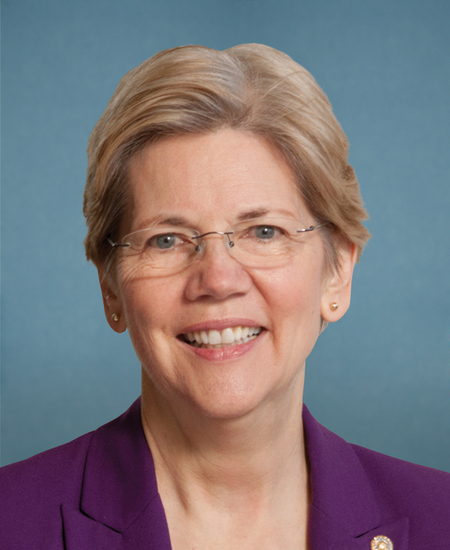
Sen. Elizabeth Warren
Sponsored bills
Maddy summaryThe Background Check Expansion Act requires most private firearm transfers between unlicensed individuals to go through a licensed dealer, who must conduct a background check as if the dealer were selling the firearm. Exceptions include transfers between close family members (like parents and children), law enforcement, temporary safety-related transfers (e.g., preventing domestic violence), and transfers for hunting or target shooting with specific safeguards. Licensed dealers must provide a notice about the background check requirement and have the buyer sign a certification form. The bill does not create a national gun registry and preserves states' authority to enact stricter firearm laws. It takes effect 180 days after enactment.
Maddy summaryS 3200, the License Monopoly Prevention Act of 2025, requires the Bureau of Industry and Security (BIS) to conduct a competitive market review before issuing any export license that would grant a single company exclusive rights to sell specific technology to a particular end user. The bill directly affects BIS and companies applying for export licenses, preventing the issuance of "monopoly licenses" that could distort markets or undermine regulatory credibility. Key provisions mandate BIS to verify no other applications exist for the same technology to the same end user, or that competing technologies are sufficiently distinct, and to consult with the International Trade Administration during reviews. This change applies to licenses for export, reexport, or in-country transfer of technology under the Export Control Reform Act of 2018.
Maddy summarySRES 501 is a ceremonial Senate resolution recognizing November 2025 as National Native American Heritage Month. It encourages the American public to observe the month through programs and activities that celebrate Native American cultural contributions, heritage, and history. The resolution does not create new legal obligations or funding, serving solely as a symbolic acknowledgment of Native American communities' enduring impact on U.S. society.
Maddy summaryThe Stop Ballroom Bribery Act restricts donations for specific properties tied to the President or Vice President, including White House grounds, Number One Observatory Circle, and monuments honoring them. It prohibits donations from individuals or entities involved in government litigation, seeking contracts/grants, lobbying the executive branch, or pursuing pardons or appointments. The bill requires prior approval from the National Park Service and Office of Government Ethics, mandates disclosure of meetings with officials, and bans donor recognition or anonymous contributions. It also imposes a two-year lobbying cooling-off period for donors and sets civil/criminal penalties for violations, including fines and disgorgement of benefits.
Maddy summaryS 3146 (Restoring Access for Detainees Act) would require U.S. Immigration and Customs Enforcement (ICE) to provide immigration detainees in DHS custody with specific communication services. It mandates 200 free monthly minutes for calls to family or legal representatives, unlimited free minutes for communications with legal entities (like courts, immigration officials, or the UN Refugee Agency), and private communication opportunities with lawyers or oversight officials during initial detention and location changes. The bill also prohibits facilities from restricting legal call duration or monitoring protected communications, while requiring clear public policies on call timing and location. This directly affects detained immigrants seeking legal assistance or family contact during immigration proceedings.
Maddy summaryThis bill requires U.S. companies exporting advanced integrated circuits (high-performance chips used in AI/data centers) to "countries of concern" (including China, Hong Kong, and Macau) to first offer them to U.S. customers for 15 days. Companies must certify they have no backlog of U.S. orders for similar chips and aren’t providing better terms to foreign buyers. It also creates a "trusted U.S. person" program, allowing certain companies to export without licenses if they meet security, U.S. manufacturing sourcing, and ownership requirements. The law directly affects chip exporters, U.S. tech companies purchasing these chips, and foreign entities seeking access to advanced semiconductors.
Maddy summarySRES 481 is a non-binding Senate resolution urging the Trump administration to use the USDA’s existing $4.5 billion contingency funds and interchange authority to fund the Supplemental Nutrition Assistance Program (SNAP) for November 2025. The resolution states that SNAP is an entitlement program requiring government funding, and the USDA legally has the authority to draw from these reserves to avoid benefit disruptions. This would directly support the 42 million Americans who rely on SNAP, including 16 million children, 8 million seniors, 4 million people with disabilities, and 1.2 million veterans. The resolution does not change the law but calls for immediate action to maintain food assistance during a potential funding gap.
This joint resolution terminates the national emergency declared by President Donald J. Trump on April 2, 2025, which imposed a 10% tariff on most imports to the United States and additional duties on specified trading partners.
Maddy summaryThe Social Security Emergency Inflation Relief Act (S 3078) would provide an additional $200 monthly payment to Social Security beneficiaries, Supplemental Security Income (SSI) recipients, railroad retirement beneficiaries, and veterans receiving disability compensation or pension payments during the six-month period from January 1 to June 30, 2026. These payments would be delivered automatically through existing benefit channels and would not count as income for tax purposes or affect eligibility for other government assistance programs. The bill allocates $11 million for Treasury administrative costs and $83 million for the Social Security Administration to manage the payments, with funding covering the entire implementation period. This temporary measure aims to provide direct financial relief to vulnerable groups during a specified inflationary period.