

Maddy summaryThe SUPPORT Rx Act creates a 3-year federal demonstration program to fund community pharmacies in providing addiction treatment for opioid and other substance use disorders. Eligible entities - including state health departments, pharmacy partnerships, and specialty treatment facilities - can apply for grants to establish or improve programs offering buprenorphine treatment, same-day low-barrier care (with minimal requirements for payment or identification), and medication-assisted therapy. Grant funds cover specific program costs like staff training, buprenorphine supply (up to 30 days), care continuity fees for patient transitions, and HIPAA-compliant technology, but may only be used for buprenorphine or overdose reversal drugs. Recipients must report annually on patient outcomes and program metrics, with results summarized in a congressional report after the demonstration ends.
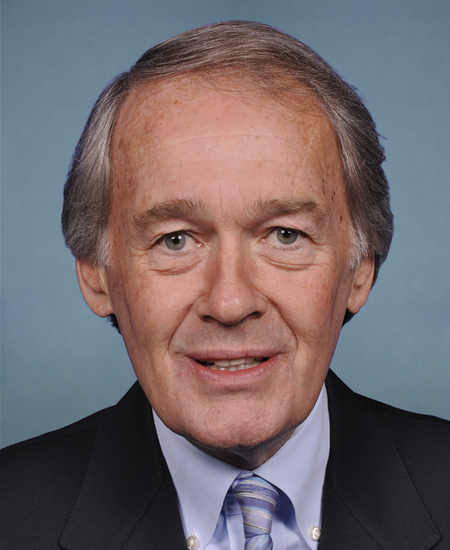
Sen. Edward J. Markey
Sponsored bills
Maddy summary# Summary of the Unaccompanied Noncitizen Children in Immigration Custody Act This comprehensive legislation establishes robust protections and oversight mechanisms for unaccompanied noncitizen children in immigration custody. Key provisions include: 1. **Office of the Ombudsperson**: Created within HHS as an independent, impartial office to monitor compliance with the Act. The Ombudsperson will establish regional offices, conduct investigations, hold hearings, and issue annual public reports. 2. **Data Collection & Transparency**: Requires detailed weekly data collection on: - Child demographics and custody status - Facility compliance and utilization rates - Family reunification processes - Length of custody and placement types - Special needs/disabilities data - Facility compliance with standards 3. **Confidentiality Protections**: Mandates separation of children's personal information and case files from immigration files (A-Files), prohibiting sharing with immigration enforcement agencies without consent. 4. **Nondiscrimination Protections**: Ensures fair treatment regardless of race, ethnicity, national origin, religion, sex, sexual orientation, gender identity, disability, or HIV status, with specific provisions for LGBTQI children regarding housing, bathroom access, and privacy. 5. **Legal Representation**: Requires government-appointed counsel for all unaccompanied children in immigration custody, with access to private meeting spaces and confidential communication with legal counsel. 6. **Child Advocates**: Expands child advocate services to all locations housing unaccompanied children and where they appear in immigration court. 7. **Enforcement Mechanisms**: Includes audit requirements, civil actions for violations, and penalties for interference with the Ombudsperson's work. 8. **Special Protections**: Includes specific provisions for indigenous children, LGBTQI children, and children with disabilities, along with prohibitions against retaliation for reporting violations or seeking legal remedies. 9. **Oversight**: Requires mandatory access for Members of Congress to detention facilities and establishes detailed reporting requirements to Congress. The legislation aims to ensure the safety, dignity, and rights of unaccompanied children in immigration custody while establishing strong accountability mechanisms for the agencies responsible for their care.
Maddy summaryThis bill, S 4385 (Enhancing Oversight to End Discrimination in Policing Act), requires the Justice Department to revise consent decree procedures for law enforcement investigations to include community oversight bodies and non-law enforcement remedies like mental health support. It authorizes $445 million annually (2025-2034) for pattern-or-practice investigations and establishes a $150 million grant program for states to fund independent investigations, implement reforms, and develop community-based alternatives to policing (e.g., social workers). States receiving grants must report quarterly on fund use and progress, with strict rules preventing diversion of funds to regular law enforcement operations. The bill also expands investigations to include prosecutors/judges and mandates reporting on demographic data for cases involving rights violations.
Maddy summaryThe Price Gouging Prevention Act of 2024 prohibits businesses from selling goods or services at "grossly excessive prices" during normal market conditions. During exceptional market shocks (such as natural disasters, public health emergencies, or other major disruptions), the bill creates a presumption of violation if businesses with "unfair leverage" (defined as companies with $1 billion+ annual revenue or dominant market position) increase prices disproportionately compared to their costs. Small businesses with less than $100 million in annual revenue are exempt from the core prohibition but must demonstrate price increases are due to uncontrollable costs. The bill requires publicly traded companies to disclose detailed pricing information in SEC filings during exceptional market shocks and authorizes the FTC and state attorneys general to enforce the law through civil penalties and injunctions, with the FTC receiving $1 billion in funding for enforcement.
Maddy summaryThis bill establishes federal minimum standards for collective bargaining rights for public employees and supervisors. It directs the Federal Labor Relations Authority (FLRA) to determine if state laws "substantially provide" for specific rights including the right to form unions, bargain collectively, and have interest impasse resolution mechanisms. If a state law doesn't meet these standards, the FLRA would administer collective bargaining for affected employees. The bill also prohibits strikes or lockouts that would disrupt emergency services and preserves existing collective bargaining agreements in place before the bill's enactment. It does not preempt state laws that already meet these minimum standards.
Maddy summaryThis resolution (SRES 692) designates May 7, 2024, as National Fentanyl Awareness Day to raise public attention about the dangers of counterfeit fentanyl pills. It highlights alarming statistics, including that illicit fentanyl was involved in 81% of drug-induced deaths among youth aged 14-23 in 2023 and that only 36% of teens were aware of fentanyl in fake pills. The resolution does not create new laws or funding but urges increased awareness and supports law enforcement efforts against counterfeit pills. It directly aims to educate families and young people about the risks of fake pills marketed as legitimate medications.
Maddy summarySRES 693 is a Senate resolution recognizing May as Asian American, Native Hawaiian, and Pacific Islander Heritage Month, celebrating the historical contributions of these communities to U.S. history. The resolution does not create new laws or funding but serves as a symbolic acknowledgment of their achievements, growth (including demographic data and key anniversaries like the 50th anniversary of *Lau v. Nichols*), and ongoing challenges like anti-Asian hate crimes. It directly honors these communities and aims to raise awareness of their diverse impacts on American society.
Maddy summaryThis bill amends two key laws to expand remedies for discrimination victims. It expands compensatory damages under federal civil rights law to include emotional pain, suffering, and loss of enjoyment of life (beyond financial losses), and adds a right to jury trial for these claims. It also aligns age discrimination cases under the Age Discrimination in Employment Act with the full range of remedies available under Title VII of the Civil Rights Act, including compensatory and punitive damages. These changes directly affect workers who face age discrimination in employment by broadening the types of compensation they can seek. The bill makes no new policy but clarifies and extends existing legal remedies.
Maddy summaryThis resolution (SRES 681) supports designating May 10, 2024, as "National Asian American, Native Hawaiian, and Pacific Islander Mental Health Day." It does not create new laws or funding but formally recognizes the mental health disparities faced by AANHPI communities, including lower service utilization rates and higher youth suicide rates. The resolution encourages federal, state, and local agencies to improve mental health awareness and culturally appropriate care for these communities. It is a symbolic gesture aligning with May's existing Heritage Month and Mental Health Awareness Month.
Maddy summaryS 4300 restricts U.S. call center employers from moving operations overseas or outsourcing work to foreign entities without 120 days' notice to the Labor Secretary. It creates a public list of violators, barring them from federal grants or loans for 5 years, and requires federal contracts to keep call center work in the U.S. The bill also mandates that businesses disclose their physical location at the start of customer service calls (with exceptions for U.S.-based teams or emergencies) and allows customers to request transfers to U.S.-based agents. These rules apply to businesses employing 50+ call center workers (full-time equivalent) and are enforced by the Labor Secretary and Federal Trade Commission.