

Maddy summaryThis bill creates new criminal and civil penalties for executives and investors of healthcare corporations when patient harm occurs due to corporate actions. It targets "covered parties" like directors, officers, and private equity firms that received compensation from a "target firm" (healthcare corporation) during a "triggering event" (such as a hospital closing, failing to pay staff for 90+ days, or defaulting on loans) that resulted in patient injury or death. The bill allows the Attorney General or state attorneys general to claw back compensation received by these parties during the 10 years before or after the triggering event, with recovered funds going to cover employee benefit shortfalls or serve community health needs. Criminal penalties include 1-6 years in prison for violations, while civil penalties can reach up to five times the clawback amount.
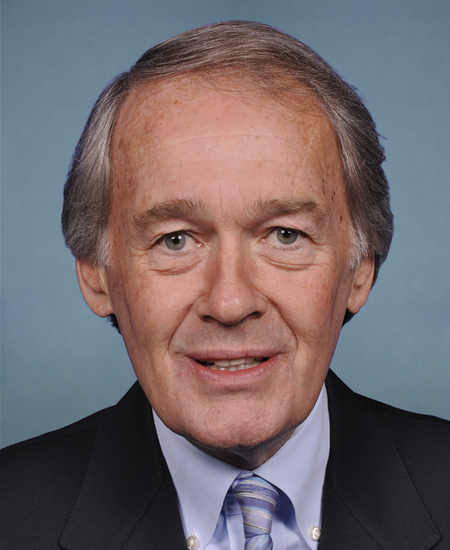
Sen. Edward J. Markey
Sponsored bills
Maddy summarySRES 726 designates June 6, 2024, as National Naloxone Awareness Day to highlight naloxone's role in reversing opioid overdoses. The resolution emphasizes that naloxone is a safe, effective medication that can save lives when administered promptly during opioid emergencies. It encourages public education about naloxone access, reduces stigma around substance use disorder, and urges federal and local agencies to support broader distribution efforts. This symbolic measure does not create new laws but aims to increase awareness and access to life-saving overdose reversal medication.
Maddy summaryThis bill updates the legal definition of "post office" in U.S. law to explicitly include Postal Service acceptance, processing, shipping, delivery, distribution, and other supporting facilities. It directly affects the Postal Service's operational infrastructure by expanding the scope of facilities covered under existing provisions. The key mechanism is amending Section 404(d) of Title 39 to replace "post office" with this broader description throughout the section. This change ensures all facilities supporting postal operations - beyond just traditional post offices - are included in relevant legal protections and regulations. The bill is procedural, focusing on clarifying existing law rather than creating new policies.
Maddy summaryS 4381, the Right to Contraception Act, establishes a federal statutory right for individuals to access contraceptives and contraception services without government interference, directly affecting people seeking care, healthcare providers (like doctors, nurses, and pharmacists), and state governments. It prohibits states or the federal government from implementing laws that restrict access to contraceptives, hinder providers from offering services, or single out contraceptive care for special restrictions. The bill preempts conflicting state laws and creates legal avenues for individuals or providers to sue to block violations, with courts required to invalidate such restrictive laws. It explicitly does not alter existing requirements for health insurance coverage of contraceptives under federal law.
Maddy summaryS 930, the Honoring Our Fallen Heroes Act of 2023, creates a presumption that public safety officers (such as firefighters and police) who develop specific cancers after exposure during duty have work-related injuries. It defines "exposure-related cancer" to include 22 types (like lung, leukemia, and WTC-related cancers) and presumes these cancers are work-related if officers were exposed during service, diagnosed within 15 years of retirement, and the cancer caused death or permanent disability. The bill requires the Bureau to review scientific evidence to add new cancer types to the list within 180 days of a petition. This directly affects families seeking benefits for fallen officers by shifting the burden of proof to the Bureau, not the claimants.
Maddy summarySRES 722 is a Senate resolution expressing gratitude for the heroism of U.S. Armed Forces members who participated in the D-Day invasion at Normandy, France, on June 6, 1944. It commemorates the 80th anniversary of this pivotal World War II operation, which helped end the war, and commends the leadership and bravery of those who fought. The resolution requests the President issue a proclamation encouraging public ceremonies to honor veterans' sacrifices and recognizes France's efforts to preserve Normandy's historical sites as a UNESCO World Heritage site. As a ceremonial resolution, it has no legal effect but serves to publicly honor historical service and legacy.
Maddy summarySRES 724 designates May 2024 as "National Brain Tumor Awareness Month" through a symbolic Senate resolution. The resolution highlights statistics on brain tumor diagnoses, survival rates, and the disease's impact on children, teens, and young adults, while encouraging public awareness. It does not create new laws or allocate funding but urges support for research, better treatments, and honors those affected by brain tumors. The resolution directly affects public discourse and advocacy efforts, not specific individuals or programs.
Maddy summaryS 4440, the Public Housing Emergency Response Act, authorizes $70 billion in federal funding for public housing infrastructure repairs through HUD's Public Housing Capital Fund. The bill directly affects approximately 1.2 million public housing units nationwide and their residents, who face severe health risks from aging infrastructure like lead exposure, mold, and inadequate heating. Key provisions require the funds to be allocated based on each housing authority's documented repair needs, rather than fixed formulas, and remain available until fully spent. This targets the $70 billion national backlog in capital repairs, aiming to address immediate health hazards linked to poor housing conditions.
Maddy summarySRES 703 is a symbolic Senate resolution designating a day in May 2024 as "Disability Reproductive Equity Day." It aims to raise awareness about reproductive rights barriers faced by people with disabilities, including historical forced sterilizations and current challenges like inaccessible healthcare and discrimination. The resolution does not create new laws but calls for recognition of the right to reproductive autonomy and urges continued enforcement of existing anti-discrimination laws like the ADA and Rehabilitation Act. It directly affects people with disabilities, particularly those facing compounded barriers due to disability, race, income, or LGBTQI+ status.
Maddy summaryThe End Polluter Welfare Act of 2024 eliminates numerous subsidies and financial benefits for fossil fuel companies across multiple government programs. It increases royalty rates for coal and oil/gas extraction, prohibits federal funding for fossil fuel projects through various agencies, and repeals tax provisions that previously provided advantages to the fossil fuel industry. The bill directly affects fossil fuel producers by ending royalty relief, eliminating tax deductions and credits for fossil fuel production, and requiring them to pay higher taxes on crude oil and natural gas. Key mechanisms include terminating the Office of Fossil Energy, restricting international financial institutions from funding fossil fuel projects, and modifying tax rules to eliminate special treatment for fossil fuel producers.