

Maddy summaryThe Ending Passenger Rail Forced Arbitration Act prohibits Amtrak from requiring customers to use private arbitration or waive class action rights for consumer and civil rights disputes. It invalidates pre-dispute agreements forcing arbitration or blocking collective claims related to Amtrak services (like personal injuries) or discrimination (e.g., based on race, gender, or disability). Courts, not arbitrators, will decide if a dispute falls under this law, ensuring customers can pursue claims in court. The bill applies to all claims arising after its effective date, directly affecting Amtrak and all its customers who use passenger services.
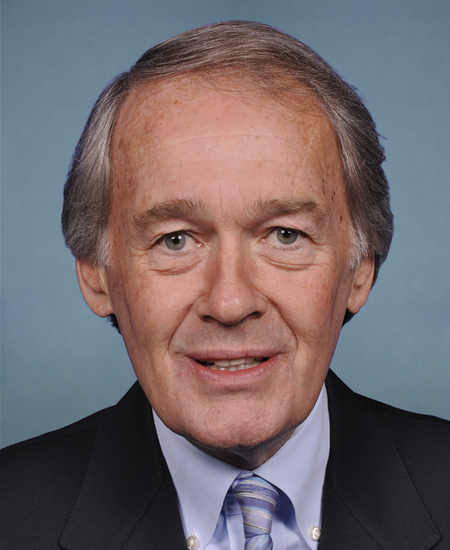
Sen. Edward J. Markey
Sponsored bills
Maddy summaryThis bill authorizes a Congressional Gold Medal to honor the "Hello Girls" - 223 women who served as Army Signal Corps telephone operators in WWI. They connected 26 million calls in France, worked 12-hour shifts under combat conditions, and were denied veteran benefits for 60 years despite wearing uniforms and facing combat hazards. The medal recognizes their pioneering military service, devotion to duty, and the decades-long struggle for recognition as soldiers. It directs the Treasury to strike the medal and place it in the Smithsonian for public display at institutions like the National WWI Museum.
Maddy summaryThe Artificial Intelligence Civil Rights Act of 2024 requires developers and deployers of AI systems that impact key life areas (such as employment, housing, healthcare, credit, and education) to conduct pre-deployment evaluations and annual impact assessments by independent auditors. The bill mandates transparency through public disclosure of AI practices and creates individual rights to request human alternatives for AI-driven decisions and to appeal AI outcomes. Enforcement will be handled by the Federal Trade Commission, state attorneys general, and through private lawsuits. This legislation aims to prevent AI systems from causing discriminatory harm or disparate impacts in critical life areas while ensuring accountability for developers and deployers.
Maddy summaryThe End Tuberculosis Now Act of 2024 establishes a U.S. government policy to accelerate global efforts to eliminate tuberculosis (TB), focusing on countries with the highest TB burden. It requires the President to set specific goals aligned with the World Health Organization's End TB Strategy, aiming to reduce TB deaths by 95% and TB incidence by 90% by 2035. The bill mandates annual reporting on U.S. TB assistance programs, including diagnostics, treatment, and prevention efforts, while requiring coordination with international partners like the World Health Organization and Stop TB Partnership. It emphasizes research for new TB diagnostics, treatments, and vaccines, and ensures TB programs can serve as platforms for responding to future respiratory pandemics.
Maddy summaryThe SAFE Lending Act of 2024 aims to protect consumers in small-dollar lending by implementing several key protections. It prohibits financial institutions from creating checks without a consumer's written authorization, requires small-dollar lenders (those offering credit under $5,000, adjusted annually for inflation) to register with the Consumer Financial Protection Bureau, and bans certain fees for prepaid accounts like overdraft charges. The bill also restricts how sensitive financial information can be collected for small-dollar credit applications, requiring transparency and direct provision of credit by the entity collecting the information. Additionally, it mandates a study on small-dollar credit's impact on Native American tribes and requires the Bureau of Consumer Financial Protection to issue implementing rules within one year.
Maddy summaryThis bill requires the FDA to create and regularly update a strategic plan for its Human Foods Program, focusing on food safety, inspections, workforce planning, and nutrition initiatives. The plan must be submitted to Congress by September 2025 (and every 4 years after), including specific goals like improving food safety oversight, coordinating with state/local agencies, and addressing critical food supply issues. The FDA must also submit biennial progress reports starting in 2027 and the GAO must assess the plan's implementation by 2028. The bill directly affects the FDA’s internal operations and coordination with federal, state, and tribal partners, without changing food safety regulations or directly impacting consumers or businesses.
Maddy summaryS. RES. 825 is a Senate resolution recognizing the significant pay gap between disabled women and both disabled and nondisabled men. It cites data showing disabled women earn, on average, just 50 cents for every dollar paid to nondisabled men, with even wider disparities for disabled women of color (e.g., 44 cents for disabled Latinas). The resolution highlights systemic barriers like occupational segregation (overrepresentation in low-paid jobs), discrimination, inadequate support services, and public benefits work disincentives as key drivers of this gap. While not creating new laws, the resolution aims to formally acknowledge these inequities and reaffirm the Senate’s commitment to addressing wage disparities for disabled women.
Maddy summaryThis bill changes how the Postmaster General is appointed and serves. It requires the President to nominate the Postmaster General with Senate confirmation, replaces the current appointment process, and sets a 5-year term with a possible single 5-year renewal. The Postmaster General becomes a voting member of the Board of Governors and will have their pay and term set by the Board. These changes apply to future appointments starting after the bill's enactment.
Maddy summaryThe BASIC Act (S 5091) helps college students access federal benefit programs that support basic needs like food, housing, healthcare, and childcare. It requires federal agencies to securely share data to identify students who might qualify for programs such as SNAP, Medicaid, housing assistance, and the Earned Income Tax Credit, then notifies students of their eligibility. The bill provides $1 billion in funding for planning grants (up to $75,000 for 2 years) to help colleges research student needs and develop strategies, followed by implementation grants (up to $1 million for 5 years) to address these needs through on-campus services and partnerships. This directly affects all colleges participating in federal financial aid programs, with special priorities for community colleges, historically Black colleges, and institutions serving many low-income students.
Maddy summaryThis resolution designates September 2024 as "National Voting Rights Month" to highlight historical and ongoing voting rights issues in the U.S. It encourages all Americans to support voting access and urges Congress to pass specific voting rights legislation, including the Freedom to Vote Act and the Democracy Restoration Act. The resolution also recommends that schools teach about voting history, voter suppression, and current voting restrictions. As a symbolic measure, it does not create new laws but aims to raise awareness about voting rights challenges.