

Maddy summaryThe NAPA Reauthorization Act (S 133) extends the National Alzheimer’s Project through 2035, replacing previous 2025 deadlines. It requires annual progress evaluations on research, risk reduction, and health equity, with new provisions to promote healthy aging, address Alzheimer’s risk factors, and expand focus to underserved groups - including people with Down syndrome and historically high-risk populations. The bill mandates updated advisory committee membership, including individuals with Alzheimer’s diagnoses and representatives from underserved communities. These changes directly affect federal health agencies, researchers, and healthcare planning efforts focused on Alzheimer’s prevention and care.
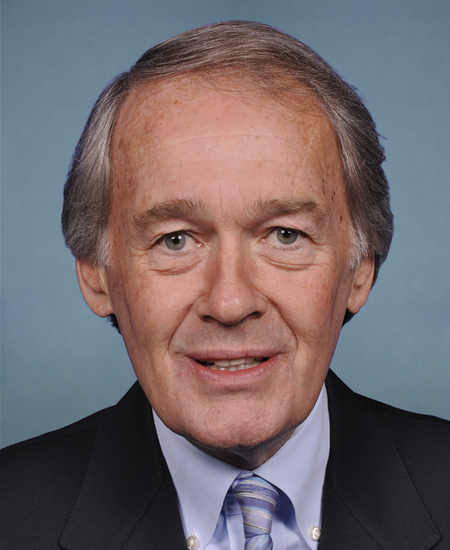
Sen. Edward J. Markey
Sponsored bills
Maddy summarySRES 888 is a ceremonial Senate resolution honoring the late James Ralph Sasser, a former U.S. Senator from Tennessee (served 1976-1993). It formally expresses the Senate’s "profound sorrow" over his death and requests the Secretary of the Senate transmit the resolution to his family. The resolution has no policy impact or direct effect on any individuals or entities - it is solely a commemorative gesture. As a procedural resolution, it does not create new laws or alter existing policies.
Maddy summaryThis bill authorizes the awarding of a Congressional Gold Medal to tennis legend Billie Jean King in recognition of her lifelong advocacy for gender equality in sports and society. The legislation specifically acknowledges her pivotal role in advancing women's rights, including her work leading to the passage of Title IX and her efforts to establish equal prize money in tennis. Under the bill, the Secretary of the Treasury would strike a gold medal featuring an image and inscription of Billie Jean King, with bronze duplicates available for sale to cover costs. The medal would be presented by congressional leaders as a formal recognition of her contributions to American society. This is a commemorative honor, not a policy that creates new legal requirements or funding.
Maddy summaryThis concurrent resolution (SCONRES 42) symbolically recognizes the persistent wage gap affecting Latina women in the U.S. labor force. It designates October 3, 2024, as "Latina Equal Pay Day" to highlight that Latina women earn, on average, 51 cents for every dollar earned by White, non-Hispanic men working full-time. The resolution cites data showing this disparity results in Latina women losing over $1.2 million in lifetime earnings and emphasizes the broader economic and personal impacts of unequal pay. As a non-binding statement, it does not create new laws or funding but formally acknowledges the issue and reaffirms congressional support for closing the gender wage gap.
Maddy summarySRES 857 is a Senate resolution expressing concern about the rising trend of book bans in U.S. schools and libraries. It cites data showing over 10,000 individual book bans in 2023-2024 (double the previous year), with many targeting books about race, LGBTQ+ experiences, and diverse perspectives - including classics like *The Handmaid’s Tale* and *To Kill a Mockingbird*. The resolution calls on schools and local governments to follow best practices for handling book challenges and to protect students’ access to diverse materials, while reaffirming First Amendment rights to free expression. It also designates the week of September 22-28, 2024, as Banned Books Week.
This resolution acknowledges the 120th anniversary of Big Brothers Big Sisters of America and commends the organization for its work mentoring the young people of the United States and strengthening thousands of communities.
Maddy summarySRES 885 is a non-binding Senate resolution designating October 2, 2024, as "Energy Efficiency Day." It commemorates the economic and environmental benefits achieved through existing private sector innovation and federal energy efficiency policies since the 1970s, such as the Energy Policy Act of 1992 and the Energy Efficiency Improvement Act of 2015. The resolution has no direct effect on individuals, businesses, or policy implementation - it solely encourages public observance through programs and activities. It references historical achievements like $1 trillion in annual energy cost savings and a 50% reduction in energy intensity in federal facilities. The resolution reflects bipartisan recognition of energy efficiency progress but does not create new laws or requirements.
Maddy summaryThis bill adjusts the premium tax credit program under the Affordable Care Act to make health insurance more affordable for lower-income households. It establishes a new sliding scale for the percentage of income people pay toward premiums based on household income relative to the federal poverty line (ranging from 150% to 400% of the poverty line). For example, households earning 150-200% of the poverty line would pay 0-2% of income, while those earning 300-400% would pay 6-8.5%. The changes apply to tax years beginning after December 31, 2025, and directly affect individuals purchasing health insurance through marketplace plans who qualify for these tax credits.
Maddy summaryThis bill establishes new protections for warehouse workers by requiring employers to provide clear written descriptions of performance quotas and workplace monitoring systems. It prohibits quotas that prevent workers from taking required breaks, using bathroom facilities, or complying with safety standards, and bans adverse employment actions based on certain types of performance data. The bill creates a new Fairness and Transparency Office within the Department of Labor to oversee enforcement, gives workers the right to request their work speed data in plain language, and adds protections against retaliation for exercising these rights. It also amends OSHA standards to improve ergonomic protections and medical treatment access for warehouse workers. The bill applies to large warehouse employers (with over 200 employees) in specific industry sectors like warehousing, distribution, and delivery services.
Maddy summaryThis bill prohibits possessing firearms within 100 yards of a federal election site (such as polling places or ballot-counting locations) unless specific exceptions apply. It directly affects anyone near these sites, including voters, election workers, and others in the vicinity, by restricting firearm access in that zone. Key provisions include exceptions for law enforcement officers on duty, firearms remaining in vehicles, and lawful private property possession, while imposing penalties of up to 1 year in jail for basic violations and up to 5 years if firearms are intended for criminal use. The law also enhances penalties for homicides occurring during election site violations involving firearms.