

Maddy summarySRES 823 is a symbolic Senate resolution recognizing Hispanic Heritage Month (September 15-October 15, 2024) and celebrating the cultural contributions and achievements of Latinos in the United States. It does not create new laws or affect specific groups; instead, it urges the public to observe the month through activities honoring Latino heritage. The resolution highlights Latinos' economic impact (e.g., $3.4 trillion purchasing power), demographic significance (19.5% of U.S. population), and historical military service, but these statistics serve as context, not policy changes. As a ceremonial resolution, it has no legal force and is intended to raise awareness, not alter government programs or funding.
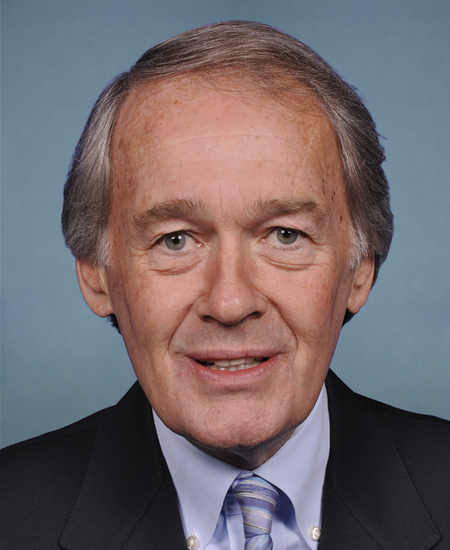
Sen. Edward J. Markey
Sponsored bills
Right to IVF Act This bill provides a statutory right to access fertility treatments (e.g., in vitro fertilization). Specifically, under the bill, individuals have the right to access fertility treatments and to make decisions about the use of their reproductive genetic material (e.g., embryos) without limitation or interference. Health care providers and insurers have the right to provide and cover these services, respectively. Manufacturers of applicable drugs or devices also have the right to provide these drugs or devices. The bill supersedes state laws that limit or otherwise interfere with the provision of fertility treatments as set out under this bill, including laws that require medically unnecessary procedures or services in conjunction with fertility treatments or that restrict the ability of individuals to receive fertility treatments based on marital status or sex (including sexual orientation or gender identity). The bill does not affect state health and safety regulations for medical facilities or health care providers that are in accordance with widely accepted and evidence-based medical standards and for which the purpose cannot be achieved in another, nonrestrictive manner. The Department of Justice may bring civil actions against states, individuals, or entities that implement or enforce limitations or requirements that violate this bill. Individuals and health care providers may also bring civil actions. In addition, the bill provides for coverage of fertility treatments under Medicare and Medicaid and for members of the uniformed services and veterans. It also requires private insurers that cover obstetrical services to also cover fertility treatments.
Maddy summaryThis is a ceremonial Senate resolution (SRES 819) designating September 25, 2024, as "National Lobster Day." It does not create new laws or policies, but formally recognizes the cultural and economic significance of the lobster industry in the U.S. The resolution encourages the public to observe the day with appropriate activities, highlighting lobster's role in coastal communities, sustainability efforts, and culinary traditions. It directly affects no specific group or entity, as it is a symbolic designation with no binding requirements.
Maddy summaryThis Senate resolution (SRES 820) symbolically supports designating September 21-28, 2024, as "National Estuaries Week" to raise public awareness about estuaries. It highlights estuaries' ecological and economic importance - such as supporting jobs, protecting coastlines, and sustaining biodiversity - without creating new laws or funding. The resolution expresses the Senate's backing for protecting and restoring estuaries but does not impose obligations or alter existing policies. It is a procedural statement, not a substantive legislative measure.
Maddy summaryThe Carbon Scoring Act of 2024 requires the Congressional Budget Office (CBO) to develop new modeling capabilities to track greenhouse gas emissions across key sectors (power, transportation, industry, buildings) by specific deadlines, starting with power sector models by 2025. The CBO must publish annual reports on these models and an annual emissions baseline estimate starting in 2025, including projections for climate-related costs. For bills containing climate-related provisions (like emissions taxes or caps), the CBO must provide estimates of their emissions impact and climate cost savings or expenses, calculated using the "social cost" of greenhouse gases. This bill directly affects the CBO (which receives $20 million annually for this work) and lawmakers who will use these analyses when considering climate-focused legislation.
Maddy summaryThe Polluters Pay Climate Fund Act of 2024 imposes a tax on fossil fuel companies based on historical carbon emissions exceeding 1 billion metric tons during 2000-2022. The tax revenue will fund a new Climate Fund to support climate resilience projects, disaster response, and environmental justice initiatives, with 40% of resources required for environmental justice communities. The bill mandates specific minimum funding levels for FEMA climate disaster programs and Clean Air Act environmental programs. The legislation explicitly states it does not affect existing legal claims against polluters or preempt state climate regulations.
Maddy summaryThis bill would expand eligibility for the Supplemental Nutrition Assistance Program (SNAP) to include college students who meet specific criteria, such as participating in work-study programs or meeting financial requirements. It creates a demonstration program to test new ways for students to use SNAP benefits on campus, including purchasing prepared foods from campus dining facilities without needing to buy a meal plan. The bill requires federal agencies to share data to identify students who might qualify for nutrition assistance and mandates institutions of higher education to provide information about available benefits. It also authorizes $1 billion in grants over seven years to support campus-based programs addressing food insecurity, housing instability, and other basic needs for students. The bill would directly affect millions of college students, particularly those from low-income backgrounds, by making it easier to access food assistance while attending college.
Maddy summaryS 4973, the "No Kings Act," removes presidential and vice presidential immunity from federal criminal prosecution, requiring such cases to be handled in federal district courts with appeals limited to the D.C. Circuit. The bill specifically bars the Supreme Court from reviewing cases involving claims of presidential immunity for official acts, including dismissals of indictments or overturning convictions. It directly affects current and former presidents and vice presidents by subjecting them to the same federal criminal accountability as all other citizens. Key provisions prevent courts from considering whether alleged crimes were part of official duties unless Congress specifies otherwise, and clarify that state criminal laws remain applicable.
Maddy summaryThis bill proposes a constitutional amendment to affirm that no person, including the President and other federal officials, is above the law. It would require all officials holding authority under the U.S. government to be subject to ordinary criminal prosecution for both official and unofficial actions. The amendment mandates that general laws apply to the President unless specified otherwise and grants Congress power to enforce this by, for example, extending the statute of limitations for prosecuting a sitting President during their term. If ratified by three-fourths of states, this change would become part of the Constitution, altering how federal law applies to high-level government officials.
Maddy summarySRES 800 is a symbolic Senate resolution introduced on August 1, 2024, by a bipartisan group of senators. It condemns the July 13, 2024, attempted assassination of Donald J. Trump at a Butler, Pennsylvania, rally and honors three individuals affected: Corey D. Comperatore (who died shielding his family), David Dutch (critically injured), and James Copenhaver (critically injured). The resolution calls for national unity and civility following the violent incident. As a non-binding resolution, it does not create new laws or policies but expresses the Senate's stance on the event.