

Maddy summarySRES 585 is a commemorative resolution honoring Ben Nighthorse Campbell, a former U.S. Senator from Colorado and the first Native American to chair the Senate Committee on Indian Affairs. It recognizes his military service, Olympic judo career, legislative work (including authoring the National Museum of the American Indian Act), and advocacy for tribal communities. The resolution has no policy impact - it formally expresses the Senate’s respect for his legacy, requests transmission to his family, and directs a moment of silence. It directly affects Campbell’s legacy and family, not any current policy or population. (Note: This is a procedural resolution, not a bill with legislative provisions.)
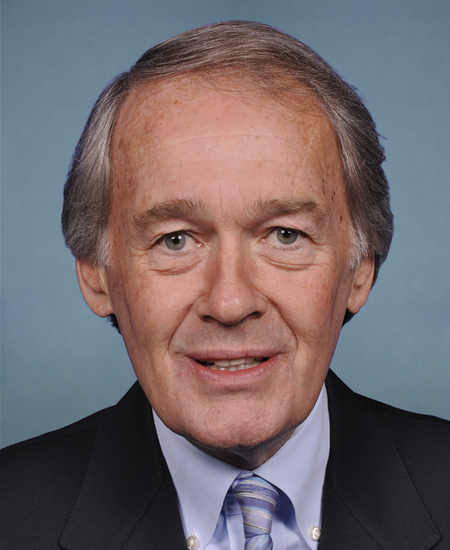
Sen. Edward J. Markey
Sponsored bills
Maddy summaryS 3680, the *Eliminating Bias in Algorithmic Systems Act of 2026*, requires federal agencies using or funding complex algorithms (like AI systems) to establish civil rights offices focused on bias. These offices must monitor and address algorithmic bias related to protected characteristics (e.g., race, gender, disability) that affect government programs or economic opportunities. Agencies must submit biennial reports to Congress detailing bias risks, mitigation steps, stakeholder engagement, and recommendations, and join an interagency working group on algorithmic fairness. The bill directly affects covered federal agencies, not private companies or the general public.
This joint resolution directs the President to terminate the use of U.S. Armed Forces for hostilities within or against Venezuela unless a declaration of war or authorization to use military force for such purpose has been enacted. The joint resolution specifies that it shall not be construed to prevent the United States from defending itself from an armed attack or threat of an imminent armed attack.
Maddy summaryThe EFFECTIVE Food Procurement Act requires the U.S. Department of Agriculture (USDA) to change its food procurement practices to prioritize foods supporting local farmers, worker well-being, environmental sustainability, and equitable food systems. It mandates the USDA to purchase more foods produced by beginning farmers, socially disadvantaged farmers, veterans, and those using sustainable practices, while requiring transparency through annual reports on procurement spending. The bill sets specific targets for increasing such purchases by 2032, allocates $2 million annually from 2026-2031 for covered producers, and creates a $25 million grant program to help small producers meet USDA requirements. The legislation also establishes a pilot program to evaluate "best value" procurement that considers factors beyond price, such as environmental impact and labor practices.
Maddy summarySJRES 84 is a joint resolution seeking to block a rule issued by the Centers for Medicare & Medicaid Services (CMS) under the Affordable Care Act. The rule, published in the Federal Register on June 25, 2025, aimed to improve affordability and integrity in health insurance marketplaces. If approved, this resolution would invalidate the rule under a federal disapproval process, preventing its implementation. This directly affects how health insurance plans are structured and priced for consumers using ACA marketplaces.
Maddy summaryThe REAADI for Disasters Act requires federal, state, and local governments to ensure people with disabilities and older adults have equal access to disaster services through accessible communication (including American Sign Language, captions, and plain language), inclusive planning processes, and accessible shelters. It establishes a new Disaster Human Services Emergency Fund to provide rapid support during disasters, including accessible housing, transportation, case management, and community-based services. The bill mandates that people with disabilities and older adults be included as key decision-makers in all phases of disaster planning, response, recovery, and mitigation, and requires adherence to accessibility standards for rebuilding damaged housing. It also creates training centers to help emergency management agencies better serve these communities and ensures that all disaster-related communications and services meet accessibility requirements.
Maddy summaryThis bill would remove "qualified immunity" as a legal defense for law enforcement officers in civil rights lawsuits. It amends federal law (42 U.S.C. 1983) to eliminate four specific excuses officers can currently use, including claiming they reasonably believed their actions were lawful or that constitutional rights weren't clearly established. The change applies to all lawsuits filed after enactment against federal, state, or local police officers who acted under official authority. This means officers could face civil liability for constitutional violations even if they thought their conduct was lawful at the time.
Maddy summaryS 3604, the Public Health Nursing Act, establishes a $5 billion annual federal grant program (2026-2035) to expand public health nursing services. It provides funding to state, local, and territorial health departments to hire and train registered nurses, particularly in medically underserved areas with high rates of chronic disease, maternal mortality, or low-income populations. Funds cover nurse wages, training, medical supplies, and administrative costs, with priority given to applicants serving rural communities, health professional shortage areas, and populations requiring culturally appropriate care. Recipients must maintain their own funding levels for these services and cannot use grants to replace existing state/local spending.
Maddy summaryThis bill amends the Food and Nutrition Act of 2008 to change how cost-of-living adjustments (COLAs) affect Supplemental Nutrition Assistance Program (SNAP) eligibility. It revises the date when COLAs stop counting toward income from July 1 to January 1, potentially increasing SNAP benefits earlier for some recipients. The bill also adds a new exclusion for specific Social Security supplementary payments under Section 1616(a) of the Social Security Act. These changes take effect October 1, 2027, directly impacting SNAP recipients whose income calculations include Social Security benefits.
Maddy summaryThis bill removes fees for unaccompanied children in multiple immigration processes. It directly affects minors defined as "unaccompanied alien children" under the Homeland Security Act (those without parents or guardians in the U.S.), by exempting them from fees for asylum applications, employment authorization, immigration court filings, and other related services. Key provisions include repealing the special immigrant juvenile fee and adding explicit exemptions to 10 different fee sections in immigration law. The bill also requires the government to refund fees paid under repealed or amended provisions within 180 days. It further limits information sharing between health and immigration agencies to protect these children’s privacy.