

Maddy summaryThis is a Senate resolution (SRES 604), not a bill, expressing the Senate's non-binding view that the federal government should create a Transgender Bill of Rights. It calls for protections including equal access to healthcare (specifically affirming gender-affirming care), anti-discrimination measures in employment and housing, easier legal gender recognition on documents, and safety improvements for transgender and nonbinary people in custody. The resolution outlines detailed policy goals but does not create new law or mandate government action. It serves as a statement of principle, not a legislative proposal.
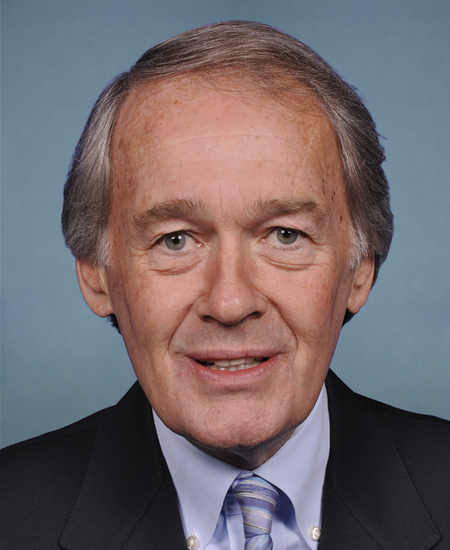
Sen. Edward J. Markey
Sponsored bills
Maddy summaryThis bill creates new criminal and civil penalties for corporate entities whose actions contribute to patient harm in healthcare settings. It targets "covered parties" including executives, directors, shareholders, and private equity firms that receive "covered compensation" (such as salaries, bonuses, or equity) from a healthcare organization experiencing a "triggering event" like financial distress leading to patient harm. The bill establishes a clawback mechanism allowing the Attorney General or state attorneys general to recover compensation received by these entities during the 10 years before or after the triggering event, with recovered funds to be used for employee benefits or community health services. It also requires healthcare entities to report ownership information and mandates a study on profit-driven practices in healthcare delivery.
Maddy summaryThis resolution designates January 2026 as "National Mentoring Month" to raise public awareness about mentoring programs. It recognizes the benefits of mentoring for youth - including improved academic performance, mental health, career development, and reduced risk of delinquency - and highlights that 40% of U.S. youth lack a mentor. The Senate encourages community, school, and workplace efforts to expand existing mentoring programs and recruit volunteers to support young people. It does not create new laws or funding but aims to promote existing mentoring initiatives across the country.
Maddy summarySRES 596 is a non-binding Senate resolution designating February 2-6, 2026, as "National School Counseling Week." It directly recognizes school counselors and their role in supporting students' academic, social, emotional, and career development. The resolution encourages public awareness through ceremonies and activities to highlight counselors' contributions, addressing their critical but often underfunded role (with a national student-to-counselor ratio of 376:1). It does not create new programs or alter funding but formally acknowledges counselors' work in schools.
Maddy summaryThe Rebuild America's Schools Act of 2026 would provide $20 billion annually (2027-2031) to improve public school facilities across the United States. The bill directs funds to states based on previous Title I funding allocations, requiring states to contribute 10% of the funds (with some exceptions) and develop plans for equitable distribution to school districts. Local educational agencies must prioritize schools with high numbers of students eligible for free or reduced-price lunch, and funds can be used for construction, renovation, energy efficiency upgrades, removal of toxic substances, and making facilities accessible. The bill also establishes school infrastructure bonds to leverage private investment and includes specific provisions to repair foundations damaged by pyrrhotite.
Maddy summaryThe ICE Out of Our Faces Act prohibits U.S. Immigration and Customs Enforcement (ICE) and U.S. Customs and Border Protection (CBP) officers from using facial recognition, voice recognition, or other biometric surveillance technology for immigration enforcement. It directly affects ICE, CBP, and 287(g) deputized officers by banning their acquisition, possession, or use of such technology in the U.S. The bill requires immediate deletion of all existing biometric data collected by these officers within 30 days and makes evidence obtained in violation inadmissible in court. Violations could lead to lawsuits by affected individuals or state attorneys general, with possible damages, penalties, or injunctive relief.
Maddy summaryThe Stop Underrides Act 2.0 requires new safety standards for side underride guards on commercial trucks and trailers to prevent passenger vehicles from sliding under them during collisions. The bill mandates that the Secretary of Transportation finalize regulations requiring these guards within 18 months, with full compliance required within two years. The regulations must meet specific performance standards to prevent intrusion into passenger vehicle occupant space during side collisions at speeds up to 40 mph. This law directly affects commercial truck manufacturers, trucking companies, and all road users, particularly vulnerable road users like cyclists and pedestrians who are at higher risk in underride crashes. The bill also establishes a public website for underride crash resources and requires studies to better understand and prevent these crashes.
Maddy summarySRES 593 is a Senate resolution honoring the 67 victims of the January 29, 2025 mid-air collision between a U.S. Army Black Hawk helicopter and American Airlines Flight 5342 over the Potomac River. It specifically recognizes the lives of all victims, including 11 U.S. figure skating athletes, their families, and 3 Army soldiers, as well as the 1,700+ first responders who assisted in the recovery efforts. The resolution offers condolences to affected families, acknowledges the bravery of emergency personnel, and commits the Senate to using safety lessons from the crash to prevent future incidents. As a commemorative resolution, it does not create new laws or provide direct benefits but serves to formally memorialize the tragedy and honor those impacted.
Maddy summaryThe AV Safety Data Act requires autonomous vehicle manufacturers and operators (covered entities) to report detailed safety data to the National Highway Traffic Safety Administration (NHTSA). Specifically, they must submit monthly reports on miles traveled by their vehicles (broken down by vehicle type, location, and software version) and document incidents like collisions involving vulnerable road users or unplanned stoppages that disrupt traffic. The data, including event details and resolution times, becomes publicly available 120 days after the law takes effect. This bill directly affects companies producing or operating autonomous vehicles with Level 2 ADAS or Automated Driving Systems, focusing on transparency rather than altering safety standards.
Maddy summaryThe Dignity for Detained Immigrants Act establishes new standards for facilities detaining immigrants under DHS custody, requiring compliance with minimum protections based on American Bar Association standards. It mandates annual unannounced inspections by the DHS Inspector General with public reporting of findings, creates a detailed public database of all detention facilities, and phases out private detention facilities within 3 years. The bill prohibits solitary confinement, requires access to legal orientation and counsel for detainees, and changes detention procedures to require more frequent hearings with a presumption of release for most detainees. These changes directly affect immigrants in DHS custody, DHS facilities, and private contractors operating detention facilities.