

Maddy summaryThe Gun Violence Prevention Research Act of 2023 would authorize $50 million annually for the Centers for Disease Control and Prevention (CDC) to conduct or support research on firearms safety and gun violence prevention for fiscal years 2024 through 2029. This funding would allow the CDC to study the causes and prevention of gun violence, including evaluating safety measures and effective interventions. The research would be conducted under the Public Health Service Act, with the funding added to existing appropriations. The bill does not change current laws but provides dedicated resources for evidence-based research on gun violence as a public health issue.
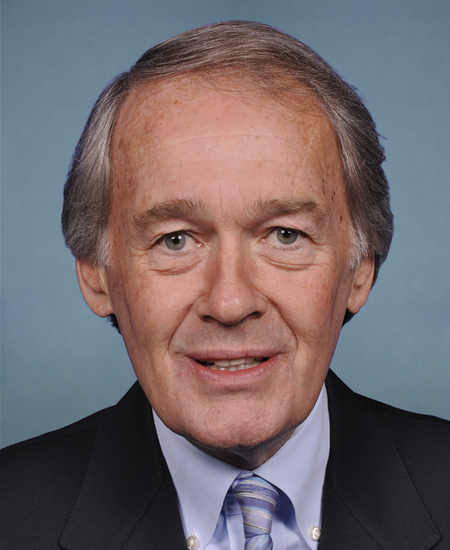
Sen. Edward J. Markey
Sponsored bills
Maddy summaryThis bill raises the salary threshold for white-collar workers (executives, administrators, professionals) to qualify for overtime pay under federal law. It sets new annual salary minimums: $45,000 starting in 2023, increasing to $55,000 in 2024, $65,000 in 2025, $75,000 in 2026, and then automatically adjusting yearly based on the 55th percentile of full-time salaried workers' earnings. The bill also limits exempt employees to no more than 20 hours per week on duties not directly related to their exempt roles. It directly affects millions of salaried workers currently excluded from overtime pay due to the current $35,568 annual threshold. The changes aim to restore overtime protections to historic levels by updating the threshold to reflect modern wages.
Maddy summaryThe EACH Act of 2023 requires federal health programs - including Medicaid, Medicare, the Indian Health Service, and others - to cover abortion services regardless of income or insurance type. It directly affects millions of low-income individuals, women of color (who are disproportionately enrolled in Medicaid), LGBTQ+ people, and people in states that currently restrict abortion coverage. Key provisions mandate that all federally funded health programs provide abortion coverage (Section 4), repeal a prior law restricting abortion coverage in private insurance (Section 5), and prohibit federal interference with private insurance coverage of abortion services. The bill aims to remove financial barriers to abortion care by ensuring coverage through federal programs and private plans.
This resolution designates March 2023 as National Women's History Month. The resolution also recognizes the celebration of such month as a time to reflect on the contributions that women have made to the United States.
Maddy summaryThe International Human Rights Defense Act of 2023 establishes a permanent Special Envoy for LGBTQI+ human rights at the Department of State to lead U.S. foreign policy efforts addressing discrimination and violence against LGBTQI+ people globally. The bill requires the Special Envoy to develop an annual global strategy to prevent and respond to criminalization, discrimination, and violence against LGBTQI+ individuals, with mandatory reporting on countries that criminalize same-sex relationships or discriminate based on sexual orientation, gender identity, or sex characteristics. It directs U.S. foreign assistance to support programs that protect LGBTQI+ rights, including health initiatives addressing HIV/AIDS in LGBTQI+ communities, and requires training for U.S. personnel and foreign officials on LGBTQI+ rights issues. The bill also mandates regular congressional briefings on the status of LGBTQI+ rights worldwide and U.S. government efforts to address abuses.
Maddy summary# Summary of the Agriculture Resilience Act of 2023 This comprehensive agricultural legislation contains multiple titles addressing conservation, renewable energy, and food waste reduction: **Conservation Programs:** - Expands Conservation Reserve Program to 32 million acres by 2028 - Creates "Grassland 30" pilot program for 30-year conservation contracts - Establishes new Private Grazing Land Conservation program with focus on advanced grazing management - Creates Alternative Manure Management Program with $1.5 billion funding (2024-2028) to reduce methane emissions from livestock operations - Makes composting a recognized conservation practice **Renewable Energy:** - Amends Rural Energy for America Program to include greenhouse gas reduction criteria - Requires carbon accounting assessments for renewable energy systems - Establishes agrivoltaic systems research and demonstration program ($15 million annually) **Food Waste Reduction:** - Standardizes "quality date" (BEST If Used By) and "discard date" (USE By) labeling - Requires federal contractors to report on food waste disposal - Creates School Food Waste Reduction Grant Program - Establishes grants for composting and anaerobic digestion food waste-to-energy projects ($100 million annually) **Additional Provisions:** - Amends Federal Food Donation Act to require food donation - Creates Food Waste Research Program with 5 regional partner institutions - Includes $20 million for Processing Resilience Grants to increase meat processing capacity - Requires technical assistance for conservation programs with specific funding allocations The legislation emphasizes climate resilience, greenhouse gas reduction, and sustainable agricultural practices while providing significant funding for conservation programs and food waste reduction initiatives.
Maddy summaryThis bill creates a student loan forgiveness program for educators who work in designated high-need schools or early childhood education programs. After completing 5 years of qualifying service (which can be non-consecutive), educators will have 100% of their outstanding student loan debt forgiven, including interest and fees. The program also provides monthly loan forgiveness during service, with payments counted toward future forgiveness. It applies to teachers, school leaders, early childhood educators, and program directors working in these settings, including those in Bureau of Indian Education schools and Tribal programs. Service completed before the bill's enactment can count toward the 5-year requirement.
Maddy summaryThis bill expands Medicaid coverage to people in jail awaiting trial or court proceedings, allowing states to provide medical benefits during pretrial detention. It amends federal law to remove a barrier preventing Medicaid access for incarcerated individuals while their cases are pending. States receiving $50 million in planning grants must develop strategies to recruit healthcare providers, assess inmate health needs, and build infrastructure for seamless care transitions. The policy directly affects individuals in local jails awaiting court dates who qualify for Medicaid under state programs.
Maddy summaryThis bill amends the federal Food and Nutrition Act to allow Puerto Rico to transition from its current nutrition assistance system to the Supplemental Nutrition Assistance Program (SNAP), which provides federal benefits to low-income households. It requires Puerto Rico to submit a transition plan to the U.S. Department of Agriculture within 60 days, with the agency having 180 days to approve it. Puerto Rico would operate under a 5-year transition period from its existing block grant system, during which the federal government must provide technical assistance and annual reporting. The bill directly affects Puerto Rico residents eligible for nutrition assistance and modifies federal funding formulas to support this transition.
Maddy summaryThis bill (S 915) would require the President to appoint and the Senate to confirm the Inspectors General (IGs) for both the Federal Reserve Board of Governors and the Consumer Financial Protection Bureau (CFPB). Currently, these IGs may be appointed without Senate confirmation, but this bill would change that process for both positions. The key mechanism is amending federal law to add a new section (425) specifying that these IGs must be appointed by the President with Senate advice and consent, aligning their appointment process with other major agency IGs. The bill does not alter the IGs' duties or oversight authority, only the appointment procedure. This directly affects the Federal Reserve and CFPB by changing how their top internal auditors are selected.