

Maddy summaryThis bill strengthens oversight of licensed gun dealers by increasing compliance inspections from once to three times annually (Section 2) and raising criminal penalties for violations from one to five years (Section 3). It introduces new requirements, including mandatory physical inventory checks when dealers unlawfully transfer firearms or 10+ crime guns are traced to them (Section 8), and allows the ATF to suspend licenses or impose $10,000 civil penalties per violation for safety failures or trafficking-related offenses (Section 5). The bill also expands license denial grounds to include public safety risks or unsuitability (Section 9) and mandates biennial reports on implementation to Congress (Section 12). These changes directly affect licensed firearms dealers, importers, manufacturers, and collectors under federal law.
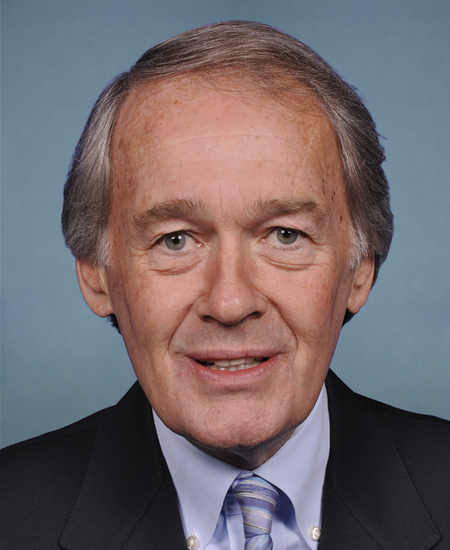
Sen. Edward J. Markey
Sponsored bills
Maddy summaryS 1808 amends the Federal Ocean Acidification Research and Monitoring Act to improve collaboration on ocean acidification research and monitoring. It requires federal agencies like NOAA to establish ongoing input channels with coastal stakeholders, fishery councils, Indigenous groups, and non-governmental experts. The bill expands advisory board membership to include two representatives from affected Indian Tribes and Native Hawaiian organizations, and mandates new policies for Tribal engagement. Key language updates explicitly include "Indian Tribes" and "Indigenous groups" in research planning and vulnerability assessments. These changes directly affect coastal communities, Tribal nations, and federal agencies managing ocean acidification responses.
Maddy summaryThe MASS Act requires states to implement comprehensive firearms and firearms dealer licensing systems, mandating thorough background checks, safety training for first-time license applicants, and clear criteria for determining who is ineligible (such as individuals with certain criminal records, domestic violence convictions, or mental health history). It establishes procedures for family members to petition courts for extreme risk protection orders to temporarily remove firearms from individuals they fear may be a danger, and sets strict requirements for firearms dealers, including employee background checks and secure storage rules. Federal grants support states in adopting these systems, with states required to report on implementation progress and ensure non-discriminatory licensing decisions. This law directly affects firearm owners, dealers, and state governments by imposing new regulatory standards for licensing and safety.
Maddy summaryThis bill prohibits the online distribution of digital instructions (like 3D printer files) that can automatically create firearms or complete firearm frames/receivers. It directly affects individuals or entities sharing such code online, not those using 3D printers to make guns. The key mechanism bans sharing this code via the internet or World Wide Web, aiming to prevent untraceable firearms that lack serial numbers. This addresses a safety concern where 3D-printed guns evade detection and background checks, undermining firearm tracing used in crime investigations.
Maddy summaryS 1831, the Roadless Area Conservation Act of 2023, protects designated roadless areas within the National Forest System by prohibiting road construction, reconstruction, and logging in those areas, as defined by the existing Roadless Rule. This directly affects National Forest visitors, communities relying on clean water from protected watersheds, Native American tribes with sacred sites in these areas, and forest managers. The bill codifies current protections under the Roadless Rule, ensuring these areas remain undisturbed to maintain water quality, biodiversity, recreation opportunities, and habitat for wildlife. It does not restrict access to National Forests outside these designated areas or impose new limitations on land use beyond the existing rule.
Maddy summarySRES 231 is a symbolic Senate resolution designating June 2, 2023, as "National Gun Violence Awareness Day" and June 2023 as "National Gun Violence Awareness Month." It does not create new laws or policies but expresses support for these designations to highlight gun violence statistics, including over 43,000 annual gun-related deaths. The resolution calls on the public to wear orange, promote gun safety awareness, and hold community discussions during June, particularly noting summer as a period of heightened gun violence. It is non-binding and serves solely to raise public awareness, referencing historical data and the legacy of Hadiya Pendleton, a 15-year-old victim of gun violence.
Maddy summaryS.Res. 229 designates May 2023 as "National Brain Tumor Awareness Month" in the U.S. Senate. The resolution encourages public awareness of brain tumors, supports research for better treatments, and honors individuals affected by the disease, including those living with or battling brain tumors. It does not create new laws or allocate funding but serves as a symbolic recognition of the health impact of brain tumors.
Maddy summaryThis resolution (SRES 230) symbolically recognizes the 102nd anniversary of the 1921 Tulsa Race Massacre, a violent attack by a White mob that killed an estimated 300 Black residents and destroyed the Greenwood District in Tulsa, Oklahoma - a thriving Black business community known as "Black Wall Street." It honors the victims and survivors, condemns the historical and ongoing legacy of racial violence, and encourages U.S. schools and universities to include education about the massacre in curricula. As a non-binding resolution, it does not enact new laws or policies but serves as a formal acknowledgment by the Senate of this pivotal event in American history.
Maddy summaryS 1766, the Department of Defense Overdose Data Act of 2023, requires the Secretary of Defense to annually report detailed data on overdoses affecting military personnel (servicemembers) and their family members. The reports must include demographics, substances involved, prior mental health/substance use treatment, opioid prescriptions, naloxone use, and patterns of overdoses, while protecting privacy under HIPAA. The bill also mandates a research report assessing barriers to care and recommending improvements in mental health access, non-opioid pain management, and overdose prevention. These provisions aim to improve data-driven responses to overdoses within the military community.
Maddy summaryThe Stop Fentanyl Overdoses Act of 2023 aims to reduce fentanyl-related overdoses through enhanced data collection, improved detection technologies, and expanded access to treatment services. It requires the CDC to improve surveillance of fentanyl overdoses and establishes grants for states to enhance their data collection systems. The bill also expands access to naloxone (an opioid overdose reversal medication) by exempting certain distributions from supply chain requirements and creates Good Samaritan immunity for people who administer overdose reversal drugs in good faith. Additionally, it funds training for law enforcement on fentanyl detection and supports research into better detection technologies for fentanyl and related substances.