

Maddy summaryThe Richard L. Trumka Protecting the Right to Organize Act of 2023 strengthens workers' rights to organize and bargain collectively by amending key labor laws. It clarifies that multiple employers can be held accountable for labor practices (joint employer definition), makes it harder for employers to misclassify workers as independent contractors, and prohibits employers from permanently replacing workers who strike. The bill requires employers to provide detailed voter lists for union elections, strengthens protections against anti-union discrimination, and increases penalties for unfair labor practices (up to $100,000 for repeat violations). It directly affects workers seeking union representation, employers who must comply with new requirements, and labor organizations conducting organizing campaigns. The bill aims to make it easier for workers to form unions and negotiate better wages and working conditions.
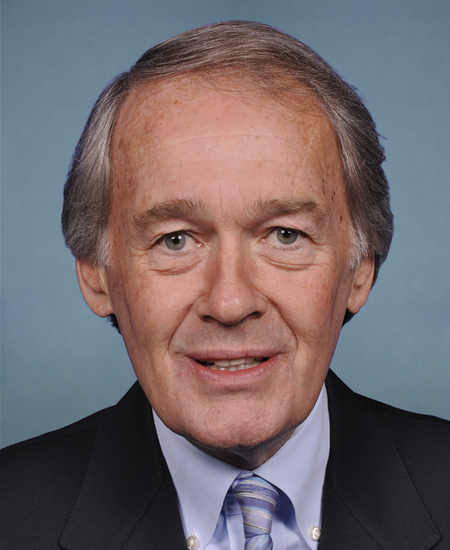
Sen. Edward J. Markey
Sponsored bills
Maddy summaryThis concurrent resolution recognizes that the climate crisis disproportionately harms children's health, economic opportunities, and fundamental rights. It expresses Congress's sense that the U.S. urgently needs to develop a national climate recovery plan to phase out fossil fuel emissions, protect natural carbon sinks, and reduce atmospheric carbon dioxide to below 350 parts per million by 2100. The resolution emphasizes the need for a science-based, equitable approach that addresses climate impacts on vulnerable communities, including children in environmental justice areas. While not a law, it urges federal agencies to prioritize climate action as a matter of protecting children's future.
Maddy summarySRES 298 is a symbolic Senate resolution designating July 30, 2023, as "National Whistleblower Appreciation Day." It commemorates the historical date of July 30, 1778, when the Continental Congress passed early whistleblower protections. The resolution asks all federal agencies to recognize the day by informing employees, contractors, and the public about their legal right to report misconduct, fraud, or crimes through proper channels. It does not create new legal protections or funding but encourages agencies to acknowledge whistleblowers' role in saving taxpayer dollars and promoting ethical government. This is a procedural resolution focused on awareness, not policy change.
Maddy summaryThis bill expands Medicare coverage to include medically necessary home resiliency services for beneficiaries at risk during climate or manmade disasters. It directly affects Medicare beneficiaries with chronic conditions, disabilities, or medical equipment dependencies (like ventilators) who face heightened vulnerability during events like extreme heat, flooding, or power outages. Key provisions require the Secretary to establish a process determining eligibility based on regional climate risks, medical needs, and infrastructure history, and to cover services such as heat pumps, solar batteries, and energy-efficient cold storage. Medicare will pay 100% of the cost for these approved services, replacing the previous standard for such items.
Maddy summaryThe Algorithmic Justice and Online Platform Transparency Act requires major online platforms to be transparent about how their algorithms use personal information to recommend content, moderate content, and target advertisements. Platforms must disclose what data they collect, how algorithms prioritize content, and provide annual transparency reports showing how content moderation affects different demographic groups. The law prohibits algorithms from discriminating in housing, employment, credit, and other opportunities based on protected characteristics like race, gender, or disability. It also establishes an advertising library showing who saw what ads and requires platforms to allow users to easily transfer their data to other platforms.
Maddy summaryS 2299 prohibits the federal government from imposing or carrying out the death penalty for any violation of federal law after the bill's enactment date. It also requires that any person already sentenced to death for a federal offense before enactment be resentenced. The bill directly affects all individuals currently facing or convicted of federal crimes that carry the death penalty under current law. This legislation would eliminate the federal death penalty as a sentencing option and mandate new sentencing hearings for existing death row cases.
Maddy summaryThis bill prohibits defendants from using a victim's LGBTQ+ sexual orientation or gender identity as a legal defense to excuse or reduce punishment for violent crimes. It directly affects criminal trials in federal courts where defendants claim such characteristics provoked their violent actions against LGBTQ+ individuals. The law amends Title 18 of the U.S. Code to ban this specific "panic defense" while allowing courts to consider evidence of the defendant's past trauma under standard evidence rules. It also requires the Attorney General to annually report on federal prosecutions involving bias-motivated violence against LGBTQ+ people.
Maddy summaryThis bill amends the Food and Nutrition Act of 2008 to allow Supplemental Nutrition Assistance Program (SNAP) benefits to be used for hot foods or hot food products ready for immediate consumption. It directly affects SNAP recipients who previously could not purchase such items (like hot meals from food trucks or delis) with their benefits. The key change removes the prior exclusion of "hot foods" from the list of permitted purchases under SNAP, while still excluding alcohol and tobacco. Vendors selling hot foods must now ensure that no more than 50% of their total gross sales come from hot food items to maintain SNAP eligibility.
Maddy summaryThe Fairness for Farm Workers Act (S 2253) updates overtime rules for agricultural workers under federal law. It gradually reduces the maximum workweek before overtime pay applies: starting at 55 hours in 2024, decreasing to 40 hours by 2027 for most farms. The bill also removes existing exemptions that previously allowed farms to avoid overtime pay for certain workers. Small farms (with 25 or fewer employees) have delayed compliance dates, with full 40-hour limits applying by 2030 for them, compared to 2027 for larger farms.
Maddy summaryS 2257, the Federal Reserve Racial and Economic Equity Act, requires the Federal Reserve to actively work toward eliminating racial and economic disparities in its operations. The bill mandates that the Federal Reserve consider racial equity when conducting monetary policy, regulating financial institutions, and enforcing fair lending laws. It also requires the Federal Reserve to annually report to Congress with detailed data on disparities in employment, income, and wealth across racial, ethnic, and gender groups. This bill directly affects the Federal Reserve's duties and reporting obligations under the Federal Reserve Act.