

Maddy summaryS 2398, the Health Impacts of Nuclear War Act of 2023, directs the Department of Health and Human Services to establish a 5-year research program studying long-term health effects from nuclear war's environmental impacts - such as reduced sunlight, crop failures, and ozone damage - using $10 million annually. It requires an assessment of U.S. health system readiness for these effects and mandates a report to Congress within one year of enactment. The bill amends the Public Health Service Act to explicitly include these environmental health consequences in federal preparedness planning for nuclear threats. This affects federal health agencies, researchers, and emergency response systems by prioritizing research and planning for cascading health crises beyond immediate nuclear explosions.
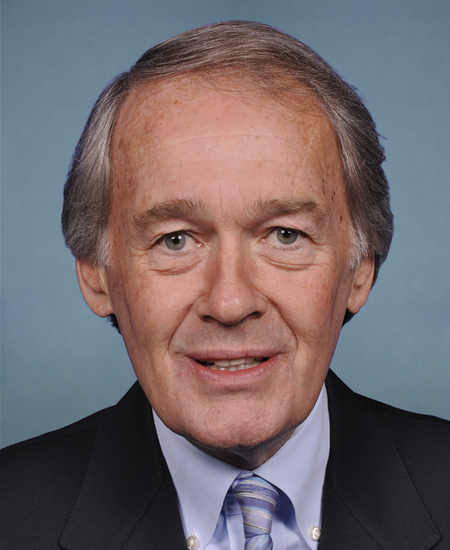
Sen. Edward J. Markey
Sponsored bills
Maddy summaryThis bill increases the excise tax on fuel used for private jets and non-commercial aviation from 21.8 cents per gallon to 35.9 cents plus $1.589 per gallon (adjusted for inflation after 2024), effective January 2024. The tax revenue funds a new "Clean Communities Trust Fund" to support environmental projects in underserved areas. Specifically, 50% of the funds must go to environmental justice communities - defined as low-income, communities of color, or Tribal/Indigenous communities disproportionately impacted by air pollution - for air quality monitoring, public transit expansion near airports, and improved bus services. Exceptions for emergency use (e.g., medical evacuations) apply until 2026.
Maddy summaryS 2372, the Accelerating Kids’ Access to Care Act, streamlines enrollment for out-of-state healthcare providers who treat Medicaid-eligible children under 21 with medically complex conditions. It requires states to adopt a process allowing these providers to join state Medicaid/CHIP programs without extra state-level screening, provided they already meet federal Medicare or home-state program requirements and pose low fraud risk. The bill establishes a 5-year enrollment period for eligible providers, directly affecting children needing specialized care across state lines and the providers serving them. Key provisions remove barriers to interstate care coordination while maintaining federal oversight standards.
Maddy summaryThis bill requires the Assistant Secretary for Preparedness and Response (within HHS) to assess how emerging AI technologies - like open-source models and large language models - could be misused to develop biological weapons, viruses, or chemical weapons. It mandates regular monitoring of global biological risks that could cause mass casualties or destabilize societies, and directs the inclusion of these findings in the National Health Security Strategy. The law directly affects federal health security planning by adding this specific AI-biosecurity risk assessment to existing public health responsibilities. It creates a new procedural requirement for federal agencies to evaluate and report on these emerging threats.
Maddy summaryThis bill requires the Secretary of Health and Human Services to develop and submit a strategy within 180 days of enactment to address public health risks from AI misuse. The strategy must cover threats like AI-facilitated biological weapons development and engineered pathogens, identify gaps in current capabilities, and outline how to strengthen emergency response. It mandates coordination with stakeholders developing health countermeasures and integrates AI threats into existing public health emergency planning under the Public Health Service Act. The bill directly affects HHS, public health agencies, and health technology developers, focusing on concrete policy coordination rather than new funding or regulations.
Maddy summaryS 2337, the Plastic Pellet Free Waters Act, prohibits plastic pellets and pre-production plastic materials from being discharged into waterways through wastewater, spills, or runoff. It directly affects plastic production facilities, molding plants, and companies that package or transport plastic pellets. Within 60 days of enactment, the EPA must issue rules banning these discharges and updating all relevant wastewater, stormwater, and performance permits to reflect this requirement. The law applies to facilities regulated under existing EPA rules for plastic manufacturing and handling.
Maddy summary# Summary of Comprehensive Election Reform Bill This document is a comprehensive voting rights and election reform bill containing multiple titles with various provisions designed to: 1. **Restore voting rights** for citizens with criminal convictions (Democracy Restoration Act) - Restores voting rights for citizens not serving felony sentences in correctional institutions - Requires states to notify individuals of restored voting rights upon release or probation - Establishes enforcement mechanisms through civil actions 2. **Strengthen voter identification requirements** - Establishes a broad list of acceptable identification documents - Requires states to provide government-issued identification at no cost - Allows for provisional ballots with sworn statements for those without ID - Includes provisions for electronic documents and copies 3. **Prohibit voter caging and improper voter list maintenance** - Bans the use of "voter caging" documents or lists as evidence for challenging voter eligibility - Establishes strict conditions for removing voters from registration lists - Requires objective and reliable evidence for removals - Mandates notification procedures for voters removed from lists 4. **Enhance election integrity protections** - Prohibits interference with voter registration (including hindering, interfering with, or preventing registration) - Restricts removal of local election administrators to cases of inefficiency, neglect, or malfeasance - Protects election workers from intimidation and harassment - Bans deceptive practices regarding election information within 60 days of an election - Establishes criminal penalties for deceptive election practices 5. **Provides enforcement mechanisms** - Establishes private rights of action for violations - Includes civil and criminal penalties for violations - Requires reports to the Department of Justice for removals of election administrators - Sets specific timeframes for notification and corrective actions The bill aims to expand voting access while maintaining election integrity, with provisions designed to protect voting rights, prevent discrimination, and ensure fair administration of elections for Federal office.
Maddy summaryThis bill directs the U.S. President to identify Cambodian officials responsible for suppressing democracy and human rights, then impose sanctions including asset blocking and visa restrictions. It requires the President to submit a report on Chinese military activities in Cambodia, particularly at Ream Naval Base and Dara Sakor Airport. The legislation includes provisions for suspending sanctions if Cambodia makes meaningful progress toward releasing political prisoners, ending government suppression of opposition parties, and holding free elections. It builds on existing U.S. restrictions on aid to Cambodia that require the government to take specific steps to improve democratic practices. The bill aims to hold Cambodian officials accountable for human rights violations while addressing concerns about China's military presence in Cambodia.
Maddy summaryThe Healthy Families Act requires most employers (with 15 or more employees) to provide workers with up to 56 hours of paid sick leave annually, earned at a rate of 1 hour for every 30 hours worked. Employees can use this leave for their own illness, medical care, caring for family members with health conditions, or addressing domestic violence, sexual assault, or stalking situations. The law prohibits employers from retaliating against workers who use this leave and mandates that employers post notices about the policy. Smaller employers (with fewer than 15 employees) may provide up to 56 hours of unpaid sick leave instead of paid leave. The Act includes enforcement mechanisms allowing employees to file complaints with the Department of Labor and seek damages for violations.
Maddy summaryThe Paycheck Fairness Act aims to reduce gender-based pay disparities by strengthening protections against wage discrimination. It modifies the "bona fide factor" defense to require employers to prove pay differences are based on job-related factors rather than sex, prohibits reliance on salary history when making hiring decisions, and requires employers with 100+ employees to collect and report pay data disaggregated by sex, race, and ethnicity. The bill enhances penalties for violations, including compensatory and punitive damages, and strengthens non-retaliation protections for employees discussing wages. These changes directly affect employers, employees, and prospective employees, with particular focus on addressing pay gaps that disproportionately impact women and women of color. The act also creates a National Award for Pay Equity in the Workplace to recognize employers making progress in eliminating pay discrimination.