

Maddy summaryThis bill, the FERDI Act, requires federal agencies to annually report on employees and retirees with unpaid taxes (excluding those with payment plans) and creates new ineligibility rules for federal employment. It mandates that job applicants certify they have no "seriously delinquent tax debt" (unpaid taxes after assessment), and agencies must verify this through IRS records. Individuals with such debt face potential job denial or separation unless they resolve the debt within 180 days or qualify for an exemption due to financial hardship. The law applies to all federal civilian and military employees and applicants, with due process protections for affected individuals.
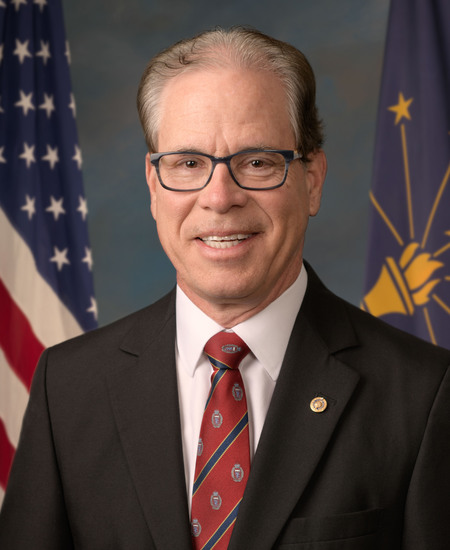
Sen. Mike Braun
Sponsored bills
Maddy summaryThe National Labor Relations Board Reform Act increases the NLRB's membership from 5 to 6 members, requiring 3 members to represent each of the two major political parties and establishing staggered terms for appointments starting in 2028. It changes the required Board majority for decisions from 3 to 4 members and adds a 30-day window for employers or employees to seek federal court review of General Counsel complaints if they lack substantial evidence. The bill also mandates that the NLRB issue final orders within one year of a case filing or the case is automatically discharged, becoming final without further action. These changes directly affect NLRB operations, employers, and employees involved in labor disputes under the National Labor Relations Act.
Maddy summaryThe Pandemic Unemployment Fraud Recoupment Act (S 1018) extends the time period for states to recover overpayments and pursue fraud charges in pandemic unemployment programs from 3 years to 10 years. It requires individuals who received pandemic unemployment benefits they were not entitled to due to fraud to repay the amounts, though states may waive repayment if the individual was not at fault and repayment would be unjust. States must recover these overpayments through deductions from future unemployment benefits over a 10-year period and provide a fair hearing before requiring repayment. This law directly affects individuals who received fraudulent pandemic unemployment benefits and state agencies administering unemployment programs.
Maddy summaryThis bill authorizes a posthumous honorary promotion for Lieutenant General Frank Maxwell Andrews, a deceased U.S. Army officer, to the rank of general. The promotion would be purely ceremonial and not affect any retirement pay, benefits, or entitlements for Andrews or others. It specifically clarifies that the honorary rank does not change existing benefits tied to his military service. The bill serves only to formally recognize his historical service without altering any current policies or financial provisions.
Maddy summaryThis bill ensures federal inspectors general (IGs) can continue essential oversight during government shutdowns. It amends the Inspector General Act to allow IGs to incur expenses in advance of new appropriations, using the previous year's funding rate, for programs that must operate during a shutdown. The law directly affects all federal IG offices (like those in agencies such as HHS or DHS) by enabling them to maintain critical watchdog functions without interruption. Key provisions require IGs to operate under the same authority and conditions as the most recently enacted appropriations bill. This is a procedural change focused on maintaining continuous oversight during funding gaps, not on altering substantive policy.
Maddy summaryThis bill repeals upfront origination fees for new Federal Direct student loans. It directly affects borrowers who take out these loans after March 27, 2022, by eliminating the initial fee charged when the loan is issued. The key provision removes section 455(c) of the Higher Education Act, which previously required these fees for loans under part D of title IV. The change applies to all new direct loans disbursed or consolidation applications received on or after the effective date, meaning borrowers no longer pay this specific fee.
Maddy summaryThis bill (SJRES 22) seeks to block a specific rule issued by the Department of Education regarding federal student loan modifications. It targets the rule titled "Waivers and Modifications of Federal Student Loans," which included a one-time debt relief program announced in October 2022. The resolution requests Congress disapprove the rule under the Congressional Review Act, preventing the Department from implementing it. If approved, the rule would have no legal effect, directly affecting how student loan borrowers could access modifications or debt relief under that specific policy.
Maddy summaryThis bill prohibits public colleges and universities from denying religious student groups access to campus facilities or official recognition that is available to other student organizations. It directly affects public institutions of higher education and religious student organizations by requiring equal treatment based on the institution's policies for non-religious groups. The key provision states that no federal funds can be withheld from an institution that denies a religious group access to facilities or recognition due to its religious beliefs, practices, speech, leadership standards, or conduct codes. The law applies to all public colleges receiving funds under the Higher Education Act of 1965.
Maddy summaryThe CURD Act (S 981) defines "natural cheese" in federal law to clarify labeling standards. It specifies that natural cheese must be made by coagulating milk proteins (without added non-milk ingredients that alter its core composition) and excludes processed cheeses like pasteurized process cheese, cheese spreads, and grated American cheese. This directly affects cheese manufacturers, who must label products consistently with the new definition, and consumers, who gain clearer information about product types. The bill requires labels using "natural cheese" to comply with this definition, ensuring transparency without restricting terms like "all-natural" in other contexts.
Maddy summaryThis bill clarifies federal regulations for industrial hemp by defining it as Cannabis sativa L. material from stalks, seeds (excluding cannabinoid resin), or viable seeds used for fiber, grain, or other non-intoxicating products. It requires hemp producers to formally designate their crop as "industrial hemp" or "hemp for any purpose" and establishes visual inspections with documentation requirements to verify compliance. States and tribes cannot impose stricter production rules than federal standards, though they may enforce penalties for misdesignating crops (e.g., 5-year program ineligibility for knowingly producing non-industrial hemp). The bill affects hemp producers, state agricultural agencies, and tribal governments by standardizing federal oversight and reducing regulatory overlap.