

Maddy summaryThis bill limits IRS employees who are union members from using paid time for union activities during critical tax seasons. It restricts taxpayer-funded union time for IRS staff from February 12-May 5 and September 1-November 1 each year. The law overrides any conflicting union contracts, ensuring these restrictions apply regardless of existing agreements. The bill directly affects IRS employees covered by collective bargaining agreements during these specific periods.
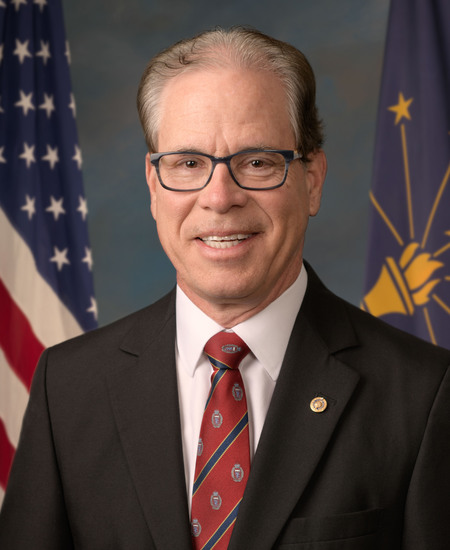
Sen. Mike Braun
Sponsored bills
Maddy summaryS 1048 designates nine specific Mexican drug cartels - including the Sinaloa Cartel, Jalisco New Generation Cartel, and Gulf Cartel - as foreign terrorist organizations under existing law (Section 219 of the Immigration and Nationality Act). This designation would enable federal authorities to use new legal tools, such as prosecuting drug traffickers who fund these groups, freezing cartel assets, and imposing penalties on financial institutions that fail to block their funds. The bill also creates an interagency task force led by the Director of National Intelligence to coordinate intelligence, strategy, and enforcement across agencies like Homeland Security and the Treasury. This directly targets the cartels’ operations and funding streams, aiming to disrupt the flow of fentanyl and other drugs into the U.S.
Maddy summaryS 1047, the Cellphone Jamming Reform Act of 2023, allows state and federal correctional facilities to use jamming systems to block cell signals from contraband devices or inmates within the facility. The bill restricts jamming to housing areas only, requires states operating such systems to cover all costs, and mandates consultation with local law enforcement before implementation. It also requires facilities to notify the Bureau of Prisons about their use of jamming systems. The Federal Communications Commission (FCC) is prohibited from blocking this specific use of jamming technology, but the law does not authorize jamming outside correctional facilities or for general security purposes.
Maddy summaryThe Farmer-Informed WOTUS Act of 2023 establishes a 32-member advisory committee composed entirely of farmers and ranchers to study how federal Waters of the United States (WOTUS) regulations affect agricultural operations. The committee will examine specific issues like exemptions for farmland, common farming practices not covered by current rules, and regulatory inconsistencies, then submit recommendations to the Agriculture Secretary, Environmental Protection Agency, and congressional committees within one year. This bill directly involves U.S. farmers in reviewing WOTUS rules without altering existing regulations, aiming to incorporate on-the-ground farming perspectives into future policy discussions. The committee’s findings will inform potential adjustments to how WOTUS regulations impact agriculture, food supply chains, and rural infrastructure.
Maddy summaryThe Define WOTUS Act of 2023 redefines "navigable waters" under the Clean Water Act to clarify which water bodies fall under federal regulation. It explicitly includes rivers, lakes, and wetlands connected to major waterways but excludes temporary streams, groundwater, man-made ditches, agricultural fields, and most artificial water features like ponds or stormwater basins. This directly affects landowners, farmers, and developers who need permits for projects near water, as it limits federal oversight to specific water types and creates a new process for property owners to get binding regulatory determinations. Key provisions require the Army Secretary to issue a final determination within 60 days of a request, with non-response automatically deeming the water unregulated, and set a 5-year limit for "regulated" findings.
Maddy summaryThis bill requires federal agencies to offset any new direct spending caused by their administrative actions (like rule changes or guidance). Agencies must propose equivalent spending reductions before implementing rules that increase costs, and the Office of Management and Budget (OMB) reviews these proposals. It applies to all executive agencies (e.g., EPA, Social Security Administration) and military departments, but excludes the Government Accountability Office. The law aims to prevent uncontrolled spending increases from agency actions by mandating budget neutrality for new rules.
Maddy summaryThis bill would block U.S. federal funding for two international environmental agreements until China's classification in those treaties changes. Specifically, it prohibits funds for the Montreal Protocol (ozone layer protection) until China is removed from "developing country" status, and blocks funds for the UN Climate Change Convention until China is added to Annex I (the list of developed nations). The bill requires the President to certify to Congress that these treaty changes have occurred before funding can resume. It affects only U.S. government spending on these agreements, not direct policy changes for citizens or businesses.
Maddy summaryThis bill establishes a federal "National Parkinson’s Project" under the Department of Health and Human Services to coordinate efforts across agencies in preventing, treating, and curing Parkinson’s disease and related conditions. It requires an integrated national plan, annual progress assessments, and a public Advisory Council - including patient advocates, researchers, and healthcare providers - to guide strategy and recommend actions. The project mandates data sharing among federal agencies and biannual reports to Congress evaluating federally funded Parkinson’s programs, aiming to improve care coordination, reduce financial burdens on Medicare and families, and advance research on environmental triggers. The law directly affects people living with Parkinson’s, their caregivers, and federal health agencies involved in research and patient services. The initiative is scheduled to sunset in 2035.
Maddy summaryThis resolution supports designating the week of April 17-21, 2023, as "National Work Zone Awareness Week." It encourages public education on work zone safety practices, such as obeying reduced speeds, avoiding distractions, and heeding signage, while urging infrastructure operators to adopt safety technologies. The resolution does not create new laws or regulations but aims to raise awareness about reducing work zone crashes and fatalities, citing 2020 data showing 857 work zone fatalities and 44,240 injuries. It is a non-binding Senate resolution focused on promoting safety awareness.
Maddy summaryThis bill (S 1010) authorizes a symbolic, honorary promotion of retired U.S. Army Master Sergeant Harold B. Pharis to the rank of Sergeant Major. It directly affects retired service member Harold B. Pharis by granting him a ceremonial rank upgrade. The bill explicitly states this promotion will not change his retired pay, benefits, or any other entitlements tied to his military service. It is a procedural measure with no financial or operational impact.