Traveler's Gun Rights Act This bill allows an individual who does not have a physical residence in a state to use the address for a private mailbox or post office box maintained by that individual for purposes of obtaining a firearm from a federally licensed dealer.
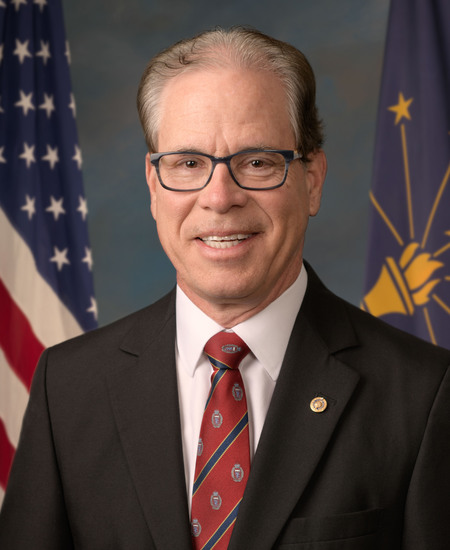
Sen. Mike Braun
Sponsored bills
Inspired to Serve Hiring Improvements Act This bill expands the hiring authorities of executive agencies, including by increasing the maximum length of temporary and term appointments to up to 3 years (including extensions) and up to 10 years, respectively.
This bill requires the Department of Homeland Security to prohibit, with certain exceptions, individuals from entering the United States through a coastal or land port of entry or a Border Patrol station near a U.S. land border. This prohibition shall not apply to a (1) U.S. citizen or lawful permanent resident, (2) member of the U.S. Armed Forces or the spouse and children of a member, or (3) person from a foreign country with valid travel documents arriving at a designated port of entry. This prohibition shall be in place until February 1, 2025.
This resolution designates April 16 through April 24, 2022, as National Park Week. The resolution also encourages the people of the United States and the world to responsibly visit, experience, recreate in, and support the treasured national parks of the United States.
This resolution expresses the sense of the Senate that the Purdue "All-American" Marching Band, which is celebrating the 100th anniversary of the construction of the World's Largest Drum, continues to remain an important cultural and historical icon of Purdue University and the state of Indiana.
Renewing Investment in American Workers and Supply Chains Act This bill classifies nonresidential real property and residential rental property as 20-year property for depreciation purposes.
Responsible Budget Targets Act of 2022 This bill modifies the federal budget process to establish new spending caps that are adjusted annually based on factors such as the amount of revenue and the growth of the gross domestic product.
Fight Inflation Through Balanced Budgets Act This bill establishes points of order that may be raised in the Senate against (1) budget resolutions that do not include a balanced budget; and (2) provisions that would cause the total amount of appropriations for a program, project, or activity to exceed the authorized amount. The bill also limits waivers of budget points of order in the Senate, including by prohibiting (1) waiving multiple points of order against a measure using a single motion, and (2) waiving a point of order that has not been specifically raised by a Senator.
Maddy summaryThis bill prohibits the U.S. government from providing any financial assistance, including money or assets, to Amnesty International or its employees. It directly affects Amnesty International as an organization and all its current and future employees who might otherwise receive direct U.S. government funding. The key provision explicitly blocks all federal financial support for the organization and its staff, regardless of existing laws that might otherwise allow such assistance.
Reducing Regulatory Burdens Act This bill establishes procedures to reduce the number of federal regulations. Specifically, it requires each agency to establish a regulatory reform task force chaired by a designated regulatory reform officer. Each task force must, among other duties (1) review each existing agency regulation; (2) estimate the potential cost savings of repealing or modifying each regulation; and (3) identify regulations that are appropriate for repeal, replacement, or modification based on cost, effectiveness, and impact on employment. The bill further prohibits agencies from issuing a new regulation with an economic impact of at least $100 million without identifying two regulations for repeal that will offset the cost of the proposed new regulation. Agencies also must submit a list of all planned regulatory actions for inclusion in the semiannual Unified Agenda of Federal Regulatory and Deregulatory Actions, including (1) the estimated economic effect of each action, and (2) proposed deregulatory actions to offset the cost of each proposed new regulation. Additionally, the Office of Management and Budget must establish an annual regulatory budget for each federal agency that specifies the net allowable increase in regulatory costs for each agency during the next fiscal year.