

Maddy summarySRES 565 is a ceremonial Senate resolution honoring the late Representative Don Young (R-AK), who served 49 years in the U.S. House of Representatives - the longest tenure of any Alaska representative and the 45th Dean of the House. The resolution commemorates his life, service, and legacy, including his work on landmark legislation like the Trans-Alaska Pipeline authorization and the Alaska Native Claims Settlement Act. It contains no policy changes or new laws; instead, it directs the Senate to mourn his passing, honor his bipartisan service, and transmit a copy to his family. This is a purely symbolic resolution with no direct impact on constituents or legislation.
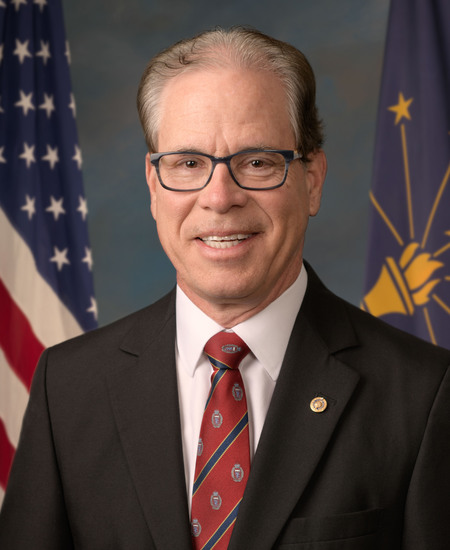
Sen. Mike Braun
Sponsored bills
Gas Prices Relief Act of 2022 This bill prohibits federal agencies from finalizing any regulations that would cause (1) a decrease in domestic oil, gas, or biofuels production; (2) an increase in gasoline prices; or (3) any negative effects on domestic energy production, domestic electricity generation, transmission of fuel or electricity, infrastructure development, or transportation fuels. The prohibition may not end until the earlier of January 1, 2023, or until the average gasoline price is $2.60 per gallon or less.
Maddy summaryThis resolution designates April 2022 as "National Native Plant Month" through a symbolic recognition by the U.S. Senate. It highlights the environmental benefits of native plants - such as preventing erosion, supporting wildlife, and restoring ecosystems - without creating new laws or affecting specific groups. The resolution serves as a formal acknowledgment of native plants' role in U.S. ecological health and heritage.
This resolution congratulates the people of Greece as they celebrate the 201st anniversary of Greece's independence. The resolution also expresses support for the principles of democratic governance to which the people of the United States and Greece are committed.
This bill prohibits a Federal Reserve bank from offering products or services directly to an individual, maintaining an account on behalf of an individual, or issuing a central bank digital currency directly to an individual.
This bill reestablishes an initiative related to China within the National Security Division of the Department of Justice (DOJ) and outlines the goals and requirements for this initiative. In 2022, DOJ ended a program named the China Initiative. This bill reestablishes and renames it the CCP Initiative to (1) counter nation-state threats to the United States; (2) curb spying by the Chinese Communist Party (CCP) on U.S. intellectual property and academic institutions; (3) identify and prosecute individuals engaged in trade secret theft, hacking, and economic espionage; and (4) protect U.S. critical infrastructure from foreign threats. DOJ must annually brief specified congressional committees on the progress and challenges of the initiative. The initiative terminates six years after enactment of this bill.
This resolution designates March 24, 2022, as National Women in Agriculture Day. It also recognizes the important role of women in agriculture as producers, educators, leaders, mentors, and more
This resolution expresses the sense of the Senate that (1) James Frederick "Jimmy" Hanley was a talented Hoosier who provided many musical compositions that were significant during the 1920s and 1930s, especially (Back Home Again in) Indiana ; and (2) he should be commemorated and remembered on the 130th anniversary of his birth for the cultural impact and significance that his compositions and music continue to have throughout the world.
This resolution commemorates the life and contributions of Charles Isham Taylor, and his impact in providing opportunities for African Americans in Indiana, on the 100th anniversary of his passing.
Protecting Medicaid Beneficiaries Act of 2022 This bill requires states and U.S. territories to implement asset verification programs and resources tests for all enrollees as a condition of Medicaid eligibility (such requirements are currently generally limited to individuals who are eligible for Medicaid on the basis of being aged, blind, or disabled, and do not apply in all U.S. territories). The Centers for Medicare & Medicaid Services (CMS) must distribute any resulting federal savings to states for two years; states may use the funds to support maternal and child health under Medicaid or for other purposes that are approved by the CMS. The CMS must also track and report on any savings. The Government Accountability Office must report on the efficacy of the asset verification programs.