

Maddy summarySRES 72 is a non-binding Senate resolution passed on February 16, 2023, declaring that Russia’s actions in Ukraine meet the legal definition of genocide under the 1948 Genocide Convention. It cites specific atrocities, including mass killings of civilians, deliberate destruction of infrastructure (like hospitals and farmland), forced displacement of Ukrainians, and systematic sexual violence, as evidence of intent to destroy the Ukrainian people. The resolution calls on the U.S. government to support Ukraine, back international accountability efforts, and urges the President to impose sanctions under the Global Magnitsky Act on those responsible. As a symbolic resolution, it does not create new laws but formally recognizes the Senate’s position on Russia’s conduct.
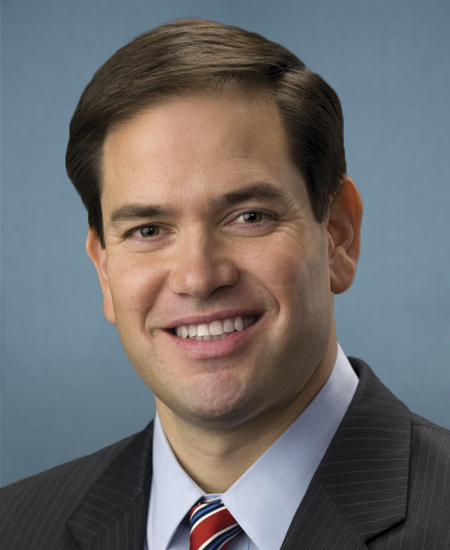
Sen. Marco Rubio
Sponsored bills
Maddy summaryThis bill requires countries participating in the U.S. Visa Waiver Program (VWP) to enter into specific information-sharing agreements with the U.S. government. It mandates that these countries share data on security threats, terrorist watch lists, and serious criminal activity involving their citizens traveling to the U.S., and fully implement these agreements. If a VWP country fails to comply within 3-6 months, the U.S. Secretary of Homeland Security must immediately terminate its VWP status. Countries can rejoin only after proving they fixed the issues and maintained compliance for a period equal to or longer than their non-compliance time. The bill directly affects VWP countries (like those in the Schengen Area) and their citizens traveling visa-free to the U.S.
Maddy summaryS 488, the FOIA Fix Act of 2023, amends the Freedom of Information Act (FOIA) to restrict access to government records. It prohibits agencies from releasing records to non-citizens, foreign entities without U.S. headquarters, or subsidiaries of entities based in specific countries (including China, Russia, Iran, and Cuba). The bill also imposes penalties of up to $10,000 and one year in prison for knowingly assisting prohibited requesters. Additionally, it allows agencies to withhold sensitive technical information related to emerging U.S. technologies if disclosure could harm national interests. The law aims to limit access to government data for certain foreign-affiliated requesters while preserving exemptions for immigration proceedings.
Maddy summaryThis bill requires any U.S. agreement with Iran regarding its nuclear program to be treated as a treaty, mandating Senate approval by a two-thirds vote before it can take effect. It directly affects the President, who cannot bypass this requirement to waive or reduce sanctions related to Iran's nuclear activities. The key provision blocks the President from granting sanctions relief or taking related actions under any Iran nuclear deal - including joint plans, side agreements, or future documents - without first securing Senate treaty approval. This applies to all forms of agreements, whether legally binding or not, and covers all related materials like annexes or technical understandings.
Maddy summaryThe CONSCIENCE Act of 2023 would require governments to provide religious exemptions for COVID-19 vaccine mandates and prohibit policies that treat religious objections less favorably than non-religious ones. It would allow individuals to challenge vaccine mandates that impose significant burdens on religious exercise, requiring governments to prove they have a strong reason for the requirement and that they're using the least restrictive approach possible. The bill applies to all government entities and private entities operating under government contracts that implement vaccine requirements. It directly affects people with religious objections to the vaccine, government agencies, and private employers who require vaccines for employment.
Maddy summaryThis bill (S 471) gives states more flexibility in determining which Medicaid providers can participate in state plans if they perform abortions. It allows states to set their own criteria for excluding abortion providers from Medicaid participation, except in specific cases. The exceptions require coverage for abortions needed due to rape or incest, or when a physician certifies a life-threatening physical condition related to pregnancy. This directly affects Medicaid providers who perform abortions and state Medicaid programs, changing how states manage provider participation under federal Medicaid rules.
Maddy summaryS 511 establishes the "CCP Initiative" within the Department of Justice's National Security Division to counter threats from the Chinese Communist Party (CCP) targeting U.S. innovation and economic security. The initiative mandates DOJ prioritization of investigations into trade secret theft, hacking, and economic espionage affecting U.S. intellectual property, academic institutions, and critical infrastructure - particularly in defense, telecommunications, and supply chains. Key mechanisms include creating a dedicated steering committee with specific DOJ and FBI leadership, requiring separate funding allocation for the initiative, and mandating annual congressional briefings on its progress. The bill expires six years after enactment and requires DOJ to apply existing laws like the Foreign Agents Registration Act to unregistered CCP operatives. It directly affects DOJ operations, federal prosecutors, and entities vulnerable to CCP-linked economic espionage.
Maddy summaryS 503 establishes a new Space National Guard as a reserve component of the U.S. Space Force, composed of state-level units in areas where the Space Force operates. It directly affects National Guard members in participating states, territories, Puerto Rico, and D.C., who would join this new space-focused reserve force. The bill requires implementation within 18 months and mandates annual congressional briefings on its progress, including missions, personnel, and funding. It also clarifies definitions in military law and explicitly states the bill won’t require relocating existing military installations.
Maddy summaryThis bill, the CVV Act (S 491), requires political organizations that accept online credit card donations to obtain the credit card verification value (CVV) from donors at the time of contribution. It directly affects political organizations receiving internet-based credit card payments by mandating they collect the CVV code (the three-digit number on the back of a card) during the donation process. The key provision adds a new requirement to the tax code, making it a condition for such organizations to be treated as tax-exempt under Section 527. The rule applies to contributions made after the bill's enactment date, aiming to verify donor identity for online political contributions.
Maddy summaryThe DEMOCRACIA Act imposes sanctions on foreign entities providing financial, material, or technological support to Cuba's military, security, or intelligence sectors, as well as on individuals responsible for serious human rights abuses in Cuba. The sanctions include blocking property in the U.S. and denying visas to sanctioned individuals, targeting Cuban officials in positions like the Communist Party, Ministry of Interior, and Council of State. The bill requires the President to terminate sanctions if Cuba meets specific democratic transition criteria, including legalizing political activity, releasing political prisoners, and holding free and fair elections. The legislation aims to restrict financial support to sectors responsible for human rights abuses and authoritarian governance in Cuba.