

Maddy summaryS 558, the "Stop CRT Act," prohibits federal funding for elementary, secondary, and higher education institutions that promote defined "race-based theories" or compel students/staff to adopt such beliefs. The bill defines "race-based theories" as concepts like inherent racial superiority, the U.S. being fundamentally racist, or assigning moral worth based on race. It blocks federal funds to schools or colleges that "promote" these theories (e.g., including them in curricula with implied endorsement) or require adherence to them contrary to civil rights law. The law explicitly allows educational discussion of such theories in context (e.g., for research or critical analysis without school endorsement) and does not restrict speech outside school settings.
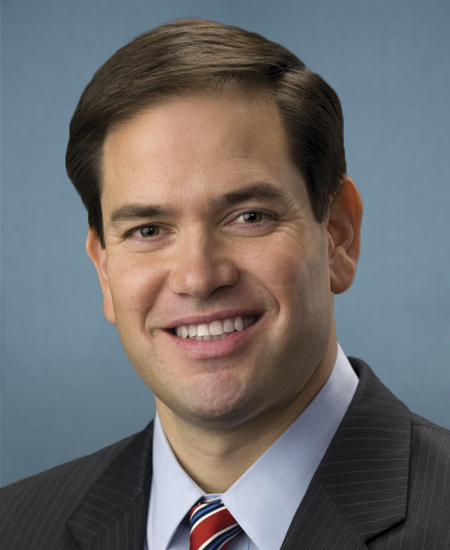
Sen. Marco Rubio
Sponsored bills
Maddy summaryThe HUD Inspection Reform and Capital Improvement Act of 2023 establishes new standards for inspecting federally assisted housing properties, requiring annual physical inspections using a 100-point Uniform Physical Condition Standards (UPCS) scoring system. Properties scoring below 60 points face increased scrutiny, including mandatory corrective plans within 30 days, potential civil penalties, and possible termination of housing assistance if deficiencies aren't fixed. The bill mandates quarterly public reports on property conditions and annual HUD reports on inspection results across the country. It directly affects HUD, housing property owners receiving federal assistance, and approximately 3 million low-income tenants living in federally assisted housing.
Haiti Economic Lift Program Extension Act of 2023 This bill extends through FY2035 the special duty-free rules for Haiti. It also extends through FY2035 the duty-free treatment provided for certain apparel products assembled in and imported from Haiti.
Maddy summaryS 566, the "Charitable Act," modifies tax deductions for charitable contributions for individuals who do not itemize their deductions on federal income taxes. It allows these taxpayers to deduct up to one-third of their standard deduction amount for 2023 and 2024 tax years, instead of the usual itemized deduction. The bill also removes references to a repealed penalty provision (Section 6662(b)(10)) and adjusts related penalty language in the tax code. This directly affects non-itemizing taxpayers who make charitable contributions, providing a new deduction option for those years only. The changes apply to tax years beginning after December 31, 2022.
Maddy summaryThis bill creates federal grants to fund security upgrades (like cameras) or accessibility improvements (for ADA compliance) at pregnancy-help organizations. It directly affects organizations that provide services to individuals facing unintended pregnancies with the goal of encouraging childbirth, excluding any group that performs, supports, or affiliates with abortion services. Grants cannot be used for abortion-related activities or provided to organizations that offer such services. The bill authorizes funding for these specific facility improvements, with strict conditions on how the money may be spent.
Maddy summaryThis bill (S 538, the FORCE Act) blocks the U.S. from removing Cuba from the "state sponsors of terrorism" list until specific conditions are met under existing law (Section 3). It requires a report identifying terrorists or fugitives in Cuba (Section 4) and restricts U.S. financial transactions with entities linked to Cuba’s military, intelligence, or security services (Sections 5-6), while exempting certain activities like agricultural exports, medical supplies, and democracy-building programs. The bill also mandates reports on Cuban corruption and U.S. engagements with Cuba (Sections 7-8), with financial restrictions set to end after 90 days if Cuba meets U.S. democratic benchmarks. The law directly affects U.S. sanctions enforcement, Cuban government entities (like the military), and U.S. financial institutions handling Cuban transactions.
Maddy summaryThe Understanding the True Cost of College Act of 2023 requires colleges and universities receiving federal financial aid to use a standardized financial aid offer form for all students applying for aid. The form must clearly separate costs (including tuition, housing, books, and other expenses), grants/scholarships (non-repayable aid), and loans (repayable debt), with a calculated net price showing what students actually pay after grants. It mandates plain-language explanations of loan terms, repayment options, interest rates, and distinctions between Federal and private loans, while requiring institutions to disclose key metrics like cohort default rates and median student debt. This replaces inconsistent, confusing financial aid documents with a uniform format designed to help students make informed college financing decisions.
Maddy summarySJRES 15 is a joint resolution disapproving a rule issued by the Department of Commerce. The rule established procedures for suspending import duties under Presidential Proclamation 10414, which relates to trade measures affecting goods entering the U.S. This resolution, if enacted, would nullify the Commerce Department's rule (published at 87 Fed. Reg. 56868), meaning the suspended duty procedures would no longer apply to importers and customs operations. The bill directly affects businesses and importers subject to these customs procedures.
Maddy summaryThis joint resolution (SJRES 17) is a symbolic measure introduced in the U.S. Senate on February 16, 2023, to formally apologize to veterans of the Vietnam War for the mistreatment they faced upon returning home. It directly affects Vietnam War veterans and their families by recognizing their sacrifice and acknowledging the hostile reception they endured due to the war's divisiveness. The resolution urges the President to acknowledge this mistreatment during the Vietnam War Commemoration and expresses support for improved educational efforts in U.S. schools about veterans' experiences. As a non-binding resolution, it does not create new laws, provide funding, or alter policy - it serves solely as a formal statement of apology.
Maddy summaryThis bill proposes a constitutional amendment to limit the Supreme Court to no more than 9 justices. It would directly affect the composition of the Supreme Court by preventing future expansions beyond the current 9-justice structure. The key provision requires a constitutional amendment, which would need ratification by 38 state legislatures (three-fourths of states) within seven years of congressional submission. Congress would also gain authority to pass laws enforcing this limit. The amendment does not change the current court size but aims to restrict future changes to the Court's membership.