

Maddy summaryThis bill directs the U.S. Treasury to instruct American representatives at multilateral development banks (like the World Bank and Asian Development Bank) to oppose new loans to China. It is based on findings that China exceeded the income threshold for graduation from development assistance in 2016 and has since received over $20 billion in loans from these institutions. The bill requires annual reports tracking China's borrowing, U.S. voting efforts to end lending to countries that have surpassed graduation thresholds, and the status of China's eligibility. It directly affects China's access to multilateral development financing and the operational policies of these banks.
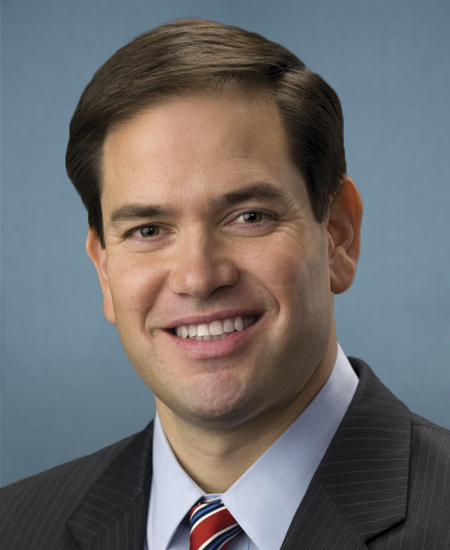
Sen. Marco Rubio
Sponsored bills
Maddy summaryThis bill removes Section 230 immunity from social media platforms that knowingly host verified government accounts from specific foreign governments designated as "censoring foreign adversaries" (including China, Russia, North Korea, Iran, Cuba, Syria, and Venezuela). It targets accounts controlled by those governments' agencies, officials, or entities they own, which display platform verification badges or have over 500,000 followers. Platforms hosting such accounts would lose legal protection under Section 230 for content posted by these accounts. The bill defines "covered social media platforms" as major U.S.-based platforms with over 50 million U.S. monthly users, excluding email and news-focused sites.
Maddy summaryThis bill requires TSA to deny airport security access to travelers presenting certain immigration enforcement documents (like deportation warrants or "Notice to Appear" forms) at checkpoints. It mandates TSA to notify immigration agencies when such documents are presented and to collect biometric data (fingerprints, photos) from non-citizens without valid ID who cannot verify U.S. citizenship. Travelers departing for deportation are exempt from entry restrictions. The law directly affects individuals under immigration supervision attempting to access secured airport areas using prohibited documents.
Maddy summaryThis bill prohibits entities controlled by the governments of Iran, North Korea, China, or Russia from purchasing or leasing agricultural land in the United States. It also prevents these entities from participating in most Department of Agriculture programs if they own or lease agricultural land, with limited exceptions for food safety and certain agency programs. The bill amends existing reporting requirements to include security interests and leases in the Agricultural Foreign Investment Disclosure Act, requiring more comprehensive transparency about foreign ownership. It mandates annual reports to Congress on foreign ownership risks and the effectiveness of current monitoring systems. The legislation aims to protect agricultural land from foreign influence while improving transparency about who owns U.S. farmland.
Maddy summaryS 864, the TASK Act, requires the Securities and Exchange Commission to mandate reporting by publicly traded U.S. companies with operations in China. It directly affects these companies by requiring them to disclose: (1) supply chain sourcing linked to products imported from Xinjiang using forced labor; (2) transactions with companies on U.S. government blacklists (like the Commerce Department’s Entity List or Treasury’s Chinese Military-Industrial Complex list); and (3) annual details about whether Chinese Communist Party committees operate in their Chinese facilities and the committee’s role in business decisions. The bill creates specific, annual disclosure obligations focused on supply chain transparency and foreign ownership ties. This policy change shifts reporting requirements to address specific supply chain and foreign entity risks.
Maddy summaryThis bill amends U.S. Code to establish new requirements for foreign port security assessments. It requires the Secretary to certify that a foreign government or international organization conducted an assessment according to specific standards (including providing sufficient information) and that the government is not a state sponsor of terrorism before the U.S. can accept that assessment. The bill also prohibits agreements with state sponsors of terrorism and automatically applies sanctions to any port under such a government's jurisdiction, deeming it lacking effective antiterrorism measures. These changes directly affect U.S. Coast Guard operations regarding port security evaluations and foreign port access.
Maddy summaryThis bill increases funding for the National Health Service Corps (NHSC) by $625 million in 2024, $675 million in 2025, and $825 million in 2026. It also creates a new demonstration project allocating $50 million annually to let NHSC alumni and current members deploy to the National Disaster Medical System during emergencies. Participants must be NHSC Scholarship or Loan Repayment Program graduates who completed their service, with priority given to those still practicing at their original service sites. The program provides additional loan repayment support (up to 50% of annual NHSC awards) without counting this service toward their original NHSC obligations.
Maddy summaryThis bill requires the U.S. government to address transnational repression - when foreign governments harass, intimidate, or harm individuals living outside their home countries through tactics like digital surveillance, threats to family members, or physical violence. It mandates that annual human rights reports include details about transnational repression incidents, establishes a new interagency strategy to combat this issue, and creates sanctions against foreign officials who engage in such activities. The bill also requires the creation of a confidential tip line for victims, mandates training for government officials to recognize these threats, and directs intelligence agencies to prioritize identifying transnational repression tactics. It directly affects diaspora communities targeted by foreign governments, U.S. government agencies, and foreign governments that engage in these practices.
Maddy summaryS 875 prohibits federal funding for individuals or entities that have agreements, partnerships, or advertising relationships with social media companies headquartered in China, Russia, Iran, North Korea, Cuba, or Venezuela. It directly affects organizations receiving federal funds (like schools, nonprofits, or local governments) that do business with platforms from these countries. The law blocks funding if the social media company meets specific criteria, such as having over 1 million monthly active users and enabling user-generated content sharing. Exceptions include platforms focused solely on product reviews or emergency alerts. This bill imposes a concrete funding restriction based on the country of origin of the social media company involved.
Maddy summaryS 861, the PATRIA Y VIDA Act of 2023, directs U.S. government agencies to establish capacity for transmitting internet access in foreign countries where governments restrict online access and during emergencies in the U.S. It authorizes the State Department and other agencies to maintain this transmission capability and identifies eligible U.S. companies providing "circumvention tools" (software to bypass government internet blocks) to receive rapid funding during foreign censorship crises. The bill requires the FCC and U.S. Agency for Global Media to report to Congress within 60 days on current capabilities and needed resources for these internet access services. This legislation directly affects federal agencies, eligible technology companies, and individuals in countries facing internet censorship.