

Maddy summaryThis bill (S 2394, GUARD Act) amends federal child welfare funding rules to require states to avoid taking adverse actions against parents who oppose medical treatments, social changes (like name/pronoun use), or gender-affirming care for minors. It directly affects parents, guardians, or legal representatives who object to such interventions for minors whose gender identity they believe conflicts with their biological sex (determined at birth). The key mechanism blocks federal funding for any state that discriminates against these parents, and allows affected parents to sue to stop funding and recover money paid to violating states. The bill focuses on altering state eligibility for federal child welfare funds based on parental objections to gender-related care for minors.
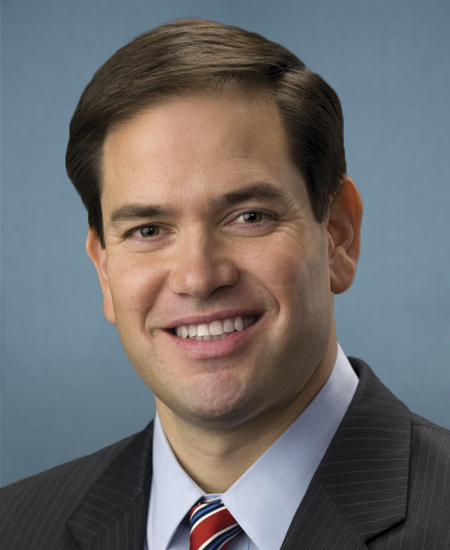
Sen. Marco Rubio
Sponsored bills
Maddy summaryThis bill amends the Uyghur Human Rights Policy Act of 2020 to require the President to identify foreign individuals or entities that knowingly provide material support to or engage in significant transactions related to human rights abuses in Xinjiang. It directly affects foreign persons (including individuals and organizations) who financially support or conduct business with entities involved in such abuses. The key mechanism adds new reporting requirements: the President must now include in annual reports a list of these foreign supporters and transaction participants. The bill takes effect upon enactment and applies to all reports submitted before, on, or after that date.
Maddy summaryThis bill directs the U.S. President to identify Cambodian officials responsible for suppressing democracy and human rights, then impose sanctions including asset blocking and visa restrictions. It requires the President to submit a report on Chinese military activities in Cambodia, particularly at Ream Naval Base and Dara Sakor Airport. The legislation includes provisions for suspending sanctions if Cambodia makes meaningful progress toward releasing political prisoners, ending government suppression of opposition parties, and holding free elections. It builds on existing U.S. restrictions on aid to Cambodia that require the government to take specific steps to improve democratic practices. The bill aims to hold Cambodian officials accountable for human rights violations while addressing concerns about China's military presence in Cambodia.
Maddy summaryThis bill prohibits U.S. government recognition of Bashar al-Assad's Syrian government and blocks federal funds from being used to imply such recognition. It directly affects all U.S. federal officials, employees, and federal funding decisions regarding Syria. The key mechanism requires adherence to existing sanctions under the Caesar Syria Civilian Protection Act of 2019, mandating that U.S. actions must not normalize relations with Assad's regime. The bill enforces current policy without creating new sanctions, focusing on preventing any official U.S. acknowledgment of the Syrian government led by Assad.
Maddy summarySRES 294 is a symbolic Senate resolution expressing support for designating May 2023 as "American Stroke Month." It does not create new laws or allocate funds, but encourages public awareness about stroke prevention, recognition of symptoms (using the F.A.S.T. acronym), and emergency response. The resolution specifically urges Americans to learn stroke risk factors, identify warning signs, and call 911 immediately during a stroke. It also commends organizations and efforts promoting stroke education and care improvements. As a procedural resolution, it directly affects public awareness efforts but has no binding legal effect on policy or healthcare.
Maddy summarySRES 295 is a non-binding Senate resolution expressing solidarity with the Cuban people who protested for freedom and human rights on July 11, 2021. It calls for the immediate release of all political prisoners in Cuba and an end to government repression, including arbitrary arrests and torture. The resolution urges other democratic nations and the European Union to prioritize human rights in Cuba policy and hold abusers accountable, while recognizing prodemocracy activists like independent journalists and labor leaders. It also calls on the international community to support Cuba’s democratic transition by affirming the Cuban people’s right to self-governance and basic freedoms.
Maddy summaryThe SNAP Nutrition Security Act of 2023 amends the Food and Nutrition Act to establish new definitions for "food security" (access to enough food for a healthy life) and "nutrition security" (equitable access to healthy, affordable foods). It requires the USDA to collect store-level data on specific food items purchased by SNAP participants using electronic systems, while exempting this data collection from standard paperwork rules. The bill mandates annual reports to Congress analyzing SNAP participants' food security, nutrition security, and diet quality, plus a detailed food sales report by 2025 using the collected data. These reports will assess program changes and recommend improvements to reduce food insecurity and diet-related health issues like obesity and diabetes. The law directly affects SNAP participants, the USDA, and Congress through enhanced data collection and reporting requirements.
Maddy summaryThis bill requires online platforms (like social media companies) to publicly disclose government requests to moderate content within 7 days. Platforms must share details including which government entity made the request, its rationale, and what actions the platform took. Exceptions apply for law enforcement actions or national security matters. Noncompliance results in daily $50,000 fines enforced by the FCC. The bill aims to increase transparency around government influence on online content moderation.
Maddy summaryThis bill requires federal agencies to report national emergency spending details in the same transparent format as regular federal funds, starting 180 days after enactment. It mandates reporting on allocated funds, committed funds, unobligated balances, and specific program spending breakdowns by object class for every presidentially declared national emergency. The bill also requires unique identifiers for emergency funds and updates data standards by the Office of Management and Budget and Treasury within 180 days. This applies directly to federal agencies managing emergency funds, ensuring consistent public access to spending data previously excluded from transparency rules.
Maddy summaryThis bill prohibits federal agencies from using the term "Latinx" in official communications or forms. It directly affects all federal departments and agencies that produce government documents, such as forms, websites, or public notices. The law requires agencies to use alternative terminology instead of "Latinx" in all official written or electronic communications. This is a procedural change to federal language standards, not a policy affecting individuals or communities.