

Transit to Trails Act This bill directs the Department of Transportation (DOT) to establish the Transit to Trails Grant Program to award grants to certain governmental and private entities for projects that increase transportation access and mobility to public lands, inland and coastal waters, parkland, or monuments for critically underserved communities. For example, DOT must (1) prioritize approving certain projects, such as projects that use low-or zero-emission vehicles and those that provide free or discounted rates for low-income riders; (2) develop transportation planning procedures for projects conducted under the program that are consistent with metropolitan and statewide planning processes; and (3) ensure that all new transportation connectors and routes developed under the program are accessible to people with disabilities. The bill requires grant awards to be at least $25,000 and not more than $500,000. Further, the bill requires publicized schedules and routes for transportation systems that are developed after the receipt of a grant under the program.
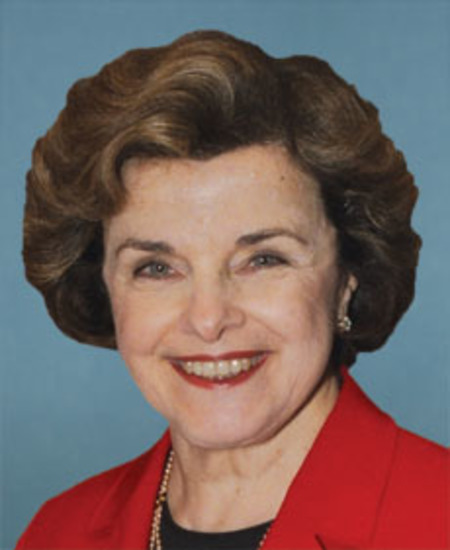
Sen. Dianne Feinstein
Sponsored bills
Reach Every Mother and Child Act of 2021 This bill authorizes the President to provide assistance to implement a comprehensive five-year strategy to contribute toward the global goal of ending preventable child and maternal deaths by 2030.
Accountability of Leaders in Education to Report Title IX Investigations Act or the ALERT Act This bill requires institutions of higher education (IHEs) that participate in federal student-aid programs to certify annually with the Department of Education that they have reviewed reports of misconduct by their employees involving domestic violence, dating violence, sexual assault, or stalking. The certification must include a confirmation that the IHE's president and board members involved in the review did not interfere with or influence investigations or dispositions.
Advancing International and Foreign Language Education Act This bill reauthorizes through FY2027 and otherwise revises international education programs. These programs provide grants to institutions of higher education and related entities to (1) enhance instruction in international and foreign language studies, and (2) promote international business skills and education. First, the bill reauthorizes programs related to international and foreign language studies. Specifically, it extends (1) the Graduate and Undergraduate Language and Area Centers and Programs, which include the National Resource Centers program; (2) the Language Resource Centers; (3) the Undergraduate International Studies and Foreign Language Programs; and (4) the American Overseas Research Centers. Next, the bill reauthorizes the Foreign Language and Area Studies Fellowships program. It also revises the program to permit graduate students to receive a stipend for the beginning, intermediate, or advanced study of a foreign language related to the student's area of specialization. Further, the bill extends the Technological Innovation and Cooperation for Foreign Information Access program. It also modifies the program, such as by (1) revising the types of available grants, and (2) allowing the Department of Education to establish a national database on international and foreign language education. Finally, the bill reauthorizes programs related to international business skills and education. Specifically, it reauthorizes the Centers for Business Education program. It also reauthorizes the Education and Training program and otherwise makes changes to the program, including by (1) renaming the program; and (2) mandating certain program activities, such as the incorporation of specified programs and studies into professional education and technical training curricula.
Safeguarding Human Rights in Arms Exports Act of 2021 or the SAFEGUARD Act of 2021 This bill establishes specified measures to prevent the sale, export, or transfer of defense articles or defense services to foreign countries for use in violation of international humanitarian law or internationally recognized human rights. These measures include (1) prohibiting arms sales to countries committing genocide or war crimes, (2) requiring a consideration of human rights practices and democratization in any foreign country to which an arms sale is contemplated, and (3) providing for congressional oversight of arms exports to foreign countries wherein certain human rights violations have occurred.
Military Hunger Prevention Act This bill requires the Department of Defense (DOD) to pay a basic needs allowance to certain low-income members of the Armed Forces. Specifically, those eligible for the basic needs allowance are members who (1) have completed initial entry training, (2) have a gross household income that did not exceed an amount equal to 130% of the federal poverty guidelines of the Department of Health and Human Services (HHS), and (3) do not elect to decline the allowance. In situations where a household contains two or more eligible members, the bill specifies that only one allowance may be paid per year to one member they jointly elect. The amount of the allowance must be the aggregate amount equal to 130% of the HHS federal poverty guidelines minus the gross household income of the covered member during the preceding year divided by 12. The Defense Finance and Accounting Service (DFAS) of DOD must notify, in writing, individuals determined to be eligible for the allowance. The notice must include information regarding financial management and assistance programs administered by DOD for which the individuals are also eligible. Individuals who seek to receive the allowance must submit specified information to DFAS.
USTR Inspector General Act of 2021 This bill requires the President to appoint an Inspector General of the Office of the U.S. Trade Representative (USTR). Among other responsibilities, the Inspector General shall (1) conduct and supervise audits and investigations relating to the programs and operations of the USTR, (2) recommend policies for preventing and detecting fraud and abuse in those programs, and (3) provide a means for keeping the USTR and Congress informed about problems and deficiencies in those programs and operations.
Stop Corporate Inversions Act of 2021 This bill revises rules for the taxation of inverted corporations (i.e., U.S. corporations that acquire foreign companies to reincorporate in a foreign jurisdiction with income tax rates lower than the United States). The bill provides that a foreign corporation that acquires the properties of a U.S. corporation or partnership after May 8, 2014, shall be treated as an inverted corporation and thus subject to U.S. taxation if, after such acquisition (1) it holds more than 50% of the stock of the new entity (expanded affiliated group), or (2) the management or control of the new entity occurs primarily within the United States and the new entity has significant domestic business activities.
Homeless Children and Youth Act of 2021 This bill modifies definitions relating to homeless individuals and homeless children or youth as used by the Department of Housing and Urban Development (HUD) to verify eligibility for HUD homeless assistance programs, including the Continuum of Care program. Specifically, the bill aligns these terms with the definitions of homeless used to verify eligibility for other federal assistance programs. The definitions are also amended to increase access to federal homeless programs by homeless children, youth, and families. Additionally, the community-wide homeless management information system shall be made available to the public on HUD's website.
Coronavirus Housing Counseling Improvement Act This bill authorizes additional housing counseling services provided through the Neighborhood Reinvestment Corporation. Funding priority is given to counseling organizations that target low-income and minority homeowners, renters, individuals experiencing homelessness, and individuals at risk of homelessness.