

Carried Interest Fairness Act of 2021 This bill modifies the tax treatment of carried interest, which is compensation that is typically received by a partner of a private equity or hedge fund and is based on a share of the fund's profits. (Under current law, carried interest is taxed as investment income rather than at ordinary income tax rates.) This bill includes provisions that set forth a special rule for the inclusion in gross income of partnership interests transferred in connection with the performance of services, treat as ordinary income the net capital gain with respect to an investment services partnership interest except to the extent such gain is attributable to a partner's qualified capital interest, exempt income from investment services partnership interests from treatment as qualifying income of a publicly traded partnership, exempt certain family partnerships from the application of this bill, increase the penalty for underpayments of tax resulting from failure to treat income from an investment services partnership interest as ordinary income, and include income and loss from an investment services partnership interest for purposes of determining net earnings from self-employment and applicable self-employment taxes. The bill defines investment services partnership interest as any interest in a partnership held by a person who provides services to a partnership by (1) advising the partnership about investing in, purchasing, or selling specified assets; (2) managing, acquiring, or disposing of specified assets; or (3) arranging financing with respect to acquiring specified assets.
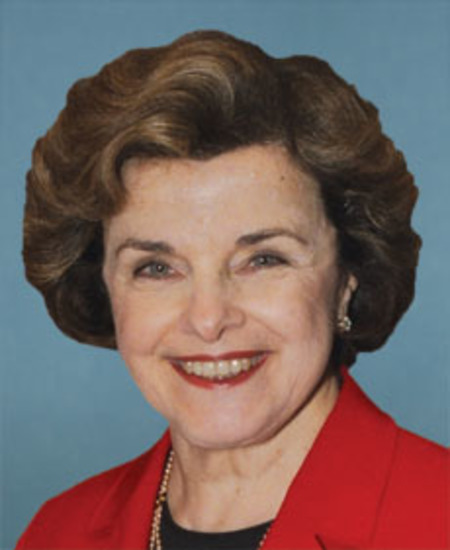
Sen. Dianne Feinstein
Sponsored bills
Military Child Care Expansion Act of 2021 This bill modifies and implements policies to update child care facilities and administration at the Department of Defense (DOD). Specifically, the bill removes certain requirements for members of the Armed Forces to receive funding for an in-home child care provider under the DOD pilot program that provides financial assistance to such members who pay for in-home child care. The bill also allows DOD to expand the pilot program to additional locations (currently it is authorized for five). DOD must establish a three-year pilot program to expand access to child care for members of the Armed Forces by entering into agreements with public or private child care facilities or development centers. Under the bill, DOD must determine the (1) root causes contributing to poor or failing facility conditions at its child development centers, and (2) total cost to improve the conditions of such centers. The Government Accountability Office must review the determinations and make recommendations on how to improve DOD child development center conditions. Lastly, DOD must utilize its existing authority to carry out minor military construction projects to construct child development centers.
Promoting Energy Alternatives is Key to Emission Reductions Act of 2021 or the PEAKER Act of 2021 This bill addresses the emissions from peaker plants and provides financial incentives for renewable energy to reduce the need for peaker plants. Peaker plants are defined as fossil fuel-fired power plants or units of power plants that are run primarily to meet peak electricity demand. In other words, peaker plants are run where there is above average energy demand, such as during extremely hot or cold weather. The bill establishes an additional investment tax credit for renewable energy generation and battery storage to replace the need for peaker plants in disadvantaged communities. In addition, the Department of Energy (DOE) must establish a grant program to provide up to $1 billion annually through FY2032 to eligible entities for clean energy projects. Specifically, grants must be awarded to assist eligible entities in carrying out (1) projects associated with the construction, installation, or acquisition of qualifying renewable energy facilities and qualifying energy storage facilities; or (2) community energy proposals or community energy studies to reduce or replace the need for peaker plants. Entities that are eligible to receive grants include state or local governments, nonprofit organizations, community-owned energy generation facilities or energy storage facilities located in disadvantaged communities, community-based energy cooperatives, or certain partnerships. DOE must also assess and report on the location of each peaker plant, the quantity and type of pollution each plant is producing, and related data as specified by the bill.
Untraceable Firearms Act of 2021 This bill establishes a federal statutory framework to regulate the manufacture, sale, offer to sell, transfer, purchase, and receipt of ghost guns (i.e., guns without serial numbers). Additionally, the bill revises the federal statutory framework regulating the manufacture, possession, sale, import, shipment, delivery, receipt, and transfer of undetectable firearms. Among the revisions, the bill defines undetectable firearm as a firearm without a major component wholly made of detectable material.
Jobs and Childcare for Military Families Act of 2021 This bill allows an employer a work opportunity tax credit for hiring an individual who is certified by a designated local agency as being, as of the hiring date, the spouse or domestic partner of a member of the Armed Forces, and requires the creation of programs for uniformed services families to pay for childcare on a pretax basis. Specifically, an employer may receive a tax credit equal to 40% of a new employee's first-year wages if the employer hires a service member's spouse or domestic partner (as recognized under state law or by the Armed Forces). Currently, a similar tax credit exists for employers who hire certain disadvantaged individuals, including disadvantaged veterans. The bill requires the Department of Defense, the Department of Homeland Security (with respect to the Coast Guard), the Department of Commerce (with respect to officers of the National Oceanic and Atmospheric Administration), and the Department of Health and Human Services (with respect to the Public Health Service) to implement flexible spending arrangements that permit members of the uniformed services to use basic pay and compensation to pay for childcare services for their dependent children on a pretax basis.
Voters' Access to Water Act This bill prohibits states from restricting the donation of food or nonalcoholic beverages to individuals who are outside of the entrance of a polling place for a federal election if such items are distributed without regard to electoral participation or political preference. However, states may prohibit individuals who are distributing these items from engaging in political or electioneering activity.
This resolution thanks the teachers of the United States and promotes the teaching profession by encouraging students, parents, school administrators, and public officials to recognize National Teacher Appreciation Week.
This resolution condemns the acts of gun violence that led to the tragic loss of eight lives in Georgia on March 16, 2021.
Military Justice Improvement and Increasing Prevention Act of 2021 This bill modifies the process and policy related to the disposition of charges and convening of courts-martial for certain sexual assault cases and other specified offenses under the Uniform Code of Military Justice (UCMJ). Among other elements, the bill provides that the determinations on the preferral, disposition, and referral of charges for specified offenses under the UCMJ must be made by a commissioned officer of the Armed Forces who is designated as a court-martial convening authority (in grade O-6 or higher) and who is available for detail as trial counsel, has significant trial experience, and is outside the chain of command of the member subject to the charges.
Creating Opportunities Now for Necessary and Effective Care Technologies (CONNECT) for Health Act of 2021 or the CONNECT for Health Act of 2021 This bill expands coverage of telehealth services under Medicare. Among other provisions, the bill allows the Centers for Medicare & Medicaid Services (CMS) to waive certain restrictions, such as restrictions on the types of technology that may be used; permanently removes geographic restrictions on originating sites (i.e., the location of the beneficiary) and allows the home of the beneficiary to serve as the originating site for all services; permanently allows federally qualified health centers and rural health clinics to serve as the distant site (i.e., the location of the health care practitioner); and allows the CMS to generally waive coverage restrictions during any public health emergency. Additionally, the CMS must report on the effects of expanded telehealth services during the COVID-19 public health emergency, including with respect to the utilization, quality, and outcomes of services. The Center for Medicare and Medicaid Innovation may also test alternative payment models relating to expanded telehealth services.