

Rescuing Every Contributor from Unwanted Recurrences (RECUR) Act This bill requires certain disclosures for recurring political contributions or donations. Specifically, the bill requires any person who is soliciting a recurring contribution or donation for a political committee, an independent expenditure, or an electioneering communication to receive the affirmative consent of the contributor or donor. This affirmative consent cannot be a passive action by the contributor or donor, such as failing to uncheck a prechecked box. In addition, any person who accepts a recurring contribution or donation must (1) provide a receipt for the initial contribution or donation and for each recurrence that clearly and conspicuously discloses all material terms, (2) provide all information needed to cancel the recurring contribution or donation in each communication with the contributor or donor, and (3) immediately cancel recurring contributions or donations upon request of the contributor or donor.
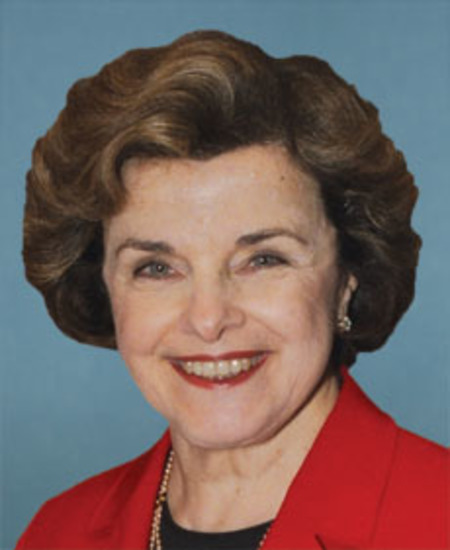
Sen. Dianne Feinstein
Sponsored bills
Financial Factors in Selecting Retirement Plan Investments Act This bill permits fiduciaries of employer-sponsored retirement plans to consider environmental, social, governance, or similar factors when making investment decisions. It also nullifies the rule published by the Employee Benefits Security Administration on November 13, 2020, that requires fiduciaries to select investments and investment courses of action based solely on financial considerations.
Global Pandemic Prevention and Biosecurity Act This bill establishes a task force and requires the Department of State and the U.S. Agency for International Development (USAID) to take specified measures to respond to and prevent zoonotic (animal-to-human) disease outbreaks. Specifically, the bill establishes the Global Zoonotic Disease Task Force to ensure an integrated approach to preventing, detecting, preparing for, and responding to zoonotic spillover and zoonotic disease outbreaks that may pose a threat to global health security. The bill directs the State Department and the USAID to work with international stakeholders on measures that include (1) preventing zoonotic spillover events, (2) preventing degradation and fragmentation of forests and other ecosystems to minimize interactions between wildlife and human populations, and (3) strengthening global capacity for detection of zoonotic diseases with pandemic potential.
COVID - 19 Hate Crimes Act This bill requires a designated officer or employee of the Department of Justice (DOJ) to facilitate the expedited review of hate crimes and reports of hate crimes. DOJ must issue guidance for state, local, and tribal law enforcement agencies on establishing online hate crime reporting processes, collecting data disaggregated by protected characteristic (e.g., race or national origin), and expanding education campaigns. Additionally, DOJ and the Department of Health and Human Services must issue guidance aimed at raising awareness of hate crimes during the COVID-19 (i.e., coronavirus disease 2019) pandemic. The bill establishes grants for states to create state-run hate crimes reporting hotlines. It also authorizes grants for states and local governments to implement the National Incident-Based Reporting System and to conduct law enforcement activities or crime reduction programs to prevent, address, or respond to hate crimes. Finally, in the case of an individual convicted of a hate crime offense and placed on supervised release, the bill allows a court to order that the individual participate in educational classes or community service as a condition of supervised release.
Helping American Victims Afflicted by Neurological Attacks Act of 2021 or the HAVANA Act of 2021 This bill specifically authorizes the Central Intelligence Agency, the Department of State, and other agencies to provide payments to agency personnel who incur brain injuries from hostilities while on assignment. Specifically, the bill allows agency personnel and their families to receive payments for brain injuries that are incurred (1) during a period of assignment to a foreign duty station; (2) in connection with war, insurgency, hostile acts, terrorist activity, or other agency-designated incidents; and (3) not as the result of willful misconduct. The bill's authority applies to injuries incurred before, on, or after the date of the bill's enactment. Agencies must submit classified reports on the bill's implementation, including the number of payments made and the amount of each payment. Since 2016, some intelligence, diplomatic, and other governmental personnel have reported experiencing unusual cognitive and neurological impairments while on assignment (particularly abroad), the source of which is currently under investigation. Symptoms were first reported by personnel stationed in Cuba and have since been collectively referred to as Havana Syndrome .
Filipino Veterans Family Reunification Act of 2021 This bill exempts from worldwide or numerical limitations certain family-sponsored immigrant visas for the sons and daughters of Filipino World War II veterans who were naturalized under certain laws providing for naturalization for service during World War II.
This resolution expresses support for the goals and ideals of National Sexual Assault Awareness and Prevention Month.
Federal Home Loan Banks' Mission Implementation Act This bill generally expands the ability of Federal Home Loan Banks (FHLBs) to provide advances and grants for activities related to small businesses, affordable housing, and community development. The 11 regional FHLBs serve as government-sponsored enterprises to support mortgage lending and related community investment through advances to member financial institutions. These advances are secured by assets such as mortgages and other loans. Specifically, the bill allows FHLBs to provide advances that are secured by (1) loans guaranteed by the Small Business Administration, and (2) certain loans made in response to the economic impact of the COVID-19 pandemic and guaranteed or insured by the federal government. The bill also expands the availability of advances to certain community development financial institutions and credit unions. It also gives the Federal Housing Finance Agency discretion in setting the average asset maximum for certain community financial institutions to qualify for an advance. However, this maximum must not be more than $10 billion. Currently, a community financial institution must have less than $1 billion in average total assets to qualify. Furthermore, the bill exempts from taxation for two years after the conclusion of the COVID-19 emergency period certain municipal bonds guaranteed by an FHLB. The bill also increases the percentage of earnings FHLBs must annually contribute to the Affordable Housing Program and sets aside a specified percentage to benefit tribes under this program.
Real Education and Access for Healthy Youth Act of 2021 This bill requires the Department of Health and Human Services (HHS) to establish grants to support sex education and sexual health services for young people (ages 10 through 29) and repeals requirements that apply to certain federally funded sex education programs. HHS must award grants, in coordination with the Department of Education, to (1) provide sex education to young people through elementary and secondary schools, institutions of higher education, and youth-serving organizations; and (2) train education professionals to effectively teach, and otherwise support, sex education. Sex education refers to high quality teaching and learning that follows, to the maximum extent practicable, specified educational standards; covers a variety of topics concerning sex and sexuality; explores values and beliefs about those topics; and helps young people gain skills to navigate relationships and manage sexual health. Additionally, HHS must award grants for the provision of sexual health services to marginalized youth to youth-serving organizations and health care entities that are eligible to receive covered outpatient drugs at reduced prices through the 340B drug discount program. Recipients of any of these grants must comply with certain nondiscrimination requirements. In addition, they may not use funds for sex education programs or sexual health services that provide incomplete or inaccurate medical information or fail to address specified issues. The bill also eliminates prohibitions regarding the content of specified federally funded sexual health education and information programs and repeals the Abstinence Only Until Marriage program.
Credit for Caring Act of 2021 This bill allows an eligible caregiver a tax credit of up to $5,000 for 30% of the cost of long-term care expenses that exceed $2,000 in a taxable year. The bill defines eligible caregiver as an individual who has earned income for the taxable year in excess of $7,500 and pays or incurs expenses for providing care to a spouse or other dependent relative with long-term care needs.