

Rights for the Transportation Security Administration Workforce Act of 2021 or the Rights for the TSA Workforce Act of 2021 This bill modifies the workplace rights, protections, and benefits applicable to Transportation Security Administration (TSA) personnel. Specifically, the bill within 180 days, eliminates personnel authorities of the Department of Homeland Security (DHS) and the Department of Transportation governing the conditions of employment for TSA employees, thus making TSA employees subject to the personnel management system applicable to other federal employees; sets forth transition rules that protect the pay rates, leave rights, and other rights of TSA and Federal Air Marshal Service employees; and requires DHS to consult with the labor organization certified by the Federal Labor Relations Authority to carry out the conversion of such positions. The bill also directs the TSA to implement in-person or remote mental health programs at each field office of the Federal Air Marshal Service and consult with labor associations to address concerns regarding federal air marshals, including mental health and suicide rates; requires DHS to prioritize the hiring of veterans, including disabled veterans; and directs the TSA to ensure its employees are provided proper guidance regarding prevention and protections against the coronavirus.
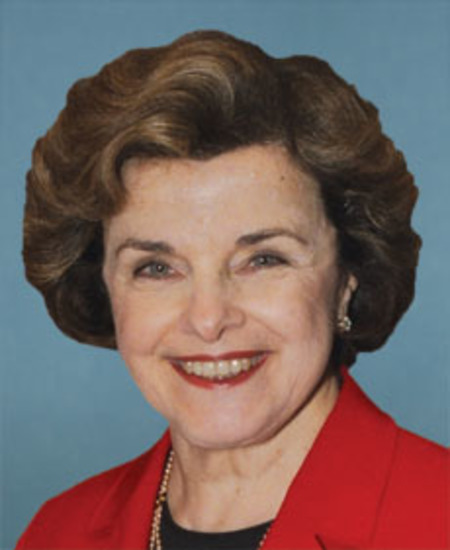
Sen. Dianne Feinstein
Sponsored bills
Wildfire Emergency Act of 2021 This bill provides for programs and activities in support of forest restoration, wildfire mitigation, and energy resilience. The Department of Agriculture (USDA) shall select landscape-scale forest restoration projects to implement on National Forest System land and on land adjoining National Forest System land. USDA shall establish a pilot program under which USDA may enter into conservation finance agreements with public or private persons to implement and monitor such projects. The Department of Energy shall establish a program to support critical infrastructure and microgrids, including by improving the energy resilience and power needs of critical facilities (e.g., hospitals) through the use of microgrids, renewable energy, energy efficiency, reduced electricity demand, and on-site storage. USDA and the Department of the Interior shall establish one or more centers in western states to train individuals in methods relevant to the mitigation of wildfire risk. USDA shall establish a competitive grant program to support workforce development in forestry and fire management.
Reproductive Rights are Human Rights Act of 2021 This bill directs the Department of State to include in its annual reports on human rights in countries receiving U.S. development and security assistance a discussion of the status of reproductive rights in each country. This must include whether a country has adopted and enforced policies to (1) promote access to contraception and accurate, nondiscriminatory family planning and sexual health information; (2) provide services to ensure safe and healthy pregnancy and childbirth; (3) expand or restrict access to safe abortion services; and (4) prevent and treat sexually transmitted diseases. For each country, the reports shall also contain (1) data concerning pregnancy-related injuries and deaths; and (2) a description of the nature and extent of discrimination and violence against women, girls, and LGBTQI+ individuals in health care settings and the relevant government's response to such actions.
Safe Gun Storage Act of 20 21 This bill requires safety standards for firearm locks and safes. Under such standards, firearm locks must be reasonably designed to (1) prevent the firearm from discharging while the lock is activated, and (2) prevent unauthorized access to the firearm. Further, firearm safes must be reasonably designed to (1) secure firearms, and (2) prevent unauthorized access to the safe through physical manipulation or damage.
Accelerating Access to Critical Therapies for ALS Act This bill establishes grant programs to address neurodegenerative diseases, such as amyotrophic lateral sclerosis (also known as ALS or Lou Gehrig's disease), and contains other related provisions. The Department of Health and Human Services (HHS) shall award grants to eligible entities to facilitate patients' access to investigational drugs that diagnose or treat ALS. The Food and Drug Administration (FDA) shall award grants to public and private entities to cover the costs of research and development of drugs that diagnose or treat ALS and other severely debilitating neurodegenerative diseases. HHS shall also establish the Public-Private Partnership for Neurodegenerative Diseases between the National Institutes of Health, the FDA, and at least one eligible entity (generally, an institution of higher education or a nonprofit organization). The partnership shall support the development and regulatory review of drugs that address ALS and other rare neurodegenerative diseases. The FDA shall publish on its website a five-year action plan for fostering the development of drugs that improve or extend the lives of people living with rare neurodegenerative diseases.
Crime Gun Tracing Modernization Act of 2021 This bill requires the National Tracing Center within the Bureau of Alcohol, Tobacco, Firearms and Explosives to establish and maintain an electronic, searchable database of records related to certain firearms transactions.
Voters on the Move Registration Act of 2021 This bill requires the Consumer Financial Protection Bureau to develop, and specified agencies to distribute, a statement providing individuals with information on how to register to vote and their voting rights. This information must be provided to individuals upon their participation in certain rental assistance programs or application for certain residential mortgages.
Extreme Risk Protection Order Act of 2021 This bill establishes grants to support the implementation of extreme risk protection order laws at the state and local levels, extends federal firearms restrictions to individuals who are subject to extreme risk protection orders, and expands related data collection. Extreme risk protection order laws, or red flag laws, generally allow certain individuals (e.g., law enforcement officers or family members) to petition a court for a temporary order that prohibits an at-risk individual from purchasing and possessing firearms. Among its provisions, the bill directs the Department of Justice to establish a grant program to help states, local governments, Indian tribes, and other entities implement extreme risk protection order laws; extends federal restrictions on the receipt, possession, shipment, and transportation of firearms and ammunition to individuals who are subject to extreme risk protection orders; and requires the Federal Bureau of Investigation to compile records from federal, tribal, and state courts and other agencies that identify individuals who are subject to extreme risk protection orders.
This resolution congratulates the students, families, teachers, administrators, and staff of public charter schools across the United States for (1) making ongoing contributions to public education, (2) making impressive strides in closing the academic achievement gap in U.S. schools, and (3) improving and strengthening the public school system. The resolution supports the ideals and goals of the 22nd annual National Charter Schools Week.
This resolution expresses support for the designation of DIPG Awareness Day. DIPG is diffuse intrinsic pontine glioma, a terminal childhood brain cancer.