

Maddy summaryThis Senate resolution designates April 2023 as "Financial Literacy Month" to raise public awareness about the importance of personal financial education and the consequences of financial illiteracy. It cites statistics showing widespread challenges, including 4.5% of U.S. households being unbanked, high credit card debt (47% of adults), and limited school-based financial education (only 23 states require personal finance courses). The resolution calls on federal, state, local, schools, nonprofits, and businesses to observe the month with educational programs. It does not create new laws or funding but aims to highlight existing financial literacy gaps affecting all Americans.
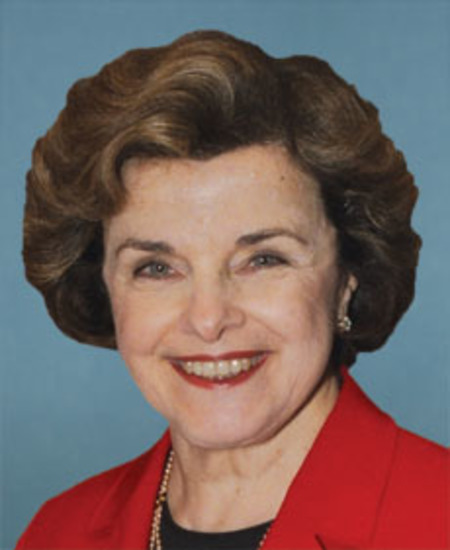
Sen. Dianne Feinstein
Sponsored bills
Maddy summarySRES 188 is a symbolic Senate resolution celebrating the 75th anniversary of Israel's founding on May 14, 2023. It formally recognizes Israel's establishment, reaffirms the U.S.-Israel partnership, and highlights shared democratic values, security cooperation, and diplomatic achievements like the Abraham Accords. The resolution has no policy impact or direct effect on individuals or legislation - it serves solely as a ceremonial expression of support. It was introduced by a bipartisan group of senators and passed without implementing new laws or funding.
Maddy summaryS 1393, the Sunlight in Workplace Harassment Act, requires publicly traded companies (covered issuers) to publicly report annual data on workplace harassment and discrimination settlements and judgments via their Form 10-K filings. Companies must disclose total numbers and dollar amounts for cases involving sexual abuse, harassment, or discrimination based on protected characteristics (like sex, race, disability, or sexual orientation), resolution times, and their prevention measures - while protecting victim privacy by omitting names and allowing victims to opt out of certain disclosures. This applies to settlements involving employees or executives and covers both internal resolutions and legal outcomes. The bill aims to increase transparency about corporate handling of such incidents without mandating new legal standards.
Maddy summarySJRES 4 is a joint resolution that removes the 1972 deadline for states to ratify the Equal Rights Amendment (ERA), which was originally proposed in House Joint Resolution 208. It declares that the ERA is valid as part of the U.S. Constitution if ratified by three-fourths of states (38), regardless of the expired deadline. The resolution directly affects the ERA ratification process, making it possible for states to complete ratification without time constraints. As of 2023, 38 states had already ratified the ERA, and this resolution would finalize its inclusion in the Constitution if enacted.
Maddy summaryThe Child Care for Working Families Act establishes a new federal program to provide affordable, high-quality child care for working families with children under age 6. It requires states to implement a sliding fee scale (with no copayment for families earning up to 85% of state median income) and develop a tiered quality system for child care providers, with payment rates that support staff wages comparable to elementary educators. The bill prioritizes access for underserved populations including children with disabilities, children experiencing homelessness, children in foster care, and children from low-income families, while requiring states to improve child care quality and supply through dedicated funding streams. States must submit detailed plans demonstrating how they will meet these requirements to receive federal funding, which will be provided through a combination of direct child care assistance and quality improvement activities.
Maddy summaryThis bill clarifies what counts as a "conviction" for immigration purposes under U.S. law. It excludes dismissed, expunged, or deferred cases, probation without judgment, and appeals from being treated as convictions that could lead to deportation. It also allows sentencing courts to recommend against deportation for certain immigrants with past convictions, after notifying immigration authorities. The law would directly affect immigrants facing removal based on older or resolved legal cases that no longer qualify as "convictions" under this definition.
Maddy summaryThe Forced Arbitration Injustice Repeal Act (S 1376) would prohibit businesses from requiring customers, employees, or small businesses to agree to private arbitration for future employment, consumer, antitrust, or civil rights disputes. It also bans agreements that prevent people from joining class or collective lawsuits in these areas. The bill makes such forced arbitration clauses unenforceable and ensures courts - not arbitrators - decide if the law applies. This directly affects individuals and small businesses in disputes involving workplace discrimination, product issues, unfair competition, or civil rights violations, allowing them to seek justice collectively in court.
Maddy summaryS 1329, the Armenian Genocide Education Act, establishes a program through the Librarian of Congress to support K-12 education about the 1915-1923 Armenian Genocide. The program develops and distributes educational resources (including digital tools and print materials), provides teacher training through workshops and fellowships, and maintains an online resource hub on the Library of Congress website. It directly affects local school districts, independent schools, and educational organizations that adopt the program’s materials into their curricula. The program is funded with $2 million annually for five years, requiring the Librarian to submit annual reports on its implementation.
Maddy summaryS 1383 restricts the possession of firearm silencers and mufflers for most individuals, making it unlawful to import, sell, manufacture, transfer, or possess them except for specific exemptions. These exemptions include use by federal, state, or campus law enforcement officers (defined as officers employed by eligible private colleges with arrest powers), nuclear facility security personnel, and licensed manufacturers testing under Attorney General authorization. The bill also establishes a federal buy-back program using Byrne grant funds, allowing individuals to voluntarily surrender silencers/mufflers for compensation, with the Attorney General required to implement this program within 90 days of enactment. The law takes effect 90 days after enactment.
Maddy summaryThe WIPPES Act (S 1350) requires manufacturers and retailers to label specific types of premoistened wipes with a standardized "Do Not Flush" notice and symbol. It directly affects producers of baby wipes, cleaning wipes (including bathroom and hard surface cleaners), and personal care wipes (like makeup remover or feminine hygiene wipes) that could be flushed. The law mandates clear, visible labeling on packaging according to strict placement rules (e.g., on cylindrical packaging, flexible film, or rigid containers) to ensure consumers see the warning each time a wipe is dispensed. The goal is to prevent sewer blockages and environmental harm caused by flushing these wipes, which often do not break down safely.