

Eliminating a Quantifiably Unjust Application of the Law Act or the EQUAL Act This bill eliminates the federal sentencing disparity between drug offenses involving crack cocaine and powder cocaine. Currently, different threshold quantities of crack cocaine and powder cocaine (e.g., 28 grams of crack cocaine and 500 grams of powder cocaine) trigger the same statutory criminal penalties. This bill eliminates the lower quantity thresholds for crack cocaine offenses. Under the bill, the same threshold quantities of crack cocaine and powder cocaine trigger the same statutory criminal penalties. The change applies to future cases and cases pending on the date of enactment. With respect to past cases, the bill authorizes resentencing of a defendant who was convicted or sentenced for a crack cocaine offense before the date of enactment.
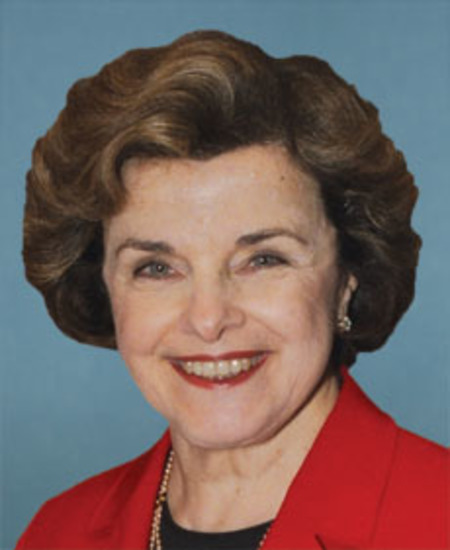
Sen. Dianne Feinstein
Sponsored bills
SOAR Permanent Authorization Act This bill permanently reauthorizes and amends the Scholarships for Opportunity and Results (SOAR) Program, which provides education funding for the District of Columbia, including for private school vouchers, public schools, and public charter schools. The bill requires participating private schools to be fully accredited by (1) an accrediting body with jurisdiction in the District that is recognized by the Student and Visitor Exchange English Language Program administered by U.S. Immigration and Customs Enforcement, or (2) any international accrediting body designated by the Department of Education (ED). The bill revises the manner in which tutoring services provided under the program are funded. The bill revises several requirements concerning SOAR evaluations, including concerning (1) frequency; (2) ED's and the Institute of Education Sciences' duties; and (3) the issues to be evaluated, including high school and college performance measurements.
Build America's Libraries Act This bill establishes and provides funds through FY2024 for the Build America's Libraries Fund, from which the Institute of Museum and Library Services (IMLS) must allocate funding to states and, through them, need-based grants to libraries to make long-term improvements to library facilities. The IMLS must also award grants to Indian tribes and organizations that primarily serve and represent Native Hawaiians. Specifically, the bill requires each state that receives an allocation, and each library that receives a grant, to carry out certain activities to improve library facilities. These activities include constructing and renovating library facilities, investing in infrastructure projects to improve internet access and connectivity, improving indoor air quality, and making facilities accessible to individuals with disabilities. The bill also outlines administrative and oversight provisions, including by requiring library projects to use iron and steel products that are produced in the United States.
Global Health, Empowerment and Rights Act This bill establishes that a foreign nongovernmental organization shall not be disqualified from receiving certain U.S. international development assistance solely because the organization provides medical services using non-U.S. government funds if the medical services are legal in both the United States and the country in which they are being provided. Such foreign organizations shall not be subject to requirements relating to their use of non-U.S. funds for advocacy or lobbying activities, other than those that apply to U.S. nongovernmental organizations. Current U.S. policy prohibits various foreign assistance from going to a foreign nongovernmental organization unless it agrees to not perform or actively promote abortions.
West Coast Ocean Protection Act of 2021 This bill prohibits the Department of the Interior from issuing a lease for the exploration, development, or production of oil or natural gas in any area of the Outer Continental Shelf off the coast of California, Oregon, or Washington.
Raise the Wage Act of 2021 This bill increases the federal minimum wage for regular employees over a 5-year period, for tipped employees, and for newly hired employees who are less than 20 years old. The bill sets forth a schedule of annual increases in the federal minimum wage for individuals with disabilities. The Department of Labor shall no longer issue special certificates for the payment of subminimum wages to such individuals after the final wage increase under this bill for such individuals takes effect. Labor shall provide, upon request, technical assistance and information to employers to (1) help them transition their practices to comply with wage increases and other requirements under this bill for individuals with disabilities, and (2) ensure continuing employment opportunities for such individuals. The bill eliminates the separate minimum wage requirements for tipped, newly hired, and disabled employees. After a specified period, these employees shall be paid the same minimum wage as regular employees. Labor must publish any increase in the minimum wage in the Federal Register and on its website 60 days before it takes effect.
Commission to Study and Develop Reparation Proposals for African Americans Act This bill establishes the Commission to Study and Develop Reparation Proposals for African Americans. The commission shall examine slavery and discrimination in the colonies and the United States from 1619 to the present and recommend appropriate remedies. The commission shall identify (1) the role of the federal and state governments in supporting the institution of slavery, (2) forms of discrimination in the public and private sectors against freed slaves and their descendants, and (3) lingering negative effects of slavery on living African Americans and society.
This bill requires the federal government to pay states for 100% of the cost of National Guard duty for a mission assignment validated by the Federal Emergency Management Agency pursuant to certain declarations related to the COVID-19 (i.e., coronavirus disease 2019) public health emergency. The bill applies to declarations, with respect to COVID-19, of major disasters, emergencies, national emergencies, and public health emergencies.
Kobe Bryant & Gianna Bryant Helicopter Safety Act This bill directs the Federal Aviation Administration (FAA) to issue regulations to implement National Transportation Safety Board recommendations for crash-resistant systems with respect to existing and new U.S.-registered turbine-powered rotorcraft (e.g., a helicopter) certificated for six or more passenger seats. Specifically, the FAA must require all U.S.-registered turbine-powered rotorcraft certificated for six or more passenger seats to be equipped with a flight data recorder, a cockpit voice recorder, and a terrain awareness and warning system. The FAA may exempt any civilian helicopter from one or more of the equipment requirements.
Drug-Free Communities Pandemic Relief Act This bill authorizes the Drug-Free Communities Support Program, subject to certain limitations, to waive matching funds requirements applicable to certain grants for reducing substance use among youth. Before waiving these requirements, the program must determine that a grantee is unable to raise funds because of the COVID-19 (i.e. coronavirus disease 2019) emergency. Currently, the Office of National Drug Control Policy administers this program, and community coalitions that receive the grants must match a specified percentage of the federal award amount with nonfederal funds, including in-kind contributions.