USPS Fairness Act This bill repeals the requirement that the U.S. Postal Service annually prepay future retirement health benefits.
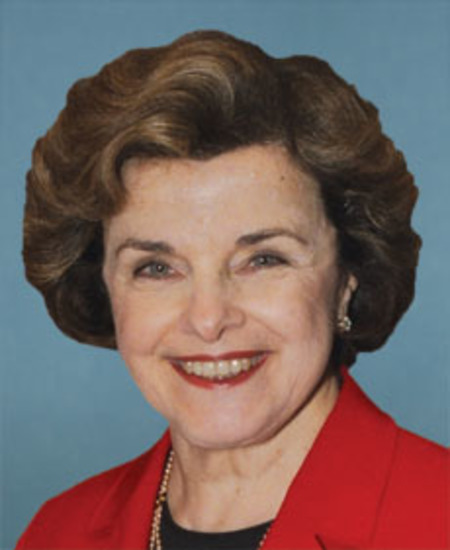
Sen. Dianne Feinstein
Sponsored bills
This resolution designates January 2021 as National Stalking Awareness Month. Additionally, it does the following: applauds the efforts of service providers, police, prosecutors, national and community organizations, campuses, and private sector supporters to promote awareness of stalking; encourages increased awareness of stalking and the availability of services for stalking victims; and urges national and community organizations, private businesses, and the media to promote awareness of the crime of stalking through National Stalking Awareness Month.
West Los Angeles VA Campus Improvement Act of 2021 This bill requires that land use revenues received by the Department of Veterans Affairs (VA) in connection with the use of an easement, certain leases, or third-party land use at the VA's West Los Angeles Campus in Los Angeles, California, be used exclusively for specified purposes on campus. The bill prescribes that such revenues be used exclusively for the renovation and maintenance of the land and facilities at the campus; supporting construction, maintenance, and services at the campus relating to temporary or permanent supportive housing for homeless or at-risk veterans and their families; implementing minor construction projects at the campus; or implementing community operations at the campus that support the development of emergency shelter or supportive housing for homeless or at-risk veterans and their families.
Improving Social Determinants of Health Act of 2021 This bill requires the Centers for Disease Control and Prevention (CDC) to establish a program to improve health outcomes and reduce health inequities by, for example, coordinating activities across the CDC. As part of the program, the CDC must award grants to eligible organizations to build capacity to address social determinants of health. The CDC shall provide for an independent evaluation of certain grants and report findings to Congress.
End Taxpayer Subsidies for Drug Ads Act This bill prohibits a tax deduction for expenses relating to direct-to-consumer advertising of prescription drugs. Direct-to-consumer advertising is any dissemination, by or on behalf of a sponsor of a prescription drug product, of an advertisement that is in regard to the drug product and primarily targeted to the general public.
Securing Access to Lower Taxes by ensuring Deductibility Act or the SALT Deductibility Act This bill repeals the temporary restrictions in taxable years 2018 through 2025 on the deductibility of state and local taxes.
Vote at Home Act of 2021 This bill expands voting by mail in federal elections and provides for automatic voter registration through state motor vehicle authorities. Specifically, the bill prohibits states from imposing additional conditions or requirements on the eligibility of individuals to cast ballots by mail in federal elections, except states may impose a deadline for returning a ballot. Further, states must mail ballots to individuals registered to vote in a federal election not later than two weeks before the election. In addition, the U.S. Postal Service must carry ballots for federal elections expeditiously and free of postage. Finally, the bill provides for automatic voter registration of individuals through state motor vehicle authorities.
Reopen and Rebuild America's Schools Act of 2021 This bill provides support for long-term improvements to public elementary and secondary school facilities. First, the bill sets forth allocations to states and establishes a need-based grant program for local educational agencies (LEAs) to improve school facilities. Further, the bill specifies allowable uses of grant funds, including carrying out major repairs, improving indoor air quality, and making facilities accessible to disabled individuals. Additionally, the bill requires LEAs that receive funds for new construction, modernization, or renovation projects to comply with hazard-resistance building codes and performance criteria under the WaterSense program of the Environmental Protection Agency. Further, the bill requires LEAs to adopt certain green practices (environmental standards) and requires the use of iron, steel, and manufactured products that are made in the United States (Buy America). The bill restores school infrastructure tax credit bonds. The bill also sets forth reporting requirements, including annual reports on grant program projects and a report by the Government Accountability Office that requires a study of the geographic distribution of projects, the impact of projects on student and staff health and safety, and the accessibility of projects to high-poverty schools. Next, the bill extends through FY2026 the Impact Aid Construction program. Finally, the bill establishes a grant program to assist LEAs with repairing or replacing concrete foundations affected by pyrrhotite (an iron sulfide material linked to crumbling foundations).

Neighborhood Homes Investment Act This bill establishes a new business-related tax credit to finance home building and rehabilitation in neighborhoods that meet certain eligibility criteria relating to poverty rates, income, and home values. The credit is limited to 35% of the lesser of the qualified development cost (i.e., the cost of construction, substantial rehabilitation, demolition, and environmental remediation of residential properties) or 80% of the national median sale price for new homes. The credit applies to single family homes containing four or fewer residential units, condominiums, or houses or apartments owned by cooperative housing corporations.
Special Districts Provide Essential Services Act This bill makes special districts eligible for the Coronavirus Relief Fund and the Municipal Liquidity Facility program. Specifically, the bill makes special districts eligible for payments from amounts paid to states from any new appropriations to the fund. A special district must submit a request for payment to the state with information demonstrating that the special district has experienced or is likely to experience during the COVID-19 (i.e., coronavirus disease 2019) emergency reduced revenue or operational funding derived from provided services, taxes, fees, or other sources of revenue; reduced indirect funding from the federal government, the state, or a unit of general government below the state level; or as a result of the COVID-19 emergency, increased expenditures necessary to continue operations. The Board of Governors of the Federal Reserve System shall include special districts as eligible issuers in the Municipal Liquidity Facility program, which was created in response to the COVID-19 emergency to buy municipal securities.