

Maddy summaryHJRES 164 is a congressional resolution seeking to block a rule issued by the Department of Commerce regarding firearms license requirements. It directly targets the rule published in the Federal Register (89 Fed. Reg. 34680), which would have revised licensing procedures for firearms dealers. If passed, the resolution would prevent this rule from taking effect by invoking the congressional disapproval process under federal law. The bill does not create new regulations but aims to halt an existing rule affecting gun license applicants and dealers.
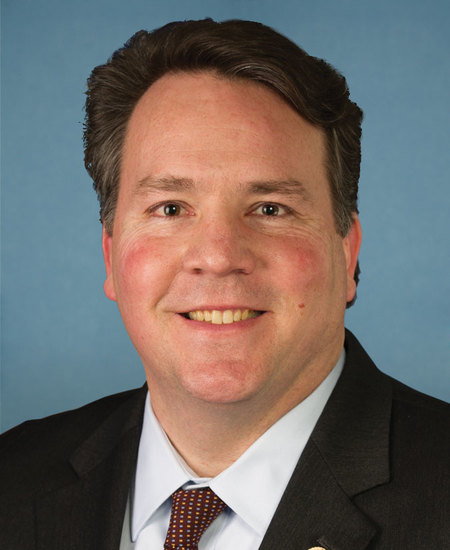
Rep. Alexander X. Mooney
Sponsored bills
Maddy summaryHRES 1358 is a resolution passed by the U.S. House of Representatives calling for accountability for Cuba's violations of internationally recognized human rights and its support for activities harming U.S. interests and democratic nations. It urges the U.S. government to maintain sanctions on Cuba until a democratic transition begins, seek Cuba's expulsion from the UN Human Rights Council, and retain Cuba on the State Sponsors of Terrorism list. The resolution also requires the State Department to submit biannual reports to Congress on efforts to promote democracy in Cuba and calls for action against the trafficking of Cuban medical personnel abroad. This resolution expresses congressional policy but does not create binding law.
Maddy summaryHJRES 182 is a joint resolution that disapproves a rule issued by the Department of Health and Human Services (HHS) regarding placement requirements for LGBTQI+ children in foster care. The rule, published in the Federal Register on April 30, 2024, would have set specific standards for how foster care agencies must place these children. If enacted, this resolution would make the HHS rule unenforceable, blocking its implementation nationwide. The bill directly targets the HHS rule, preventing it from affecting foster care systems and related policies.
Maddy summaryHRES 1351 is a symbolic resolution commending Cuban citizens who protested against the Communist regime on July 11, 2021. It honors their courage in demanding fundamental rights, while condemning the regime's crackdown - including detaining over 1,400 protesters, cutting internet access, and subjecting activists like José Daniel Ferrer García to torture. The resolution calls for the immediate release of imprisoned protesters and urges the U.S. government to prioritize democracy and human rights in Cuba policy over "unilateral concessions." As a non-binding resolution, it does not create new laws or policies but expresses congressional support for Cuban pro-democracy activists.
Maddy summaryHR 8985, the Preventing Forced Abortions Act of 2024, prohibits federal courts from enforcing any surrogacy contract clause requiring a surrogate mother to have an abortion at the request of intended parents or their agents. The bill mandates courts to enforce payment to the surrogate for her services, regardless of any contract term tied to abortion, including clauses penalizing refusal (like reduced pay or liquidated damages). It directly affects surrogacy agreements between intended parents and surrogate mothers, ensuring surrogates cannot be forced to undergo abortions against their will while protecting their contractual compensation. The law defines "abortion" as intentionally terminating a pregnancy except in specific medical circumstances, such as after fetal viability or removing a non-viable fetus.
Maddy summaryHR 8941, the "No Tax on Tips Act," creates a new tax deduction for workers who receive cash tips. It allows employees to deduct the full amount of cash tips they report to their employer (via statements required under tax law) from their taxable income, reducing their overall tax burden. This deduction applies to both itemizing and non-itemizing taxpayers and is exempt from standard limitations on miscellaneous deductions. The provision takes effect for taxable years beginning after December 31, 2024, directly benefiting service industry workers like servers and bartenders who rely on cash tips.
Maddy summaryThis bill (HR 2365, Public Law 118-66) directs the U.S. Department of Health and Human Services (HHS) to establish the National Parkinson’s Project. It requires HHS to create and update a coordinated national plan for preventing, diagnosing, treating, and researching Parkinson’s disease and related disorders (including multiple system atrophy and progressive supranuclear palsy), while coordinating federal research and care efforts across agencies like the NIH, CDC, and VA. The law mandates annual progress assessments, an advisory council with patient advocates and diverse experts, and annual reports to Congress on federal Parkinson’s programs and recommendations for improvement. It affects federal agencies managing Parkinson’s-related programs and aims to improve care coordination and research efficiency for patients and caregivers, with the law sunsetting in 2035.
Maddy summaryThe Conscience Protection Act of 2024 would strengthen protections for health care providers, facilities, and organizations that refuse to participate in or provide coverage for abortions, assisted suicide, or other procedures conflicting with their religious or moral beliefs. It creates a private right of action allowing individuals or entities to sue when their conscience rights are violated, and requires the Department of Health and Human Services to enforce existing conscience protections through the Office for Civil Rights. The bill prohibits discrimination against health care entities that decline to provide or facilitate these services, while ensuring these protections don't interfere with emergency care requirements under existing law. It also establishes clearer enforcement mechanisms, including the ability to terminate federal funding for non-compliance with conscience protections.
Maddy summaryHRES 901 is a U.S. House resolution expressing support for democracy and human rights in Pakistan. It calls on the U.S. President and Secretary of State to collaborate with Pakistan to uphold democratic processes, human rights, and the rule of law. The resolution urges Pakistan to protect freedoms of speech, assembly, and press, and to avoid arbitrary detention or suppression of political participation. It also condemns efforts to undermine Pakistan's electoral or judicial systems, including harassment of citizens during protests or interference with elections.
Maddy summaryHRES 1305 is a procedural resolution that formally rescinds subpoenas issued by the January 6th Select Committee to four individuals (Stephen Bannon, Mark Meadows, Daniel Scavino Jr., and Peter Navarro) and withdraws the committee’s recommendations finding them in contempt of Congress. The bill specifically cancels subpoenas from September 2021, October 2021, and February 2022, along with related contempt resolutions adopted in 2021-2022. It does not alter legal proceedings but withdraws the committee’s authority to enforce these actions. The resolution is supported by House members who argue the committee was partisan and illegitimate, though the bill itself only addresses the committee’s procedural actions.