

Dismemberment Abortion Ban Act of 2021 This bill restricts the performance of dismemberment abortions. It defines the term dismemberment abortion . Specifically, the bill prohibits a physician from knowingly performing a dismemberment abortion. It provides an exception for a dismemberment abortion that is necessary to save the life of a mother whose life is endangered by a physical disorder, illness, or condition. The bill establishes criminal penalties—a fine, a prison term of up to two years, or both—for a physician who performs a prohibited dismemberment abortion. It also authorizes civil remedies for a woman or parent of a minor who undergoes a dismemberment abortion. A woman who undergoes a dismemberment abortion may not be prosecuted or held civilly liable.
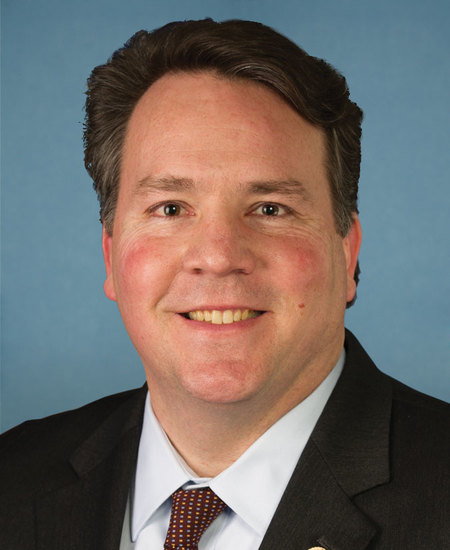
Rep. Alexander X. Mooney
Sponsored bills
Protecting Individuals with Down Syndrome Act This bill creates new federal crimes related to the performance of an abortion on an unborn child who has Down syndrome. It subjects a violator to criminal penalties—a fine, a prison term of up to five years, or both. It also authorizes civil remedies, including damages and injunctive relief. A woman who undergoes such an abortion may not be prosecuted or held civilly liable.
Protecting the Dignity of Unborn Children Act of 2021 This bill establishes a new criminal offense for recklessly disposing of or abandoning fetal remains in a landfill or in any navigable waters of the United States. The term fetal remains means any part (except a cremated part) of a deceased human fetus following an abortion. A violator is subject to a fine, up to three years in prison, or both.
Pregnant Women Health and Safety Act of 2021 This bill establishes requirements for physicians who perform abortions and abortion clinics. Specifically, the bill requires a physician who performs an abortion (1) to have admitting privileges at a nearby hospital; and (2) at the time of the abortion, to notify the patient of the hospital location where the patient can receive follow-up care if complications arise. A physician who fails to comply is subject to criminal penalties—a fine, a prison term of up to two years, or both. A woman who undergoes an abortion may not be prosecuted. The bill also requires an abortion clinic, in order to receive federal funds or assistance, to (1) be licensed by the state in which it is located, and (2) be in compliance with federal standards for ambulatory surgical centers.
This joint resolution proposes a constitutional amendment limiting Representatives to three terms and Senators to two terms. Terms beginning before the ratification of this amendment do not count towards these term limits.
This joint resolution proposes an amendment to the Constitution to require that the Supreme Court consist of nine Justices.
This resolution honors Officers Brian Sicknick and Howard Liebengood of the U.S. Capitol Police, and it commends the bravery and service demonstrated by officers of the U.S. Capitol Police, the Metropolitan Police Department of the District of Columbia, and the other law enforcement agencies and protective entities that assisted in responding to the January 6, 2021, attack on the U.S. Capitol.
Unlocking Our Domestic LNG Potential Act of 2021 This bill grants the Federal Energy Regulatory Commission the authority to approve or deny applications for facilities, such as liquefied natural gas terminals, to export natural gas from the United States to foreign countries or import natural gas from foreign countries.
Protecting the Right to Keep and Bear Arms Act of 2021 This bill prohibits (1) the President or the Department of Health and Human Services from declaring emergencies or disasters for the purpose of imposing gun control; and (2) a federal officer or employee, or person operating under color of federal law, from banning the manufacture, sale, or transfer of firearms or ammunition while acting in support of relief from a major disaster or emergency.
No Social Media Accounts for Terrorists or State Sponsors of Terrorism Act of 2021 This bill bars access to certain social media platforms by individuals designated as terrorists or senior officials of a government that is a state sponsor of terrorism. Specifically, the bill requires the President to prohibit providers of social media platforms (i.e., platforms that allow users to generate and share content and that have over 100,000 active users) from making such platforms available to barred individuals or officials. The bill does, however, allow officials to use these platforms solely for legitimate emergency alert purposes. Violations of this prohibition are subject to civil and criminal penalties. In addition, the President may waive the prohibition in the interests of U.S. national security. The Department of the Treasury must report to Congress on (1) the status and impact of the prohibitions of this bill, and (2) efforts to facilitate the free flow of information and access to communications technologies by civil society and democratic activists in Iran, Syria, North Korea, Cuba, and other countries controlled by authoritarian regimes.