

Military Spouse Hiring Act This bill expands the Work Opportunity Tax Credit (WOTC) to include the hiring of a qualified military spouse. (The WOTC permits employers who hire individuals who are members of a targeted group such as qualified veterans, ex-felons, or long-term unemployment recipients to claim a tax credit equal to a portion of the wages paid to those individuals.) A qualified military spouse is any individual who is certified by the designated local agency as being (as of the hiring date) a spouse of a member of the Armed Forces.
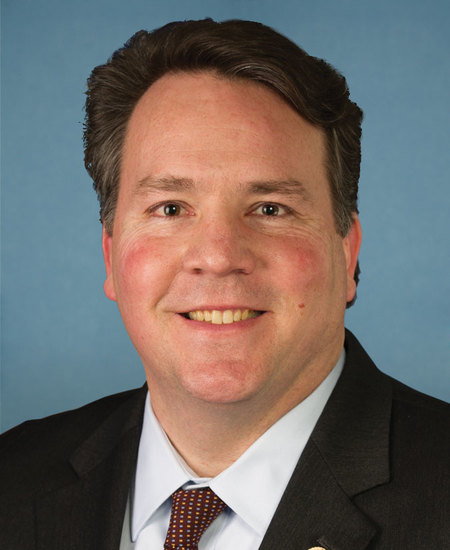
Rep. Alexander X. Mooney
Sponsored bills
Deterring Enemy Forces and Enabling National Defenses Act of 2022 or the DEFEND Act of 2022 This bill requires the Department of Defense to seek to cooperate with Middle East allies and partners (i.e., countries of the Gulf Cooperation Council, Iraq, Israel, Jordan, Egypt, and other countries in the region as appropriate) to identify and develop an approach for such allies and partners to implement an integrated air and missile defense capability to protect against attacks from Iran and groups linked to Iran.
This joint resolution directs the President to remove U.S. Armed Forces from hostilities against the Houthis in Yemen within 30 days of the enactment of this joint resolution unless Congress authorizes a later withdrawal date, issues a declaration of war, or specifically authorizes the use of the Armed Forces. Prohibited activities include sharing intelligence or providing logistical support to enable offensive strikes by the coalition led by Saudi Arabia. This joint resolution shall not affect any military operations directed at Al Qaeda or associated forces.
Maddy summaryHRES 1131 is a resolution proposing to remove the January 13, 2021, impeachment of President Trump from the official congressional record, treating it as if it never occurred. It specifically targets the House resolution (H. Res. 24) that impeached Trump for "incitement of insurrection" following the January 6 Capitol riot. The resolution argues the impeachment lacked due process, omitted context about the 2020 election, and violated constitutional procedures by rushing the vote before Trump’s term ended. If passed, it would formally erase the impeachment from legislative history but would not affect Trump’s legal status or future eligibility for office. This is a symbolic procedural measure, not a binding law, and would not change the actual voting record or constitutional implications.
Prohibiting Abortion Industry's Lucrative Loopholes Act This bill expands the prohibition on the sale or purchase of human fetal tissue in interstate commerce to include any payments associated with the transportation, implantation, processing, preservation, quality control, or storage of such tissue.
This resolution condemns the unauthorized leak of a draft Supreme Court opinion concerning abortion and the related violence, property damage, and attempted intimidation of Supreme Court Justices by activists. It also encourages the enforcement of federal criminal laws that prohibit protests and picketing outside of the homes of federal judges, jurors, witnesses, and others involved in the U.S. court system.
This resolution expresses support for the designation of Home Front Heroes Day, recognizing the efforts and sacrifice made by civilians contributing to wartime efforts.
Maddy summaryThis bill prohibits the use of federal funds to establish or operate a Disinformation Governance Board under the Department of Homeland Security. It directly affects the Department of Homeland Security by blocking funding for this specific board, preventing its creation or activities. The measure restricts how existing federal appropriations can be applied, without altering other funding mechanisms.
Social Security Guarantee Act of 2022 This bill requires the Department of the Treasury to issue certificates to Social Security beneficiaries that guarantee them the full monthly benefit amount to which they are entitled and at least an annual cost-of-living increase to their benefits. It also provides additional mandatory funding for those benefits. Currently, Social Security beneficiaries are entitled to their benefits, but benefits are primarily funded through a payroll tax (including assets derived from the tax held in reserve). Actuarial projections reported by the Social Security Board of Trustees indicate that in 2035 there will be insufficient tax revenue and reserved assets to cover the full amount of benefit payments.
Protecting Free Speech Act This bill terminates the Disinformation Governance Board of the Department of Homeland Security (DHS) and prohibits using DHS funding for the activities of any other entity that is substantially similar to the board.