

Maddy summaryHR 6619, the PATROL Act, prevents the federal government from suing states for building border barriers. It specifically blocks the Attorney General from filing civil lawsuits under the 1899 Act against states that construct physical barriers (like walls, fences, or buoys) along the border to stop illegal entry or protect state territory. The law directly affects states building such barriers and the federal government’s legal authority to challenge those actions. This is a procedural change that removes a legal obstacle for states pursuing border security measures.
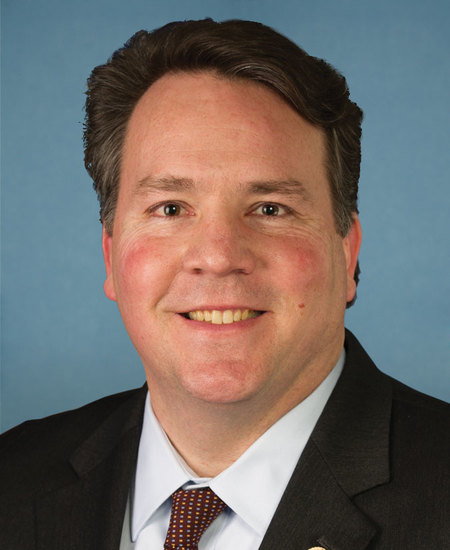
Rep. Alexander X. Mooney
Sponsored bills
Maddy summaryThis bill restricts warrantless surveillance of U.S. persons by amending the Foreign Intelligence Surveillance Act. It limits who can conduct queries of U.S. person data (capping at five personnel per FBI field office), prohibits using such queries for law enforcement without proper authorization, and requires documentation of all queries. The bill creates exceptions for emergencies, consent, and cybersecurity, but prohibits using metadata results to access protected communications. It also limits how information acquired under Section 702 can be used in criminal proceedings, requiring specific approvals for such use.
Maddy summaryThis bill authorizes the posthumous presentation of a Congressional Gold Medal to honor Marshall "Major" Taylor, a pioneering Black cyclist who broke racial barriers in the late 19th and early 20th centuries. It recognizes his athletic achievements, including world records and international championship wins, as well as his advocacy for equality in sports. The medal, designed by the Treasury Secretary, will be presented to Taylor's great-granddaughter, Karen Donovan, following the congressional authorization. As a commemorative act with no policy changes, it serves solely to honor Taylor's legacy as a trailblazer and role model.
Maddy summaryThis bill requires the Secretary of Labor to pay black lung benefits to eligible miners within 60 days if a liability determination (who is responsible for payment) hasn't been made. It directly affects miners diagnosed with black lung disease (pneumoconiosis) who face delays in benefit processing. The key mechanism is a 60-day deadline: if liability isn't determined by then, benefits are paid immediately from the existing trust fund. Operators later found liable must still repay the benefits, so the bill doesn't eliminate their financial responsibility. The change aims to prevent prolonged delays in critical health benefits for miners.
Maddy summaryHR 6612, the Birthright Citizenship Act of 2023, clarifies who qualifies for U.S. citizenship at birth under the 14th Amendment. It amends immigration law to define that a child born in the U.S. is "subject to the jurisdiction" for citizenship if one parent is a U.S. citizen, a lawful permanent resident living in the U.S., or an active-duty military member. The bill directly affects children born in the U.S. to parents in these specific categories, ensuring they meet the citizenship definition without altering the constitutional right itself. It explicitly states this definition applies only to births occurring after the law's enactment, leaving existing citizenship status unaffected for those born before. The bill aims to codify existing constitutional principles through specific, narrow criteria for parental status.
Maddy summaryHRES 905 is a House resolution commemorating the 200th anniversary of the Monroe Doctrine, first articulated by President James Monroe in 1823. The resolution formally recognizes the doctrine's historical significance in establishing U.S. policy against foreign colonization in the Western Hemisphere and its enduring influence on U.S. foreign policy. It resolves that the House will "commemorate" the anniversary, "reassert" the U.S. position against foreign malign influence threatening Western Hemisphere democracies, and "recognize" the doctrine's principles as a foundational element of U.S. foreign policy. This is a purely ceremonial resolution with no new policy or funding implications.
Maddy summaryThis bill authorizes a feasibility study to determine if a historical route taken by George Washington in 1753 - stretching approximately 500 miles from Williamsburg, Virginia, to Waterford, Pennsylvania - could qualify as a National Historic Trail. The study, mandated under the National Trails System Act, would assess the route's historical significance and suitability for designation without committing to trail creation or funding.
Maddy summaryThis bill requires Congress to authorize any U.S. vote to allocate IMF funds (Special Drawing Rights) or support quota increases for eight specific countries: China, Russia, Iran, North Korea, Cuba, Venezuela, Nicaragua, and Afghanistan under Taliban control. It directs the U.S. Treasury to oppose IMF proposals that would benefit these nations through funding or policy changes. The law applies directly to U.S. representation at the International Monetary Fund, preventing automatic U.S. support without legislative approval. It targets countries designated as adversaries or subject to U.S. sanctions.
Maddy summaryHR 6504, the Protect American Gun Exporters Act, blocks the Department of Commerce from implementing a pause on new export licenses for specific firearm exports (items under Commerce Control List numbers 0A501, 0A502, 0A504, and 0A505). The bill directly affects U.S. gun exporters by preventing the Commerce Secretary from enforcing the October 2023 pause or similar restrictions on these exports. Key provisions prohibit the Secretary from taking any action to carry out the pause unless it follows standard regulatory processes, including a required impact analysis and compliance with the Administrative Procedure Act and Congressional Review Act. This bill does not create new export rules but stops the existing pause on certain firearm exports.
Maddy summaryH.J.Res. 66 disapproves a specific rule issued by the Consumer Financial Protection Bureau (CFPB) regarding small business lending under the Equal Credit Opportunity Act (Regulation B). The resolution, if passed, would prevent this CFPB rule from taking effect by declaring it "have no force or effect." The rule in question (88 Fed. Reg. 35150) aimed to clarify how lenders must evaluate small business loan applications under existing equal credit laws. This disapproval directly affects the CFPB's regulatory authority and would block the rule's implementation for small business lenders and financial institutions.