

Maddy summaryThis bill repeals a law (18 U.S.C. § 1715) that previously prohibited mailing firearms without a license. It directly affects the U.S. Postal Service, firearm sellers, and individuals mailing firearms by preventing the Postal Service from creating rules that would block firearm mailings or require disclosure of sensitive records like sales receipts or firearm serial numbers. Key provisions include removing the existing ban on mailing firearms and prohibiting the Postal Service from imposing new restrictions on firearm mailings or demanding customer transaction data. The bill ensures that firearm mailings can proceed without these specific federal restrictions, while applying to ongoing legal cases under the repealed law.
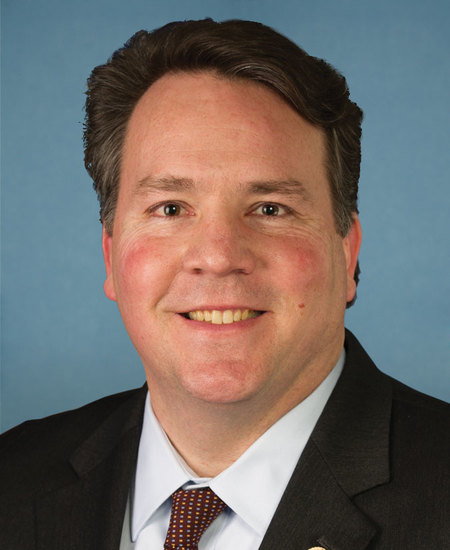
Rep. Alexander X. Mooney
Sponsored bills
Abortion Funding Awareness Act of 2024 This bill establishes reporting requirements for states regarding certain Medicaid payments to abortion providers. Specifically, the bill requires states that make Medicaid payments using federal funds for any items or services furnished by an abortion provider to annually (1) submit a report to the Centers for Medicare & Medicaid Services on all such payments, and (2) publish the report on the state's website. The report must include specified information, including the number of abortions performed by the providers and the gestational age with respect to each such abortion. (Current law restricts the use of federal funds for abortions to cases of rape, incest, or life endangerment of the woman. States may use their own funds to cover abortions in other cases.)
Maddy summaryThis ceremonial resolution (HRES 985) expresses the U.S. House of Representatives' support for Catholic schools during the 50th anniversary of National Catholic Schools Week. It acknowledges Catholic schools' contributions to education, diversity, and community values - highlighting their 1.7 million students, 98.9% high school graduation rate, and role in serving diverse communities - while applauding the National Catholic Educational Association and the United States Conference of Catholic Bishops for organizing the event. The resolution has no binding effect or policy changes; it solely serves as a symbolic gesture of recognition.
Maddy summaryHR 7092, the "Protecting Private Job Creators Act," exempts fixed-income securities from SEC Rule 15c2-11. This rule change specifically applies to securities like bonds, notes, debentures, and asset-backed securities used by businesses to raise capital. The bill codifies the SEC’s 2023 exemption of fixed-income securities sold under Rule 144A from Rule 15c2-11 requirements, which the SEC had previously applied without formal rulemaking. It directly affects businesses relying on fixed-income markets to access capital, ensuring they are not subject to the rule’s quotation disclosure requirements.
Maddy summaryHR 7044, the "Woman’s Right To Know Act," requires abortion providers to give patients a specific 24-hour in-person informed consent form before performing an abortion. The form must detail the unborn child’s gestational age, medical risks of the procedure, and developmental milestones (like heartbeat presence), and must be signed by the patient, provider, and a witness. Providers who fail to comply face civil penalties of $100,000-$250,000 per violation or lawsuits from patients seeking damages, including triple the abortion cost. Exceptions apply if compliance poses immediate life-threatening risks to the patient. The bill directly affects abortion providers and patients seeking abortion services, mandating specific disclosure requirements and enforcement mechanisms.
Ultrasound Informed Consent Act This bill requires abortion providers to conduct an ultrasound before performing an abortion. Specifically, before a woman gives informed consent to any part of an abortion, the abortion provider must perform an obstetric ultrasound on the pregnant woman; provide a simultaneous explanation of what the ultrasound is depicting; display the ultrasound images so the woman may view them; and provide a complete medical description of the images, including the dimensions of the embryo or fetus, cardiac activity if present and visible, and the presence of external members and internal organs if present and viewable. Providers are subject to civil actions and penalties for violations. The bill's ultrasound requirements do not apply in cases where a physical disorder, illness, or injury caused by the pregnancy endangers a woman's life. A woman is also not required to view the ultrasound images; nor may she or the provider be penalized if she declines to do so.
Maddy summaryHR 6975 designates the U.S. courthouse at 500 West Pike Street in Clarksburg, West Virginia, as the "Irene M. Keeley United States Courthouse." The bill updates all official U.S. references (laws, maps, documents) to use this new name for the building. This is a naming resolution with no policy changes or funding impacts; it solely affects the courthouse's official designation and related records.
Maddy summaryThe Death Tax Repeal Act would eliminate the federal estate tax and generation-skipping transfer tax for estates of people who die on or after the bill's enactment date, and for generation-skipping transfers made after that date. It would also establish a new $10 million lifetime gift tax exemption (adjusted annually for inflation) and replace the existing gift tax rate schedule with a revised structure. These changes would primarily affect high-net-worth individuals and their heirs, as the estate tax and gift tax typically apply to large estates or gifts exceeding the new exemption threshold. The bill's provisions would take effect on the date of enactment, with transitional rules for the year the bill is signed into law.
Maddy summaryHR 7045 creates a new 50% federal tax credit for individuals and businesses that donate to eligible pregnancy centers. Donors can claim a credit equal to half their contribution, up to $10,000 per year ($20,000 for joint filers), for donations made to centers that provide free services like counseling, prenatal care, and material support to pregnant women. To qualify, centers must be 501(c)(3) organizations operating primarily to help women carry pregnancies to term without performing or promoting abortions. The bill directly affects donors seeking tax benefits and pregnancy centers receiving support, while requiring centers to meet specific service and non-abortion criteria.
Maddy summaryThe RIFLE Act of 2024 changes how the federal government handles violations by firearms licensees, affecting gun dealers and manufacturers who hold federal licenses. It creates a graduated penalty system where non-willful violations require the Attorney General to work with licensees to fix issues before taking action, while willful violations may lead to license suspension or revocation only after proper notice, hearing, and evidence of continued noncompliance. The bill establishes new procedures for administrative hearings, defines "willful" violations more clearly, and gives licensees 90 days to liquidate inventory after license expiration or revocation, with extensions possible for reasonable cause. These changes aim to create a more transparent process for addressing violations while maintaining public safety standards.