This resolution expresses support for World Hearing Day and other efforts to promote ear and hearing care.
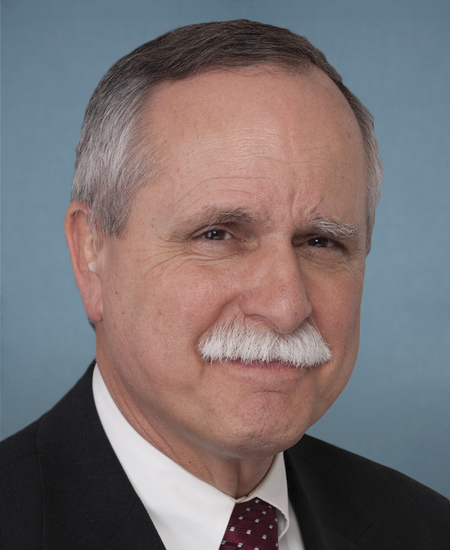
Rep. David B. McKinley
Sponsored bills
This resolution honors Officers Brian Sicknick and Howard Liebengood of the U.S. Capitol Police, and it commends the bravery and service demonstrated by officers of the U.S. Capitol Police, the Metropolitan Police Department of the District of Columbia, and the other law enforcement agencies and protective entities that assisted in responding to the January 6, 2021, attack on the U.S. Capitol.
Medicare Audiologist Access and Services Act of 2021 This bill provides for Medicare coverage of certain audiologist services. Specifically, the bill expands coverage to include diagnostic and treatment services that are furnished by audiologists and that would otherwise be covered if provided by a physician, including incidental services, regardless of whether such services are provided pursuant to a referral from, or under the supervision of, a physician or other health care practitioner.
Treat and Reduce Obesity Act of 2021 This bill expands Medicare coverage of intensive behavioral therapy for obesity. Specifically, the bill allows coverage for therapy that is provided by (1) a physician who is not a primary care physician; or (2) other health care providers (e.g., physician assistants and nurse practitioners) and approved counseling programs, if provided upon a referral from, and in coordination with, a physician or primary care practitioner. Currently, such therapy is covered only if provided by a primary care practitioner. The bill also allows coverage under Medicare's prescription drug benefit of drugs used for the treatment of obesity or for weight loss management for individuals who are overweight.
Qualified Immunity Act of 2021 This bill codifies the defense of qualified immunity for law enforcement officers in any case under provisions regarding civil actions for deprivation of rights under color of law. Specifically, a law enforcement officer subject to such an action in his or her individual capacity shall not be found liable if the officer establishes that the right, privilege, or immunity secured by the Constitution or federal law was not clearly established at the time of the deprivation, or that at this time, the state of the law was not sufficiently clear that every reasonable law enforcement officer would have understood that the conduct alleged constituted a violation of the Constitution or federal law; or a court of competent jurisdiction had issued a final decision on the merits holding, without reversal, vacatur, or preemption, that the specific conduct alleged to be unlawful was consistent with the Constitution and federal laws. A law enforcement agency or unit of local government that employed a law enforcement officer subject to such an action shall not be liable if the officer is found not liable and to have been acting within the scope of his or her employment.
This bill requires the Office of the Inspector General in the Department of Justice to report to Congress on the number of (1) firearm transfer denials issued by the National Instant Criminal Background Check System that are referred to the Bureau of Alcohol, Tobacco, Firearms and Explosives (ATF) for investigation; (2) prosecutions resulting from such investigations; and (3) firearms recovered by the ATF in cases in which a denial was issued by the system after a firearm was transferred.
No Social Media Accounts for Terrorists or State Sponsors of Terrorism Act of 2021 This bill bars access to certain social media platforms by individuals designated as terrorists or senior officials of a government that is a state sponsor of terrorism. Specifically, the bill requires the President to prohibit providers of social media platforms (i.e., platforms that allow users to generate and share content and that have over 100,000 active users) from making such platforms available to barred individuals or officials. The bill does, however, allow officials to use these platforms solely for legitimate emergency alert purposes. Violations of this prohibition are subject to civil and criminal penalties. In addition, the President may waive the prohibition in the interests of U.S. national security. The Department of the Treasury must report to Congress on (1) the status and impact of the prohibitions of this bill, and (2) efforts to facilitate the free flow of information and access to communications technologies by civil society and democratic activists in Iran, Syria, North Korea, Cuba, and other countries controlled by authoritarian regimes.
Research Investment to Spark the Economy Act of 2021 or the RISE Act of 2021 This bill authorizes the Departments of Agriculture, Commerce, Defense, Education, Energy, the Interior, Health and Human Services, and Transportation, National Aeronautics and Space Administration (NASA), National Science Foundation, and Environmental Protection Agency to provide support for research regarding COVID-19 (i.e., coronavirus disease 2019) or research disrupted by the COVID-19 pandemic. Support may be used to provide supplemental funding to extend the duration of a grant to a research institution, national laboratory, or individual that was awarded prior to the enactment of this bill, or to expand the purposes of such a grant as specified; issue awards to research the effects of the current pandemic and potential future pandemics; and provide flexibility on awards to account for facility closures or other limitations during the COVID-19 public health emergency. Agencies must provide the support as rapidly as possible. Provided funds shall remain available through FY2021.

The COVID-19 Hospital and Health Provider Loan Conversion Act of 2021 This bill establishes and otherwise modifies requirements for the Medicare Accelerated and Advance Payment Program during the public health emergency relating to COVID-19 (i.e., coronavirus disease 2019). The program provides Medicare payments in advance to eligible providers experiencing claims or cash flow disruptions, such as during national emergencies; the program was specifically expanded in response to COVID-19 to encompass more types of providers, subject to certain recoupment and repayment provisions. The bill requires the Centers for Medicare & Medicaid Services to waive recoupment and repayment for providers who meet specified requirements. Among other criteria, providers must not have engaged in surprise billing practices with respect to COVID-19 patients. Providers must still repay any amounts not used for COVID-19 expenses; the bill caps the interest rate on such repayments at 2% upon a demonstration of hardship. The bill also requires private health insurers to treat out-of-network COVID-19 services as in-network for purposes of payment and cost-sharing.
Thin Blue Line Act This bill expands the list of statutory aggravating factors in death penalty determinations to also include killing or targeting a law enforcement officer, firefighter, or other first responder.