

Supporting Affordable and Reliable Energy in Developing Countries Act of 2021 This bill bans federal agencies and governmental corporations from implementing climate finance plans that would prohibit, or have the effect of prohibiting, the financing of certain projects to construct facilities that use fossil fuels or nuclear energy to generate electricity.
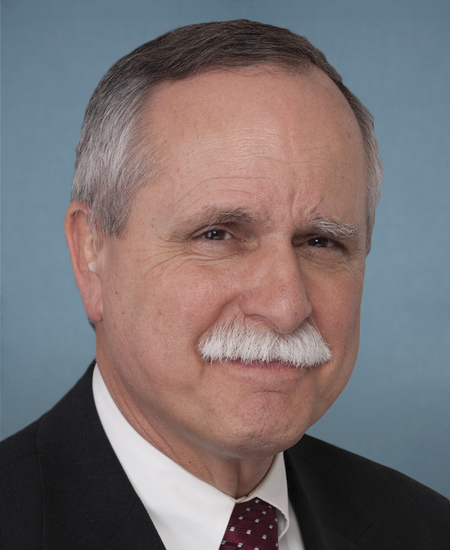
Rep. David B. McKinley
Sponsored bills
Options Over Terminations Act This bill exempts a federal employee or contractor from any federal mandate requiring a vaccine for COVID-19 if the employee or contractor provides proof of COVID-19 antibodies.
Public Health Workforce Loan Repayment Act of 2021 This bill establishes a student loan repayment program for public health professionals. As a condition of participation, recipients must agree to complete a period of full-time employment with a state, tribal, or local public health agency. Individuals eligible for this program include those with public health or health professions degrees, as well as those with degrees in statistics, computer science, or related information technology fields.
Supplying America Needs Truckers Aged 18 Act or the SANTA 18 Act This bill exempts drivers who transport goods from a port of entry and another place within the same state from age restrictions and other requirements that apply to federal commercial driver's licenses.
Maddy summaryHRES 754 is a non-binding resolution expressing the House of Representatives' opposition to proposed "punitive natural gas taxes" on U.S. businesses, families, and workers. It cites claims that such taxes would raise average energy bills by 17%, reduce GDP by $9 billion, and eliminate 90,000 jobs, while disproportionately harming low-income households. The resolution argues that opposing these taxes supports U.S. energy security, national security, and continued leadership in reducing emissions through domestic natural gas production. As a procedural resolution, it does not create law but formally states the House's position against this policy approach.
This bill prohibits the use of federal funds to require a member of the Armed Forces to receive a COVID-19 vaccination. The bill also prohibits adverse action (e.g., punishment) being taken against a member of the Armed Forces because the member refuses to receive a COVID-19 vaccination.
Cold War Service Medal Act This bill authorizes the military department concerned to issue Cold War Service Medals to eligible persons who served during the Cold War (September 2, 1945, to December 26, 1991) and meet other requirements. Specifically, eligible persons are those who (1) served on active duty for at least 24 consecutive months during the Cold War, (2) were deployed as members of the armed forces outside of the United States for at least 30 days during the Cold War, (3) were members of a reserve component and called or ordered to active duty related to the Cold War, or (4) performed other service in the armed forces during the Cold War. The military department concerned may issue the medal to the next-of-kin if the eligible recipient is deceased.
Pay Our Correctional Officers Fairly Act This bill provides increased locality pay rates to certain Bureau of Prisons employees whose duty stations are located in the pay locality designated as Rest of U.S. The Rest of U.S. GS (general schedule) locality is the default locality area that applies to GS employees in any city that does not fall within another specified GS locality. Such an employee shall not be subject to this bill if his or her official work site is not located within 100 miles of any pay locality other than Rest of U.S .
This bill designates the federal building and U.S. courthouse at 180 West Main Street in Abingdon, Virginia, as the H. Emory Widener, Jr., Federal Building and United States Courthouse.
State, Local, Tribal, and Territorial Fiscal Recovery, Infrastructure, and Disaster Relief Flexibility Act This bill allows states, tribes, territories, and localities to use certain COVID-19 relief funds for new categories of spending, including for natural disasters and infrastructure projects. It also makes changes to expenditure deadlines and other aspects of this funding. Specifically, recipients may use funds for emergency relief from natural disasters and associated negative economic impacts of natural disasters. In addition, recipients may use a portion of their COVID-19 relief funds for designated infrastructure projects, such as nationally significant freight and highway projects. Furthermore, the bill allows recipients to expend COVID-19 relief funds on these types of infrastructure projects until September 30, 2026. Under current law, recipients must expend the funds by December 31, 2024. Other changes in the bill include (1) modifying eligibility and allocation requirements for funding set aside for counties and Indian tribes that are near public lands, (2) allowing Indian tribes an additional year to expend their COVID-19 relief funds, and (3) establishing a process for government entities to decline COVID-19 relief funds and requiring any declined funds to be used to reduce the federal deficit.