

Maddy summaryHR 5736, the Federal Accountability in Interviews Reform Act (FAIR Act), requires the Department of Justice to mandate audio recordings of all interviews with U.S. citizens suspected of federal crimes during DOJ investigations or when assisting state/local agencies. This applies to both custodial and non-custodial interviews (excluding confidential informants) and covers interviews conducted outside the U.S. as well. Unrecorded statements cannot be used as evidence in federal court, and recordings must be kept for 10 years (or indefinitely for capital offense cases). The law directly affects U.S. citizens during federal law enforcement interviews and aims to increase transparency by making recordings mandatory without requiring consent or notice to the interviewee.
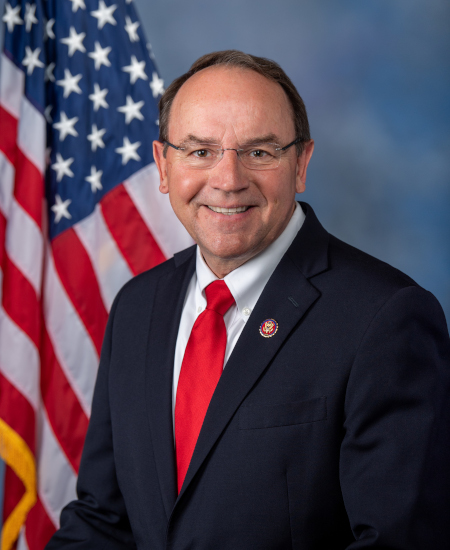
Rep. Thomas P. Tiffany
Sponsored bills
Maddy summaryHR 788, the Stop Settlement Slush Funds Act of 2023, prohibits federal agencies from entering settlement agreements that direct payments to third parties (other than the U.S. government) unless the payment directly reimburses actual harm caused by the defendant or covers services related to the case. It requires agencies to report annually on such settlements to Congress and mandates annual audits by agency Inspectors General to ensure compliance. The law applies to all federal agencies entering settlements after its enactment and includes a 7-year sunset provision. This directly affects how federal agencies handle settlements in civil cases, limiting their ability to divert settlement funds to external entities without clear, direct justification.
Maddy summaryThis bill raises the dollar threshold that determines when the National Labor Relations Board (NLRB) can handle labor disputes involving small businesses. It increases the threshold for 2023 to ten times the previous year’s amount and sets up an automatic annual adjustment using the Personal Consumption Expenditure Per Capita Index (starting in 2024) to keep pace with inflation. Small businesses with payroll below this higher threshold will no longer fall under the NLRB’s jurisdiction for labor disputes. The change directly affects small businesses and the NLRB’s ability to assert jurisdiction over their labor issues, shifting oversight away from the agency for smaller employers. The amendment applies to all NLRB decisions made after the bill’s enactment date.
Maddy summaryHRES 955 is a resolution commending Taiwan for its democratic election history and supporting Taiwan's democratic institutions. It recognizes Taiwan's transition to democracy since the late 1980s, including 7 presidential and 9 legislative elections held since then, all deemed free and fair. The resolution specifically expresses support for Taiwan's upcoming January 13, 2024, elections and condemns interference by the Chinese Communist Party. It affirms U.S. commitment to a strong partnership with Taiwan across multiple domains and supports Taiwan's self-defense and liberty. As a procedural resolution, it does not create new law but formally expresses congressional support for Taiwan's democratic development.
This bill allows creditors to consider an applicant’s immigration status for certain purposes when assessing an application for an extension of credit. In particular, considering an applicant’s U.S. immigration status for the purpose of determining the creditor's rights and remedies applicable to the particular extension of credit does not constitute discrimination.
Maddy summaryHR 1147, the Whole Milk for Healthy Kids Act of 2023, allows schools participating in the National School Lunch Program to offer whole milk as an option during lunch. It amends the school lunch law to explicitly permit schools to serve flavored and unflavored whole milk alongside reduced-fat, low-fat, and fat-free milk choices for students. The bill also requires the Secretary of Agriculture to adjust meal regulations to account for saturated fat from whole milk, ensuring it doesn't count against meal fat limits. This change directly affects participating schools and the students who receive school lunches, expanding their milk beverage options.
Maddy summaryHR 6734 prohibits the use of federal funds to finalize, implement, or enforce the Bureau of Alcohol, Tobacco, Firearms, and Explosives' (ATF) proposed rule (2022R-17) defining "engaged in the business as a dealer in firearms." This bill directly affects the ATF by blocking funding for this specific regulatory rule, which was proposed in August 2023. The legislation does not create new requirements but prevents federal resources from being used to advance this particular ATF regulation.
Maddy summaryThis bill restricts warrantless surveillance of U.S. persons by amending the Foreign Intelligence Surveillance Act. It limits who can conduct queries of U.S. person data (capping at five personnel per FBI field office), prohibits using such queries for law enforcement without proper authorization, and requires documentation of all queries. The bill creates exceptions for emergencies, consent, and cybersecurity, but prohibits using metadata results to access protected communications. It also limits how information acquired under Section 702 can be used in criminal proceedings, requiring specific approvals for such use.
Maddy summaryThe No Kill Switches in Cars Act (HR 6563) repeals Section 24220 of the Infrastructure Investment and Jobs Act, which had authorized the use of "kill switches" in vehicles to disable them if a driver was impaired by alcohol or drugs. This repeal removes the federal requirement for vehicle manufacturers to incorporate or allow such technology, directly affecting automotive safety regulations and manufacturers' compliance obligations. The bill eliminates a specific statutory provision without introducing new requirements, changing federal policy by withdrawing permission for kill switches in cars. As a procedural repeal, it focuses solely on removing an existing provision from the Infrastructure Investment and Jobs Act.
Maddy summaryHR 6612, the Birthright Citizenship Act of 2023, clarifies who qualifies for U.S. citizenship at birth under the 14th Amendment. It amends immigration law to define that a child born in the U.S. is "subject to the jurisdiction" for citizenship if one parent is a U.S. citizen, a lawful permanent resident living in the U.S., or an active-duty military member. The bill directly affects children born in the U.S. to parents in these specific categories, ensuring they meet the citizenship definition without altering the constitutional right itself. It explicitly states this definition applies only to births occurring after the law's enactment, leaving existing citizenship status unaffected for those born before. The bill aims to codify existing constitutional principles through specific, narrow criteria for parental status.