

Maddy summaryThis bill requires federal agencies to acquire and maintain opioid overdose reversal kits (like naloxone) and train employees annually on their use, effective within 270 days of enactment. It mandates these actions for all federal agencies - including the Veterans Health Administration - while providing non-mandatory guidance to private employers on similar practices. The law directly affects federal workplaces by making kits and training a requirement, and indirectly encourages private employers to adopt similar safety measures. Key provisions include a 270-day deadline for the Labor Department to issue regulations for federal agencies and non-binding guidance for other employers. The bill focuses on practical workplace safety measures without altering existing federal health or safety laws.
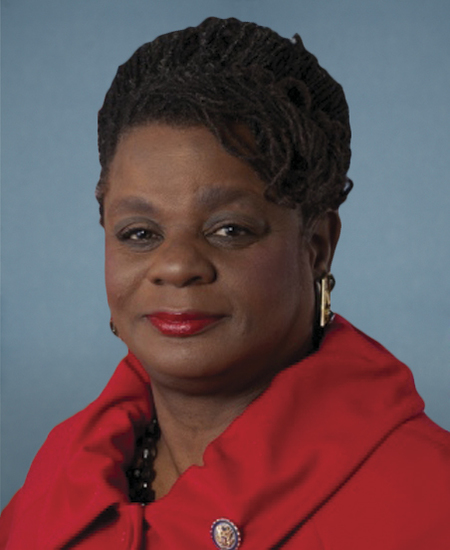
Rep. Gwen Moore
Sponsored bills
Maddy summaryHR 5322, the Time Off to Vote Act, requires most private employers (with 25+ employees) to provide two consecutive hours of paid leave for employees to vote in federal elections. Employers must grant this leave upon request, can schedule it during early voting periods if permitted by state law, and cannot include lunch breaks in the leave period. The bill prohibits retaliation against employees who take this leave and ensures it does not affect accrued employment benefits. Violations could result in civil penalties up to $10,000 per offense, enforced by the Department of Labor.
This bill increases from 20% to 25% the value of the total assets represented by securities of one or more taxable Real Estate Investment Trust (REIT) subsidiaries (thus restoring the REIT subsidiary asset test).
Maddy summaryThe Unhoused Voter Opportunity Through Elections Act (HR 5294) protects voting rights for people experiencing homelessness by prohibiting states from denying voting access based on living in a "nontraditional abode" like shelters, public spaces, or locations where someone is considered homeless under federal law. Key provisions require election officials to make ballot drop boxes accessible to unhoused individuals, accept written attestations of residence instead of traditional proof, allow homeless shelters to be used as voting addresses, and mandate outreach to shelters about registration deadlines and election dates. The bill also creates a grant program to fund mobile voting centers and direct outreach services specifically for unhoused individuals. These changes would directly affect homeless individuals and election officials across all states, implementing concrete policy changes to improve voting access for a population often excluded from the electoral process.
Maddy summaryHR 5295, the Expanding the VOTE Act, modifies Section 203 of the Voting Rights Act to expand language access for voters. It requires states and localities to provide voting materials (including ballots and instructions) in the language of covered language minority groups, with new provisions for American Indian and Alaska Native languages requiring tribal government consultation for unwritten languages. The bill creates $15 million in grants to help jurisdictions provide voting materials in languages that don’t currently trigger Section 203 coverage, while mandating continued provision for those groups in future elections. It also directs a study to evaluate lowering population thresholds for language protections and expanding the definition of covered languages.
Maddy summaryHR 4745, the Delivering for Rural Seniors Act of 2023, creates a pilot program to expand home delivery of food packages under the Commodity Supplemental Food Program (CSFP) for low-income seniors in rural areas. The bill authorizes $10 million annually (2024-2026) for competitive grants to state agencies, which must prioritize rural service providers to cover costs like transportation, staffing, and outreach for home delivery. It requires grantees to report on delivery metrics, costs, and effectiveness annually. The program directly affects rural CSFP participants facing transportation barriers to accessing food assistance.
Southeast Asian Deportation Relief Act of 2023 This bill prohibits the detention or removal of certain nationals of Vietnam, Cambodia, or Laos. Specifically, this protection from detention or removal shall apply to nationals of these countries who (1) entered the United States on or before January 1, 2008, (2) have continuously resided in the United States since entry, and (3) are subject to a final order of removal. Such individuals shall also receive employment authorization. The bill also directs the Department of Justice to grant motions to reconsider or reopen the case of any non-U.S. national who was ordered removed, deported, or excluded from the United States between April 24, 1996, and this bill's enactment and who otherwise satisfies the requirements for protection from detention or removal under this bill. For these individuals, the bill also waives certain requirements that typically apply to motions to reconsider or reopen, such as deadlines for filing such a motion. Further, the Department of Homeland Security must provide individuals covered by the bill with notice of the bill's provisions. The notice must include instructions for filing a motion to reconsider and reopen removal proceedings.
Maddy summaryThis bill extends the existing "safe-to-report" policy for minor misconduct to the U.S. Coast Guard Academy. It amends a 2021 defense law to explicitly include the Academy under the policy, which allows service members to report certain minor issues (like harassment or misconduct) without facing disciplinary action for the initial minor offense. The change directly affects Coast Guard Academy cadets and staff by providing them the same reporting protections already available at other military service academies. This is a procedural update to existing law, not a new policy.
This resolution condemns racism and invidious discrimination as evil and antithetical to the U.S. Constitution and declares unconditional war on racism and invidious discrimination in America. (Invidious discrimination generally refers to discrimination based on a classification that is arbitrary or irrational and not related to a legitimate purpose.) The resolution also expresses the intention of the House of Representatives to pass legislation establishing a Cabinet-level Department of Reconciliation. The department shall be charged with developing and coordinating the implementation of a comprehensive national strategy to eliminate racism and invidious discrimination.
Providing Essential Temporary Shelter Assistance For Emergencies Act of 2023 or the PETSAFE Act of 2023 This bill directs the Federal Emergency Management Agency (FEMA) to establish a pilot program to provide grants for mobile pet shelters during emergencies and major disasters. FEMA may provide funds to state, local, and tribal governments to establish a new pet shelter site that is a mobile unit, which may be a companion animal mobile equipment trailer, to be used in case of evacuation due to emergencies and major disasters. FEMA's authority to approve projects under this bill shall cease on January 1, 2029.