

Assault Weapons Ban of 2025 This bill makes it a crime to knowingly import, sell, manufacture, transfer, or possess a semiautomatic assault weapon (SAW) or large capacity ammunition feeding device (LCAFD). The prohibition does not apply to a firearm that is (1) manually operated by bolt, pump, lever, or slide action, except for certain shotguns; (2) permanently inoperable; (3) an antique; (4) only capable of firing rimfire ammunition; or (5) a rifle or shotgun specifically identified by make and model. The bill also exempts from the prohibition the following, with respect to a SAW or LCAFD: importation, sale, manufacture, transfer, or possession related to certain law enforcement efforts, or authorized tests or experiments; importation, sale, transfer, or possession related to securing nuclear materials; and possession by a retired law enforcement officer. The bill permits continued possession, sale, or transfer of a grandfathered SAW, which must be securely stored. A licensed gun dealer must conduct a background check prior to the sale or transfer of a grandfathered SAW between private parties. The bill permits continued possession of, but prohibits sale or transfer of, a grandfathered LCAFD. Newly manufactured LCAFDs must display serial number identification. Newly manufactured SAWs and LCAFDs must display the date of manufacture. The bill also allows a state or local government to use Edward Byrne Memorial Justice Assistance Grant Program funds to compensate individuals who surrender a SAW or LCAFD under a buy-back program.
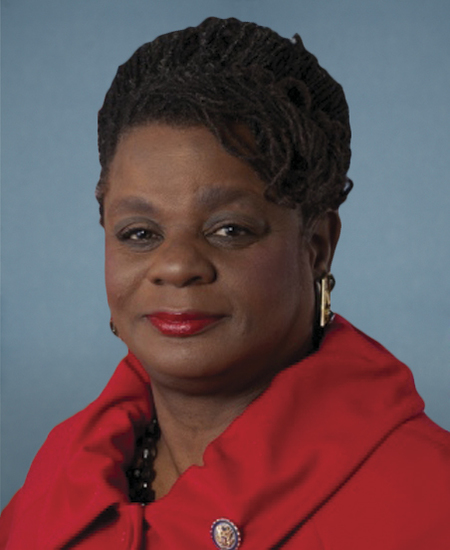
Rep. Gwen Moore
Sponsored bills
Maddy summaryThis bill, the REHIRE Act (HR 3093), creates a hiring preference for certain federal employees who were involuntarily separated between January 1, 2025, and January 1, 2027. It directly affects career federal employees removed during that period who were not in political positions or separated for misconduct or poor performance. The key provision gives these employees 5 additional points in their hiring rating (under 5 U.S.C. §3309) and deems them "preference eligible" for competitive service positions. The preference expires 5 years after the bill becomes law and does not apply to political appointees, those fired for misconduct, or those with documented poor performance reviews.
Maddy summaryHR 3121, "Anna’s Law of 2025," requires federal grants to fund trauma-informed training for law enforcement and emergency medical personnel who handle sexual assault, domestic violence, and stalking cases. The training must cover how trauma affects victims’ behavior, prevent retraumatization during interactions, and teach victim-centered communication techniques. It mandates 8 hours of training for new recruits in law enforcement or EMT programs and 4 hours annually for existing staff. The bill also requires grant recipients to use diverse trainers and report annually to Congress on program effectiveness and survivor experiences. This policy directly affects law enforcement agencies, emergency medical services providers, and survivors interacting with these responders.
Maddy summaryThe Equality Act (HR 15) amends federal civil rights laws to explicitly prohibit discrimination based on sexual orientation and gender identity in employment, housing, public accommodations, credit, and jury service. It expands existing protections under the Civil Rights Act of 1964 by adding sexual orientation and gender identity as protected characteristics under sex discrimination prohibitions. The bill clarifies that discrimination against LGBTQ people is a form of sex discrimination, consistent with the Supreme Court's Bostock decision, and adds specific definitions for gender identity and sexual orientation. This legislation directly affects businesses, employers, housing providers, financial institutions, and government entities that serve the public. The bill creates a more comprehensive legal framework to address discrimination that LGBTQ people face in multiple aspects of daily life.
Maddy summaryThis bill requires most private health insurance plans to cover diagnostic and supplemental breast exams with no out-of-pocket costs (like deductibles or copays) for enrolled patients. It specifically covers exams used to evaluate abnormalities found in screenings (diagnostic) or for high-risk screening without abnormalities (supplemental), based on medical guidelines. Plans can still require prior authorization for these exams, and state laws offering stronger protections remain in effect. The rule takes effect for plan years starting January 1, 2026.
Maddy summaryHR 3045, the West Bank Violence Prevention Act of 2025, imposes U.S. sanctions on foreign individuals and entities responsible for violence, displacement, or property destruction in the West Bank. It targets those directly involved in attacks on civilians, forced displacement, or property seizures, including settler leaders or officials of groups engaged in such activities. Key provisions require freezing assets of sanctioned individuals within U.S. jurisdiction and blocking their entry into the United States via visa restrictions. The law applies to foreign nationals meeting specific criteria outlined in the bill, not U.S. citizens or entities.
Maddy summaryHR 2994, the Child and Dependent Care Tax Credit Enhancement Act of 2025, increases financial support for families covering childcare costs. It raises the credit rate to 50% (reduced for higher incomes), boosts the maximum creditable amount from $3,000 to $8,000 per child under 13 (or $6,000 to $16,000 for other dependents), and adjusts these limits annually for inflation starting in 2026. The bill also ensures married couples filing separately calculate their credit as if filing jointly, preventing reduced benefits. It directly affects low- and middle-income taxpayers with childcare expenses who itemize deductions. The changes take effect for tax years beginning after December 31, 2024.
Maddy summaryThis bill limits how much Social Security can withhold from monthly benefits to recover overpayments. It sets a 10% cap on withholdings for cases without fraud (unless the recipient requests a higher rate), affecting Social Security beneficiaries who received more than they were entitled to. The key provision prevents excessive deductions from monthly payments, ensuring recipients retain at least 90% of their benefit for non-fraudulent overpayments. The law applies to overpayments existing after the bill's effective date.
Maddy summaryThe Hunger-Free Future Act of 2025 amends the SNAP program to require that any update to the thrifty food plan must not increase food insecurity. It mandates that adjustments to the diet cost must continue following existing rules while explicitly ensuring updates do not worsen food insecurity, defined as households lacking adequate food due to insufficient money or resources. This directly affects SNAP beneficiaries by setting a new standard for how the program's cost calculations are reviewed. The bill changes the procedural requirement for SNAP re-evaluations without altering benefit amounts or eligibility rules.
Maddy summaryThis bill increases the federal tax credit for rehabilitating historic buildings. It raises the standard credit rate from 20% to 30% for qualifying small projects (with a $3.75 million expenditure cap) and further increases the cap to $5 million for projects in rural areas. The bill also allows taxpayers to transfer all or part of this credit to another taxpayer, creating a new market for the credit. These changes apply to properties placed in service after the bill's enactment date. The bill directly affects developers and owners of historic properties seeking tax incentives for rehabilitation projects.