

Maddy summaryThis bill authorizes a posthumous Congressional gold medal for Constance Baker Motley, a pioneering civil rights attorney and federal judge. It directs the Treasury to strike a gold medal featuring her image and name, to be presented to her son, Joel Motley III, and niece, Constance Royster. The medal is a commemorative tribute recognizing her historic contributions to civil rights and her service as the first African-American woman appointed to a federal judgeship. No new policies or programs are created; the bill solely honors her legacy through a commemorative medal.
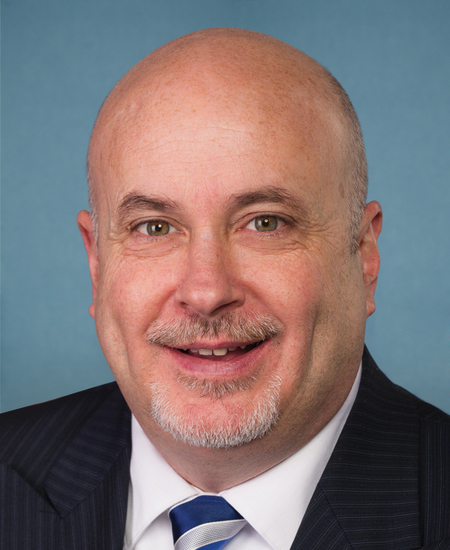
Rep. Mark Pocan
Sponsored bills
Maddy summaryHR 902, "Ellie’s Law," authorizes $10 million annually from fiscal years 2024 through 2028 for the National Institute of Neurological Disorders and Stroke to conduct broader research on unruptured brain aneurysms. The funding aims to study diverse patient populations by age, sex, and race, supplementing existing research budgets without replacing them. This bill directly affects researchers and future patients by increasing federal investment in a condition impacting 6.6 million Americans, with current federal spending at only $2.08 per affected person yearly. The legislation focuses on advancing scientific understanding to improve prevention and treatment, citing the high mortality rate (50% fatal) and significant healthcare costs ($4.1 billion annually in direct costs) associated with brain aneurysm ruptures.
Maddy summaryHR 949, the Insular Area Medicaid Parity Act, removes federal funding caps on Medicaid for U.S. territories, directly affecting Puerto Rico, the U.S. Virgin Islands, Guam, the Northern Mariana Islands, and American Samoa. The bill amends the Social Security Act to eliminate the existing limit on federal Medicaid funding for these territories, allowing them to receive full federal matching funds like states. This change takes effect for fiscal year 2023, ending the previous restriction that required territories to fund a portion of their Medicaid costs themselves. The policy change ensures these territories can access the same level of federal Medicaid support as states.
Maddy summaryThe Heating and Cooling Relief Act significantly expands the Low-Income Home Energy Assistance Program (LIHEAP) to help low-income households with rising energy costs. It increases annual funding to $400 billion for fiscal years 2024-2033 (up from $2 billion), adds $1 billion yearly for cooling assistance during heat events, and expands eligibility to include households with a 3% energy burden. The bill requires states to provide protections against home energy shutoffs and late fees for program participants, and to prioritize energy-efficient, renewable energy solutions. It also creates new "just transition" grants to help communities move away from fossil fuels while reducing energy burdens for vulnerable households.
Maddy summaryThe HELP Copays Act (HR 830) changes how health insurance plans calculate patient cost-sharing. It requires that payments made by third parties (like pharmacies, charities, or discount programs) toward medical costs count toward a patient's deductible, copay, or out-of-pocket limit. This directly affects insured individuals who receive financial assistance, discounts, or product vouchers for healthcare expenses. The law ensures these external payments reduce the patient's actual out-of-pocket costs more quickly, aligning with existing Affordable Care Act and Public Health Service Act requirements.
Maddy summaryHR 1014, the Big Oil Windfall Profits Tax Act, imposes a tax on major oil companies (defined as those averaging over 300,000 barrels of crude oil daily in 2019) based on the difference between current Brent crude oil prices and the 2015-2019 average, calculated at 50% of that excess. The tax revenue funds the "Protect Consumers from Gas Hikes Fund," which provides quarterly rebates to eligible individuals (with income limits of $75,000-$150,000 depending on filing status) via refundable tax credits. The bill directly affects large oil producers through the new excise tax and eligible U.S. residents through the rebate program. Key mechanisms include the price-based tax calculation, automatic fund transfers for rebates, and income-adjusted credit limits. The tax applies to crude oil extracted or imported in the U.S., with rebates distributed starting in 2022.
Maddy summaryThis bill expands health care coverage under TRICARE for military dependents. It eliminates a separate premium for young adults aged 21-26 enrolled in the TRICARE Young Adult Program, meaning they will no longer pay an extra fee for coverage. The bill also removes an eligibility restriction that previously limited coverage for some dependents in this age group. These changes directly affect military service members' adult children and spouses who rely on TRICARE Young Adult coverage. The policy update simplifies enrollment and reduces out-of-pocket costs for these beneficiaries.
Maddy summaryHR 1002, the "Saving the Civil Service Act," restricts how federal government positions can be moved between competitive hiring (where most federal jobs are filled through merit-based exams) and non-competitive "excepted service" positions. The bill prevents agencies from moving positions out of the competitive service unless they fit specific schedules in place as of September 2020, requires Office of Personnel Management (OPM) approval for certain transfers, and mandates employee consent for any position transfer between service types. It also limits the number of employees that can be moved from competitive to excepted service during a presidential term - capping it at 1% of an agency's workforce or five employees, whichever is greater. The bill directly affects federal employees and agencies by making it harder to shift positions out of the competitive hiring system without strict oversight.
Maddy summaryHR 782 prohibits state officials from interfering with abortion services provided across state lines. It specifically blocks states from restricting: (1) out-of-state patients traveling for legal abortions, (2) providers offering such services, (3) assistance for travel or care, or (4) the interstate shipment of FDA-approved abortion drugs. The bill allows the federal Attorney General or affected individuals to sue violators for injunctions, damages, and attorney fees. It directly affects patients seeking care in other states, healthcare providers, transportation services, and pharmacies handling FDA-approved abortion medications. The law focuses on preventing state laws from blocking access to legally permitted abortion services.
Maddy summaryHR 927, the Supreme Court Ethics Act, establishes new ethics rules and oversight for Supreme Court justices. It requires the Judicial Conference to create a binding code of conduct within one year and mandates the appointment of an Ethics Investigations Counsel to receive public complaints, investigate potential violations, and issue annual public reports. The bill also requires justices to publicly disclose their reasons for recusing themselves or denying recusal motions in cases. These provisions directly affect Supreme Court justices by creating a formal process for handling ethics concerns and increasing transparency around their conduct.