

Maddy summaryThis bill requires U.S. public schools to include Asian Pacific American history in all K-12 American history and civics education. It amends the Elementary and Secondary Education Act to mandate that curriculum standards, teacher training, and national assessments explicitly cover this history as part of American history. The policy directly affects students and teachers nationwide by changing how history is taught in public schools. The key mechanism is requiring specific curriculum updates to address gaps in current Eurocentric teaching, ensuring students learn about APA contributions, experiences, and challenges as integral to U.S. history.
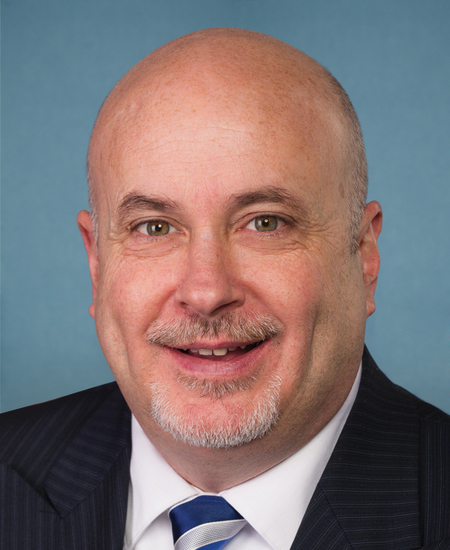
Rep. Mark Pocan
Sponsored bills
Maddy summaryThe ACRE Act of 2023 amends the tax code to exclude interest income from certain rural and agricultural loans from taxable income for eligible lenders. It directly affects banks, savings associations, and their wholly-owned entities that provide qualified loans secured by rural or agricultural real estate, including single-family homes in designated rural areas (with a $750,000 loan balance cap) or aquaculture facilities. The key provision allows these lenders to exclude interest earned on qualifying loans from their gross income, effectively reducing their tax liability on such lending activity. The bill applies to loans made after its enactment date and aligns with existing definitions of rural property from the Agricultural Credit Act of 1987.
Maddy summaryHCONRES 37 is a non-binding congressional resolution expressing that Congress views climate change as an emergency requiring a massive national mobilization. It states that human-caused climate change severely impacts U.S. economic well-being, health, safety, and national security, and urges the President to use existing authorities to accelerate climate action. The resolution does not create new laws or funding but emphasizes the need for urgent, equitable efforts to reduce emissions, address environmental injustice, and support vulnerable communities disproportionately affected by climate impacts. It cites rising global temperatures, extreme weather costs ($165 billion in U.S. disasters in 2022), and the Inflation Reduction Act as context, while clarifying it does not declare an actual national emergency.
Maddy summaryThe Words Matter Act of 2023 replaces the outdated term "mental retardation" with "intellectual disability" across numerous federal laws and regulations. It amends over 20 provisions in the U.S. Code, Social Security Act, and other statutes - including healthcare, disability programs, and legal definitions - to update terminology used in areas like nursing home care, criminal justice, and federal grants. The bill explicitly states this is a purely linguistic change, not a policy shift, and does not alter eligibility, benefits, or program requirements for individuals with intellectual disabilities. It affects all federal programs and legal references that previously used the terms "mental retardation," "mentally retarded," or "developmentally disabled."
Defending the Human Rights of Palestinian Children and Families Living Under Israeli Military Occupation Act This bill limits U.S. assistance to Israel and establishes reporting requirements related to Israel's activities in the West Bank and its expenditures for offshore procurement. (Offshore procurement involves spending U.S. security assistance from the Foreign Military Financing program on Israeli-origin rather than U.S.-origin defense articles.) Specifically, the bill prohibits the use of any funds that are made available for assistance to Israel to support (1) military detention, interrogation, abuse, or ill treatment of Palestinian children; (2) seizure, appropriation, or destruction of Palestinian property and forcible transfer of civilians in the Israeli-controlled West Bank; or (3) certain activities to facilitate unilateral annexation by Israel of West Bank territory. The Department of State must report on the nature and extent of such activities carried out by Israel. Further, the Government Accountability Office must submit to Congress a report on related topics, such as (1) identifying specific programs and items to which funds for offshore procurement in Israel have been allocated, (2) identifying all end-use monitoring to which Israel is subject with respect to U.S.-origin defense articles, and (3) assessing the extent to which offshore procurement funds have supported illegal Israeli settlement activity in the occupied West Bank.
Maddy summaryHR 2965, the Autism Family Caregivers Act of 2023, establishes a federal pilot program to provide free or low-cost evidence-based skills training for family caregivers of children (ages 0-9) with autism spectrum disorder or other developmental delays. It authorizes $10 million annually to fund grants for eligible organizations (like nonprofits, health centers, and community groups) to teach caregivers practical strategies for communication, social engagement, daily living skills, and managing challenging behaviors. The program requires local stakeholder committees - including caregivers, healthcare providers, and community representatives - to ensure cultural relevance, and mandates annual evaluations to assess impacts on children's well-being and caregiver support.
Maddy summaryThe SAFE Banking Act of 2023 would protect banks and financial institutions that provide services to state-legal marijuana businesses and hemp-related businesses by preventing federal regulators from taking adverse actions against them solely for serving these businesses. It clarifies that income from state-legal marijuana businesses can be considered for mortgage applications, and requires regulators to update guidance on suspicious activity reports related to these businesses. The bill does not require financial institutions to serve these businesses, but ensures they won't face penalties for doing so. It extends similar protections to hemp-related businesses, which have faced banking challenges despite being federally legal under the 2018 Farm Bill.
Maddy summaryH.Res. 354 is a non-binding House resolution condemning police brutality globally, including its disproportionate impact on racial minorities, women, migrants, and LGBTQ+ individuals. It calls on the U.S. government to halt arms sales and security training to countries with documented police brutality, end militarized policing tactics domestically and internationally, and redirect funds toward violence prevention programs. The resolution also urges U.S. businesses selling policing equipment to avoid supplying nations with patterns of police brutality. As a statement of policy, it does not create new laws but establishes a formal position for the House.
Maddy summaryHRES 356 is a non-binding House resolution supporting the designation of May 4, 2023, as a "National Day of Reason." It does not create new laws or affect any individuals or groups directly, as it is a symbolic gesture of support. The resolution encourages all citizens to observe this day, emphasizing reason, critical thinking, the scientific method, and free inquiry as vital to addressing societal challenges and advancing human welfare. It cites historical context, including the Founders' emphasis on reason and James Madison's views on knowledge as essential to liberty. The resolution was introduced by Rep. Raskin and others in May 2023, with no further legislative action noted.
Maddy summaryHRES 341 is a nonbinding resolution expressing the House's support for maintaining cash as a viable payment option. It highlights that 18.6% of U.S. households (nearly 6 million) rely solely on cash due to lack of bank access, privacy concerns, and risks associated with digital payments like data breaches. The resolution cites legal tender status under U.S. Code and Federal Reserve Chair Powell's testimony emphasizing cash's critical role for unbanked and low-income communities. It does not create new laws but urges businesses to accept cash to protect consumer privacy and financial security.