

Maddy summaryHRES 289 is a resolution recognizing the week of April 11-17, 2023, as the sixth annual "Black Maternal Health Week" to raise awareness about maternal health disparities. It highlights that Black women in the U.S. face disproportionately high rates of pregnancy-related deaths (2.6 times more likely than White women) and complications, driven by systemic inequities. The resolution urges national attention on these issues and supports policy solutions like the Black Maternal Health Momnibus Act to address racial gaps in maternal care. As a non-binding recognition, it does not enact new laws but aims to amplify community-driven efforts to improve outcomes.
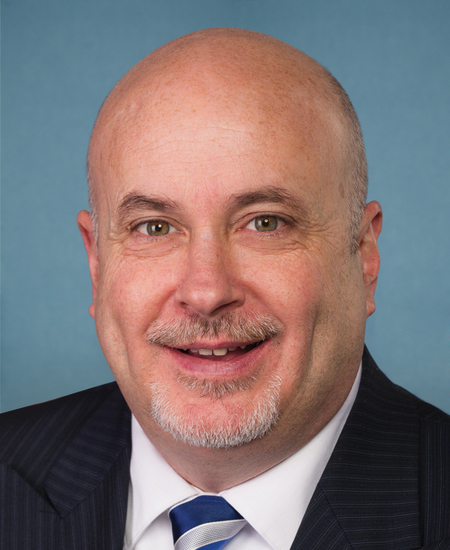
Rep. Mark Pocan
Sponsored bills
Maddy summaryThe Strengthening Organic Agricultural Research (SOAR) Act of 2023 increases annual funding for organic agricultural research and extension programs, directly supporting organic farmers, researchers, and institutions. It authorizes $60 million in 2024, rising to $100 million annually after 2028, for the Organic Research and Extension Initiative, and creates a new $10-20 million annual program to study transitioning from conventional to organic farming. This new program requires grants to prioritize partnerships with organic producers and specific educational institutions (1890/1994 colleges, Hispanic-serving institutions) while focusing on barriers, ecosystem benefits, and improved transition methods. Finally, the bill mandates a USDA economic impact analysis of organic agriculture, examining effects on rural economies, labor, environment, and community dynamics, to be completed within three years of enactment.
Maddy summaryThe PAST Act of 2023 amends the Horse Protection Act to ban specific devices used to cause pain (soring) in horses at shows, particularly affecting Tennessee Walking Horses, Racking Horses, and Spotted Saddle Horses. It defines prohibited "action devices" (like boots or chains causing friction) and requires licensed, conflict-free inspectors at events to enforce rules. The bill increases penalties for violations to up to $5,000 fines or 3 years in jail, and mandates longer disqualifications for repeat offenses (180 days → 1 year → 3 years). Horse show organizers, exhibitors, and participants must comply with these new inspection and penalty requirements.
Maddy summaryThe Firearm Safety Act of 2023 amends the Consumer Product Safety Act to remove firearms from an existing exclusion, reclassifying them as consumer products under federal law. This change would subject firearms to safety standards, testing, and oversight by the Consumer Product Safety Commission (CPSC), which currently does not regulate firearms under this framework. The bill specifically targets Section 3(a)(5) of the Consumer Product Safety Act, eliminating the exemption that previously kept firearms outside the definition of "consumer product." As a result, firearm manufacturers and sellers would now face CPSC requirements, such as safety testing, labeling, and reporting, similar to other consumer products.
Affordable Pricing for Taxpayer-Funded Prescription Drugs Act of 202 3 This bill requires companies that receive federal funding for research (or a license of the rights to a patent or regulatory test data) for a biomedical product or service to agree to set reasonable prices for the resulting biomedical product or service. The Department of Health and Human Services (HHS) must determine a reasonable price based on a formula that ensures the U.S. price for the product or service is not more than the median price for the product or service in Canada and six other reference countries with, based on specified criteria, large economies and high incomes. Companies entering these agreements also must report to HHS certain financial information related to the biomedical product or service involved.
Maddy summaryHRES 393 is a symbolic resolution (not a law) passed by the House of Representatives on May 11, 2023, to honor diverse family structures. It recognizes adopted children (1.8 million in the U.S.), foster families (320,000 in 2021), stepparents (13% of adults), guardians, and LGBTQ+ parents (2-3.7 million children under 18 with LGBTQ+ parents). The resolution states the House’s "sense" that a parent’s contribution to a child’s success isn’t defined by how they became a parent, and all families deserve recognition. It has no legal effect or policy changes - only serves as a formal statement of support.
Maddy summaryThe RAISE Act of 2023 creates a new refundable tax credit for teachers and early childhood educators working in schools with high student poverty rates. The credit starts at $1,000, with additional amounts up to $14,000 (or $9,000 for early childhood educators without bachelor's degrees) based on the school's poverty ratio. The bill also increases the educator expense deduction from $250 to $500 and establishes mandatory funding for local schools that maintain or increase teacher salaries. These provisions directly affect K-12 teachers, early childhood educators, and their schools, with specific eligibility requirements and protections against employer retaliation regarding the credit.
Maddy summaryHR 3233, the Diversify Act, amends the TEACH Grants program to increase funding and expand eligibility for future teachers. It doubles the annual grant amount from $4,000 to $8,000, raises the maximum service obligation from $16,000 to $32,000, and adds high-need early childhood education programs to eligible teaching settings. The bill also prohibits penalties for not completing service requirements and exempts these grants from automatic budget cuts (sequestration). These changes directly affect teacher candidates pursuing careers in underserved schools or early childhood education programs.
Maddy summaryHR 3238, the Affordable Housing Credit Improvement Act of 2023, updates the Low-Income Housing Tax Credit (LIHTC) program to increase the availability of affordable housing across the United States. The bill makes several key changes including increasing state funding formulas, modifying tenant eligibility rules to better serve vulnerable populations (such as domestic violence victims and students), and expanding credit eligibility for projects in rural and Native American communities. Specific provisions raise the credit for properties serving extremely low-income households, clarify rules around tenant income increases, and require housing providers to protect victims of domestic violence. The bill also updates terminology from "low-income" to "affordable" throughout the tax code and enhances program transparency through data sharing requirements. These changes aim to make the LIHTC program more effective at creating and preserving affordable housing units for low-income households nationwide.
Maddy summaryHR 3179, the Supporting Apprenticeship Colleges Act of 2023, provides federal grants to colleges offering construction and manufacturing apprenticeship programs. It funds two key initiatives: (1) Community Outreach Grants to help colleges recruit students and partner with employers, especially in rural areas and for underrepresented groups like first-generation, minority, and nontraditional students; and (2) Student Support Grants to improve retention through services like career advising, mental health resources, and childcare. The bill allocates $5 million annually (2024-2028) for these programs, with each college receiving up to $500,000 per grant. It directly affects apprenticeship colleges, their students, and local employers by expanding access to skilled trades careers.