Donor Milk Safety Act This bill treats human milk that has gone through a bioburden reduction process (e.g., pasteurized donor milk) as an exempt infant formula (i.e., specialized infant formula) for purposes of certain regulatory standards.
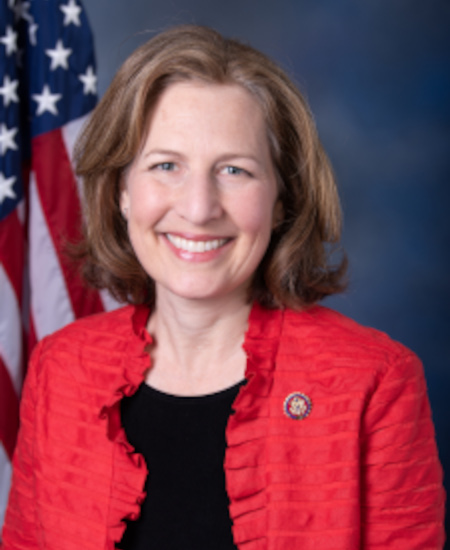
Rep. Kim Schrier
Sponsored bills
Securing a Strong Retirement Act of 2022 This bill makes various changes with respect to employer-sponsored retirement plans, including providing for the automatic enrollment of employees in certain plans and increasing the age at which participants are required to begin receiving mandatory distributions.
Clarifying Remanufacturing to Protect Patient Safety Act of 2022 This bill specifies that entities that remanufacture medical devices in a manner that could change the performance or safety specifications or the intended use of the device must register with the Food and Drug Administration as producers of medical devices and comply with related requirements.
Emmett Till Antilynching Act This bill makes lynching a federal hate crime offense. Specifically, the bill imposes criminal penalties—a fine, a prison term of up to 30 years, or both—on an individual who conspires to commit a hate crime offense that results in death or serious bodily injury or that includes kidnapping or an attempt to kidnap, aggravated sexual abuse or an attempt to commit aggravated sexual abuse, or an attempt to kill.
9-8-8 Implementation Act of 2022 This bill modifies provisions to increase access to behavioral health services, with a focus on crisis services and the 9-8-8 telecommunication system. (The 9-8-8 system provides callers with mental health or suicide crisis support and resources through the existing National Suicide Prevention Lifeline and is scheduled to take effect by July 16, 2022.) The bill reauthorizes through FY2027 and revises the National Suicide Prevention Lifeline program and requires a national suicide prevention media campaign. In addition, the Substance Abuse and Mental Health Services Administration (SAMHSA) must establish standards for a behavioral health crisis continuum of care that health care providers and communities may use in responding to individuals experiencing a behavioral health crisis. The continuum must include emergency treatment, stabilization, and related services. The bill expands Medicaid and other insurance coverage for such services. The bill further expands Medicaid coverage for behavioral health services. This includes permanently allowing coverage of certain community-based mobile crisis services and exempting some short-term stabilization services from coverage restrictions that apply to institutions for mental diseases. Additionally, the bill establishes (1) an office within SAMHSA to coordinate behavioral health activities; and (2) various grants, including a pilot program for mobile crisis care teams that respond to behavioral health crises rather than law enforcement and a capital improvement program for certain behavioral health facilities. The bill also reauthorizes through FY2027 and expands certain workforce programs for behavioral health providers. It also addresses training for emergency services dispatchers and coordination of the 9-1-1 system with the 9-8-8 system.
Diagnostic Device Advisory Committee Act This bill establishes the Real World Impact of Medical Devices Panel to advise the Food and Drug Administration on the real world impact of regulatory decisions relating to medical devices, including diagnostic devices.
Forced Arbitration Injustice Repeal Act of 2022 or the FAIR Act of 2022 This bill prohibits a predispute arbitration agreement from being valid or enforceable if it requires arbitration of an employment, consumer, antitrust, or civil rights dispute.
Dr. Lorna Breen Health Care Provider Protection Act This bill establishes grants and requires other activities to improve mental and behavioral health among health care providers. Specifically, the Department of Health and Human Services (HHS) must award grants to hospitals, medical professional associations, and other health care entities for programs to promote mental health and resiliency among health care providers. In addition, HHS may award grants for relevant mental and behavioral health training for health care students, residents, or professionals. Additionally, HHS must conduct a campaign to (1) encourage health care providers to seek support and treatment for mental and behavioral health concerns, and (2) disseminate best practices to prevent suicide and improve mental health and resiliency among health care providers. HHS must also study and develop policy recommendations on improving mental and behavioral health among health care providers, removing barriers to accessing care and treatment, and identifying strategies to promote resiliency. Furthermore, the Government Accountability Office must report on the extent to which relevant federal grant programs address the prevalence and severity of mental health conditions and substance use disorders among health care providers.

Supporting Children's Mental Health Care Access Act of 2022 This bill reauthorizes through FY2027 two grant programs that support pediatric mental and behavioral health services and interventions. First, it reauthorizes and makes changes to a grant program for states, localities, and Indian tribes for statewide or regional telehealth access programs to promote the integration of behavioral health in pediatric primary care. Specific changes include allowing a nonprofit organization to receive the grant if the state (1) does not apply for the grant, and (2) supports the nonprofit's receipt of it. Additionally, recipients may use grant funds to support schools and emergency departments. Second, the bill reauthorizes a grant program for human services agencies and nonprofits to develop and maintain infant and early childhood mental health promotion, intervention, and treatment programs.
Increasing Transparency in Generic Drug Applications Act of 2022 This bill requires the Food and Drug Administration to inform generic drug applicants, upon request or during review, whether the drug is qualitatively and quantitatively the same as the listed brand-name drug (and if not, the reasons why).