

Rights for the Transportation Security Administration Workforce Act of 2022 or the Rights for the TSA Workforce Act of 2022 This bill modifies the workplace rights, protections, and benefits applicable to Transportation Security Administration (TSA) personnel. Specifically, the bill by December 31, 2022, eliminates personnel authorities of the Department of Homeland Security (DHS) and the Department of Transportation governing the conditions of employment for TSA employees, thus making TSA employees subject to the personnel management system applicable to other federal employees; sets forth transition rules that protect the pay rates, leave rights, and other rights of TSA employees; and requires DHS to consult with the exclusive representative of TSA screening employees to carry out the conversion of those positions. The bill also permits the TSA to consult with organizations representing federal air marshals to address concerns, including mental health and suicide rates; directs the TSA to ensure its employees are provided proper guidance regarding prevention and protections against COVID-19; requires the TSA to provide a one-time bonus payment of $3,000 to each TSA employee carrying out duties that require substantial contact with the public during the COVID-19 national emergency; and requires the Government Accountability Office to report on implementation of the bill, TSA recruitment efforts, and specified TSA personnel policies.
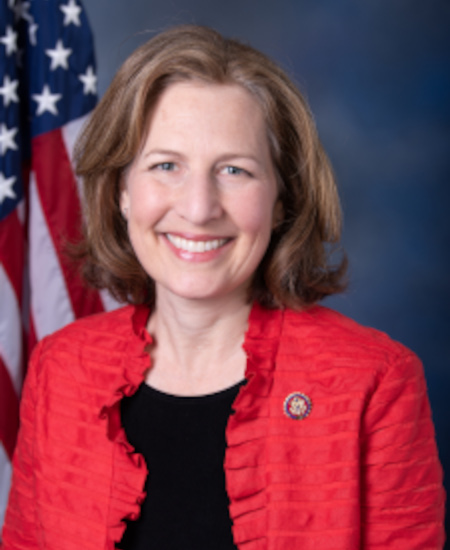
Rep. Kim Schrier
Sponsored bills
Federal Firefighters Fairness Act of 2022 This bill makes it easier for federally employed firefighters who contract certain illnesses to qualify for federal workers' compensation. Specifically, the bill provides that chronic obstructive pulmonary disease, mesothelioma, and specified other cancers of those employed in fire protection activities for at least five years are presumed to be proximately caused by such employment for purposes of a disability or death claim under the federal workers' compensation program. This presumption also applies to federal employees employed in fire protection activities for at least five years who experience a sudden cardiac event or stroke within 24 hours of performing a fire protection activity. The bill also requires the Department of Labor to conduct a review to determine whether breast cancer, gynecological cancer, and rhabdomyolysis should be included under the presumption and to conduct periodic reviews to determine whether other diseases should be included. In addition, a person may petition Labor to include another disease under the presumption. An employee in fire protection activities is a firefighter, paramedic, emergency medical technician, rescue worker, ambulance personnel, or hazardous material worker who (1) is trained in fire suppression; (2) has the legal authority and responsibility to engage in fire suppression; (3) is engaged in the prevention, control, and extinguishing of fires or response to emergency situations where life, property, or the environment is at risk, including the prevention, control, suppression, or management of wildland fires; and (4) performs such activities as a primary responsibility.
Benjamin Berell Ferencz Congressional Gold Medal Act This bill provides for the award of a Congressional Gold Medal to Benjamin Berell Ferencz in recognition of his service to the United States and the international community during the post-World War II Nuremberg trials and his lifelong advocacy for international criminal justice and the rule of law.
Roadless Area Conservation Act of 2021 This bill bars the Department of Agriculture from allowing the construction of roads, the reconstruction of roads, or logging in an inventoried roadless area where those activities are prohibited by the Roadless Rule (i.e., certain federal regulations relating to roadless area management).
Maddy summaryHRES 1094 designates May 5, 2022, as the National Day of Awareness for Missing and Murdered Native Women and Girls. It directly supports Native American communities affected by disproportionately high rates of violence against women and girls, citing data showing murder rates over 10 times the national average in some Tribal communities. The resolution asks the public to honor victims and show solidarity with families, while acknowledging existing efforts like Savanna’s Act to address the crisis. As a symbolic resolution, it does not create new laws but raises awareness about this ongoing issue.
Childhood Cancer Survivorship, Treatment, Access, and Research Reauthorization Act of 2022 or the Childhood Cancer STAR Reauthorization Act This bill reauthorizes through FY2028 and modifies pediatric cancer research and related programs, including to expand collection of and access to relevant biospecimens and to support the transition of pediatric cancer survivors to primary care.
Modernizing Access to our Public Land Act or the MAPLand Act This bill directs the Department of the Interior, the Forest Service, and the U.S. Army Corps of Engineers to jointly develop and adopt interagency standards to ensure compatibility and interoperability among federal databases for the collection and dissemination of outdoor recreation data related to federal lands and used to depict locations at which recreation uses are available to the public. Interior, the Forest Service, and the Corps of Engineers must digitize and publish geographic information system data that includes federal interests, including easements and rights-of-way, in private land; status information as to whether roads and trails are open or closed; the dates on which roads and trails are seasonally opened and closed; the types of vehicles and recreational uses that are allowed on each segment of roads and trails; and the boundaries of areas where hunting or recreational shooting is permanently restricted or closed. Interior, the Forest Service, and the Corps of Engineers may work with the U.S. Geological Survey to collect, digitize, standardize, or publish data to meet the requirements of this bill.
Prescription Information Modernization Act of 2022 This bill allows health care providers to receive prescribing information for drugs electronically rather than in paper form from manufacturers.
Cut Red Tape Act of 2022 This bill establishes in the legislative branch the Regulatory Improvement Commission to make recommendations and propose legislation for modification, consolidation, or repeal of regulations that have been finalized not later than 10 years before the establishment of the commission for the purpose of reducing compliance costs, encouraging growth and innovation, improving competitiveness, and protecting public safety. The commission must give priority to such regulations that (1) impose disproportionately high costs on a small entity, (2) create substantial recurring paperwork burdens or transaction costs, or (3) could be made more effective while reducing regulatory costs. The bill sets forth reporting requirements for the commission and procedures for congressional consideration of commission reports, recommendations, and proposed legislation.
Ensuring Lasting Smiles Act This bill requires private health insurance plans to cover diagnosis and treatment of congenital anomalies and birth defects, such as reconstructive services and items. Coverage must include services and items that functionally improve, repair, or restore any body part that is medically necessary for normal bodily functions or appearance, as determined by the treating physician. Coverage limits and cost-sharing requirements for such services and items may not be more restrictive than those applicable to all medical and surgical benefits under the plan.