

Maddy summaryThe Dignity for Detained Immigrants Act establishes minimum standards for detention facilities operated by the Department of Homeland Security, requiring them to follow the American Bar Association's Civil Immigration Detention Standards. It mandates annual unannounced inspections by the DHS Inspector General, with penalties including fines for noncompliant private facilities and transfers of detainees from noncompliant facilities. The bill requires DHS to publicly report on facility compliance, phase out private detention facilities over three years, and prohibit solitary confinement. It also ensures detainees have access to legal orientation, counsel, and more frequent custody review hearings. The bill directly affects all individuals detained in DHS custody, including immigrants, asylum seekers, and refugees held in facilities operated by or contracted to DHS.
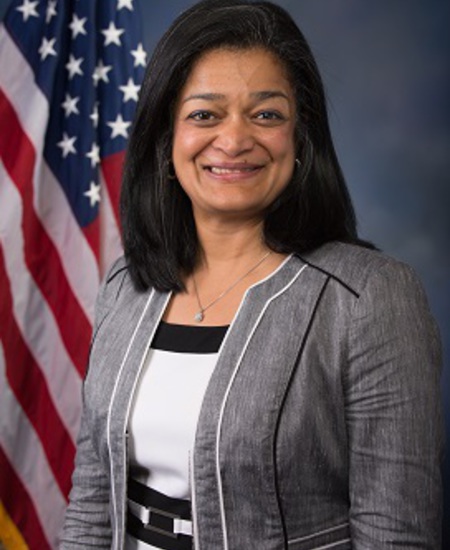
Rep. Pramila Jayapal
Sponsored bills
Maddy summaryThis bill would protect unaccompanied children by repealing fee requirements and other provisions in the "One Big Beautiful Bill Act" that have created barriers to their access to humanitarian protections. It specifically exempts unaccompanied children from paying fees for asylum applications, employment authorization, and immigration court proceedings, and requires the government to refund fees already paid under the repealed provisions. The bill also repeals provisions allowing for summary removal of children without due process, intrusive body examinations without safeguards, and sharing of sponsor information with immigration enforcement that has led to family separations. These changes would directly affect unaccompanied children seeking asylum or other protections in the United States, ensuring they can access legal processes without financial barriers or heightened risks of exploitation. The bill aims to uphold protections for unaccompanied children established under the William Wilberforce Trafficking Victims Protection Reauthorization Act of 2008 (TVPRA).
Maddy summaryThis bill creates several tax credits to increase housing affordability for individuals and families. It establishes a first-time homebuyer credit of up to $25,000 (or $50,000 for first-generation homebuyers) for purchasing a principal residence, with income limits based on household size. It also creates a starter home construction credit for building homes under 1,200 square feet priced below 80% of local median home prices, and a renter tax credit for tenants paying more than 30% of their income in rent. Additionally, it provides a credit for converting non-residential buildings to affordable housing that meets specific income and rent restrictions. The bill includes provisions for inflation adjustments and reporting requirements for these tax credits.
Maddy summaryHRES 856 is a non-binding resolution expressing the House of Representatives' view that the U.S. Department of Agriculture (USDA) should use its existing contingency funds and interchange authority to fund the Supplemental Nutrition Assistance Program (SNAP) for November 2025. The resolution cites that the USDA holds over $5 billion in contingency funds set aside for emergencies and has legal authority under the Department of Agriculture Organic Act to transfer funds between nutrition programs to maintain SNAP benefits. This would directly support approximately 42 million people relying on SNAP, including 16 million children, 8 million seniors, 4 million people with disabilities, and 1.2 million veterans, preventing disruption during a potential funding gap. The resolution does not create new law but urges the administration to use existing resources to ensure continued food assistance.
Maddy summaryThe Migrant Due Process Protection Act (HR 6349) would require immigration judges to allow non-citizens in removal proceedings (who are not held in government custody) to request virtual hearings via video or phone. Judges must approve such requests and ensure virtual formats do not disadvantage the individual. This directly affects people facing deportation who are not currently detained by immigration authorities. The bill adds a new procedural option for remote hearings without changing legal standards or outcomes.
Maddy summaryThe Artificial Intelligence Civil Rights Act of 2025 requires developers and deployers of AI systems that make decisions affecting "consequential actions" (such as employment, housing, healthcare, education, and credit) to conduct pre-deployment evaluations and annual impact assessments by independent auditors. The bill mandates transparency requirements including clear disclosures to individuals about how AI is used in decision-making, establishes a right to human alternatives for significant AI-driven decisions, and prohibits discrimination based on protected characteristics like race, gender, or disability. It creates enforcement mechanisms through the Federal Trade Commission, state attorneys general, and private lawsuits, with penalties including civil penalties of up to 4% of annual revenue. The act also requires developers to provide explanations for AI-driven decisions and sets standards for data collection to prevent harm and ensure fairness in critical life areas.
Give Kids a Chance Act of 2025 This bill expands the Food and Drug Administration’s (FDA’s) authority with respect to research on rare pediatric diseases, including by permitting the FDA to take enforcement action against drug sponsors that fail to satisfy pediatric study requirements and by reauthorizing programs that support pediatric research. Specifically, the bill modifies requirements relating to molecularly targeted pediatric cancer investigations to permit research on new drugs in combination with active ingredients that have already been approved, provided certain conditions are met; permits the FDA to take enforcement action against drug sponsors that fail to comply with pediatric study requirements, if such sponsors demonstrated a lack of due diligence in satisfying the requirement; renews the FDA’s authority to award priority review vouchers to sponsors of new products intended to treat rare pediatric diseases through September 30, 2029; and reauthorizes through FY2027 certain funding for the National Institutes of Health to support priority pediatric research. The bill also provides statutory authority for the FDA’s interpretation of the orphan drug exclusivity period. The bill specifies, consistent with FDA regulations, that the seven-year market exclusivity period for drugs for rare diseases or conditions (i.e., orphan drugs) prohibits the approval of the same drug for the same approved use or indication with respect to the disease or condition. (In Catalyst Pharmaceuticals, Inc. v. Becerra , a court rejected the FDA’s interpretation and held that orphan drug exclusivity extends to all uses or indications for the disease or condition.)
Maddy summaryThe FRESHER Act of 2025 requires the Secretary of the Interior to study stormwater runoff impacts from oil, gas, and mining operations on groundwater and aquifers. It mandates a specific analysis of measurable contamination, groundwater resources, and aquifer susceptibility to contamination in affected areas. The study must be completed within one year of the bill's enactment, with results reported to Congress. This bill directly affects oil, gas, and mining operations by establishing new federal study requirements for their stormwater runoff.
Maddy summaryHR 6318, the No GOUGE Act, prohibits large businesses from excessively raising prices on goods affected by tariffs or planned tariffs (e.g., imports subject to new tariffs) for five years after the tariff takes effect. It specifically targets companies with over $100 million in U.S. revenue, banning price hikes that exceed the actual cost of the tariff plus legitimate operational expenses (excluding executive pay or stock buybacks). The Federal Trade Commission (FTC) enforces this by presuming violations if large firms (over $1 billion revenue) raise prices beyond pre-tariff averages during "tariff shock" periods, though companies can rebut this by proving costs were genuinely tied to the tariff. The law aims to prevent price gouging by ensuring tariff costs - not profit motives - drive price changes for consumers.
Maddy summaryHR 6249, the "Addressing Addiction After Disasters Act," updates federal disaster relief guidelines to explicitly include substance use and alcohol use disorders in crisis counseling services. It amends the Robert T. Stafford Disaster Relief Act to allow FEMA-funded programs to address these issues alongside mental health needs for disaster survivors. The bill requires FEMA to revise application forms and guidance within 180 days to reflect these changes and mandates a GAO report on program duration and compliance with using funds only for disaster-related substance/alcohol issues. This directly affects disaster survivors facing substance use or alcohol challenges by expanding access to covered support services.