Prohibition of Agricultural Land for the People's Republic of China Act This bill requires the President to prohibit nonresident aliens, foreign businesses, and agents associated with China's government from (1) purchasing agricultural (including ranching) real estate located in the United States, or (2) participating in Department of Agriculture programs that are unrelated to food and safety regulatory requirements.
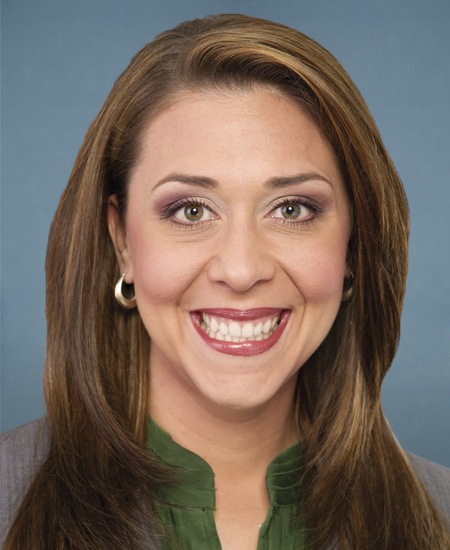
Rep. Jaime Herrera Beutler
Sponsored bills
Lactation Spaces for Veteran Moms Act This bill requires the Department of Veterans Affairs to ensure that each of its medical centers contains a hygienic lactation space that is not a bathroom and meets other specifications (e.g., must be easy to locate).
Building America's Health Care Workforce Act This bill extends certain flexibilities relating to training and competency requirements for nurse aides in Medicare skilled nursing facilities (SNFs) and Medicaid nursing facilities (NFs). Generally, SNFs and NFs may not hire nurse aides for longer than four months unless they meet certain training and certification requirements. The Centers for Medicare & Medicaid Services waived some of these requirements during the COVID-19 emergency period so as to allow facilities to maintain adequate staffing levels; the waiver ends in June 2022. The bill extends these flexibilities for at least two years after the bill's enactment and specifies that (1) any time worked by a nurse aide during the emergency period counts toward the 75 hours required for initial training, and (2) a competency evaluation may be conducted at the SNF or NF where the nurse aide is employed if the state does not offer such an evaluation at least once a week.
Federal Firefighters Fairness Act of 2022 This bill makes it easier for federally employed firefighters who contract certain illnesses to qualify for federal workers' compensation. Specifically, the bill provides that chronic obstructive pulmonary disease, mesothelioma, and specified other cancers of those employed in fire protection activities for at least five years are presumed to be proximately caused by such employment for purposes of a disability or death claim under the federal workers' compensation program. This presumption also applies to federal employees employed in fire protection activities for at least five years who experience a sudden cardiac event or stroke within 24 hours of performing a fire protection activity. The bill also requires the Department of Labor to conduct a review to determine whether breast cancer, gynecological cancer, and rhabdomyolysis should be included under the presumption and to conduct periodic reviews to determine whether other diseases should be included. In addition, a person may petition Labor to include another disease under the presumption. An employee in fire protection activities is a firefighter, paramedic, emergency medical technician, rescue worker, ambulance personnel, or hazardous material worker who (1) is trained in fire suppression; (2) has the legal authority and responsibility to engage in fire suppression; (3) is engaged in the prevention, control, and extinguishing of fires or response to emergency situations where life, property, or the environment is at risk, including the prevention, control, suppression, or management of wildland fires; and (4) performs such activities as a primary responsibility.

No Timber From Tyrants Act This bill prohibits the importation of wood and related articles from Russia and Belarus. It also directs the Department of the Interior and the Department of Agriculture (USDA) to replace these prohibited imports with timber production on certain lands. Specifically, the bill directs the President to prohibit the importation of all wood and related articles from Russia and Belarus. The President may terminate this prohibition upon certification to Congress that certain conditions have been met, including that Russia or Belarus (or both, as applicable) reached an agreement to withdraw forces in Ukraine. Additionally, the bill directs Interior and USDA to authorize timber harvest in an amount sufficient to equal the volume, with respect to calendar year 2021, of imports of wood and related articles from Russia and Belarus. Interior may authorize timber harvest only on public lands and USDA may authorize timber harvest only on National Forest System lands. The bill generally prohibits Interior and USDA from approving a plan that reduces the allowable sale quantity of timber.
NIH Implementing a Maternal health and PRegnancy Outcomes Vision for Everyone Act of 2022 or the NIH IMPROVE Act This bill provides statutory authority for an initiative of the National Institutes of Health that supports research on improving maternal health outcomes with a particular emphasis on mitigating maternal health disparities.
Comprehensive Southern Border Strategy Act This bill requires the Department of Homeland Security to report to Congress a comprehensive southern border strategy. The strategy must include (1) an overview of current security risks along the southern border; and (2) an assessment of the barriers, technologies, and tools that are necessary to achieve and maintain situational awareness and operational control of the border.
Supply Chain Disruptions Relief Act This bill modifies the treatment of liquidations of new motor vehicle inventory as qualified LIFO (last in first out accounting method) inventory. It allows new motor vehicle dealers to elect to wait until the end of 2025 to replace their inventory for purposes of determining income attributable to the sale of such inventory during 2020 and 2021.
Securing a Strong Retirement Act of 2022 This bill makes various changes with respect to employer-sponsored retirement plans, including providing for the automatic enrollment of employees in certain plans and increasing the age at which participants are required to begin receiving mandatory distributions.
COI Elimination Act This bill limits U.S. contributions to the United Nations pertaining to the U.N. Independent International Commission of Inquiry on the Occupied Palestinian Territory, including East Jerusalem, and Israel. Current law imposes a cap on the annual U.S. contribution to the U.N. budget. The bill lowers that cap by 25% of the amount budgeted for the commission. The bill also states that it shall be U.S. policy to seek the abolition of the commission and combat systemic anti-Israel bias in international bodies.