

Securing and Enabling Commerce Using Remote and Electronic Notarization Act of 2022 or the SECURE Notarization Act of 2022 This bill allows a notary public commissioned under state law to remotely notarize electronic records and perform notarizations for remotely located individuals. The bill provides technical requirements for such notarizations, including the creation and retention of video and audio recordings and the use of communication technologies (i.e., video chat). Additionally, the bill requires U.S. courts and states to recognize notarizations—including remote notarizations of electronic records and notarizations of remotely-located individuals—that occur in or affect interstate commerce and are performed by a notary public commissioned under the laws of other states. The bill also allows a notary public to remotely notarize electronic records involving an individual located outside of the United States, subject to certain requirements.
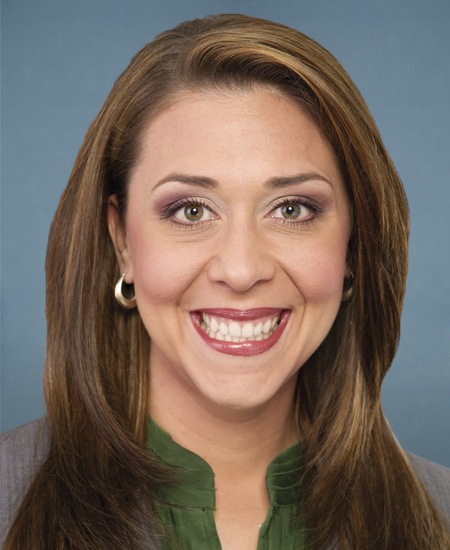
Rep. Jaime Herrera Beutler
Sponsored bills
Gabriella Miller Kids First Research Act 2.0 This bill reauthorizes through FY2027 a pediatric disease research initiative within the National Institutes of Health (NIH) and requires the NIH to coordinate pediatric research activities to avoid duplicative efforts. Additionally, the Department of Health and Human Services must report, within five years, to Congress about research funded through the initiative.
Access to Safe Contraception Act of 2022 This bill prohibits states from banning any form of contraception that is approved by the Food and Drug Administration. The bill does not preempt state laws that protect the right of any entity to opt out of providing contraception due to the entity's religious or moral beliefs.
Allowing Greater Access to Safe and Effective Contraception Act This bill requires the Food and Drug Administration to prioritize review of supplemental applications for over-the counter oral contraceptives that are intended for routine use. It also removes certain limitations in relation to such products and health savings accounts, flexible spending arrangements, and other arrangements (e.g., limitations on the number of items that may be purchased).
This resolution condemns the 1994 attack on the Argentine Jewish Mutual Association Jewish Community Center in Buenos Aires, Argentina, and expresses sympathy for the victims' relatives. It also expresses concern for the continuing 28-year-long delay in the proper resolution of the case and calls for accountability for the attack, including for the Iranian and Hezbollah operatives involved.
Don Young American Grown Act This bill prohibits the official display of a cut flower or green in any public area of a building of the Executive Office of the President, the Department of State, or the Department of Defense unless it is produced in the United States. The prohibition does not apply to any cut flower or green used by a federal officer or employee for personal display.
Fire Department Repayment Act of 2022 This bill requires standard operating procedures for reciprocal fire suppression cost share agreements. The Departments of Agriculture, the Interior, Homeland Security, and Defense shall establish standard operating procedures relating to fire suppression cost share agreements established under the Reciprocal Fire Protection Act; and with respect to each agreement in operation on one year after enactment of this bill, review each agreement and modify it as necessary to comply with the standard operating procedures. The standard operating procedures shall include a requirement that each fire suppression cost share agreement be aligned with each of the cooperative fire protection agreements applicable to the entity subject to such fire suppression cost share agreement. The standard operating procedures shall also include a requirement that the departments, to the maximum extent practicable, complete reviews, including second-level reviews of a fire suppression cost share agreement, as soon as practicable after a wildfire related to the area covered by such cost share agreement is contained; and a requirement that in completing such reviews, the department concerned consults with state and local fire suppression organizations.
Optimizing Postpartum Outcomes Act of 2022 This bill requires (1) the Centers for Medicare & Medicaid Services to issue guidance to support coverage of prenatal and postpartum pelvic health services under Medicaid and the Children's Health Insurance Program (CHIP), (2) the Government Accountability Office to study gaps in Medicaid coverage of these and other services for postpartum women, and (3) the Centers for Disease Control and Prevention to educate health professionals and postpartum women on pelvic health services.
Federal Columbia River Power System Certainty Act This bill requires Federal Columbia River Power System (FCRPS) operations to be consistent with a specified decision. The system includes dams in the Columbia and Snake rivers in the Pacific Northwest. Specifically, the Bureau of Reclamation, the Bonneville Power Administration, and the U.S. Army Corps of Engineers must operate the FCRPS consistent with the Columbia River System Operations Environmental Impact Statement Record of Decision dated September 2020. The preferred alternative outlined in that decision would allow specified dams in the lower Snake River to remain in place. The decision may be amended if each agency determines that (1) changes are necessary for public safety or electrical grid reliability, or (2) certain requirements in the decision are no longer necessary. Further, the bill requires statutory authorization for any structural modification, action, study, or engineering plan that (1) restricts FCRPS hydroelectric dam generation; or (2) limits navigation on the Snake River in Washington, Oregon, or Idaho.
Freight Rail Assistance and Investment to Launch Coronavirus-Era Activity and Recovery Act of 2022 or the Freight RAILCAR Act of 2022 This bill provides a new tax credit through 2024 for 10% of freight railcar fleet modernization expenses (i.e., railcar replacement and modernization expenses for meeting fuel efficiency and performance standards). The bill provides that no more than 2,000 freight railcars per taxpayer may be taken into account for purposes of determining the credit in a taxable year. The Department of the Treasury must report to Congress on the credit to provide information on the number of times the credit was claimed and the number of railcars scrapped or built as a result of the credit.