

Dr. Lorna Breen Health Care Provider Protection Act This bill establishes grants and requires other activities to improve mental and behavioral health among health care providers. Specifically, the Department of Health and Human Services (HHS) must award grants to hospitals, medical professional associations, and other health care entities for programs to promote mental health and resiliency among health care providers. In addition, HHS may award grants for relevant mental and behavioral health training for health care students, residents, or professionals. Additionally, HHS must conduct a campaign to (1) encourage health care providers to seek support and treatment for mental and behavioral health concerns, and (2) disseminate best practices to prevent suicide and improve mental health and resiliency among health care providers. HHS must also study and develop policy recommendations on improving mental and behavioral health among health care providers, removing barriers to accessing care and treatment, and identifying strategies to promote resiliency. Furthermore, the Government Accountability Office must report on the extent to which relevant federal grant programs address the prevalence and severity of mental health conditions and substance use disorders among health care providers.
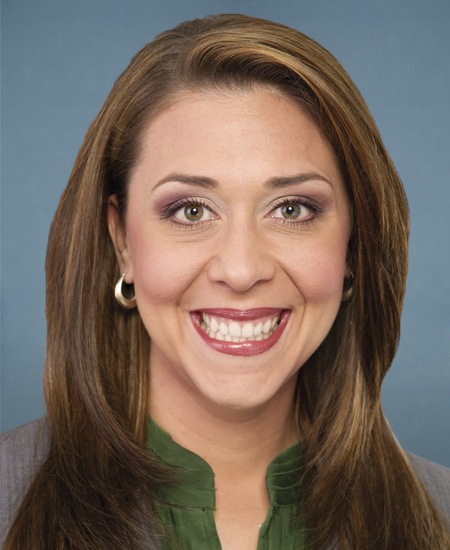
Rep. Jaime Herrera Beutler
Sponsored bills
Into the Light for Maternal Mental Health and Substance Use Disorders Act of 2022 or the Into the Light for MMH and SUD Act of 2022 This bill reauthorizes through FY2028 a program that addresses maternal depression and, among other changes, expands its scope to include mental health and substance use disorders. It also requires the Department of Health and Human Services to maintain a national hotline to provide mental health and substance use disorder resources to pregnant and postpartum women and their families.
Maternal and Child Health Stillbirth Prevention Act of 2022 This bill expands the scope of the Maternal and Child Health Services Block Grant to include research and activities to prevent stillbirths.
Stop Injection Sites for Illegal Drugs Act of 2022 This bill generally prohibits federal funds from being made available to a state, local, tribal, or other entity that operates or controls an injection center (i.e., a medically supervised injection site) in violation of the federal statute commonly known as the Crack House Statute. The statute generally prohibits making facilities available for the purpose of unlawfully using a controlled substance. The bill provides an exception for federal funds awarded through the Community Oriented Policing Services (COPS) grant program or the Edward Byrne Memorial Justice Assistance Grant (JAG) program. Specifically, federal funds awarded through the COPS grant program or the JAG grant program shall remain available to a state, local, tribal, or other entity that operates or controls an injection center in violation of the Crack House Statute.
This resolution condemns the terrorist attack on Congregation Beth Israel in Colleyville, Texas, on January 15, 2022. It also expresses support for the affected community, commends the actions of law enforcement and emergency responders, and reaffirms a commitment to combat hate, bigotry, anti-Semitism, and violence against Jewish Americans.
American Energy Independence from Russia Act This bill addresses U.S. energy security, the production of oil and gas, and the importation and exportation of oil and gas. Specifically, the President must submit an energy security plan that (1) evaluates U.S. crude oil, petroleum products, and natural gas imports and exports; (2) assesses the energy security risks of such imports; and (3) includes strategies to encourage increased domestic production of crude oil, petroleum products, and natural gas to offset Russian imports. The bill also approves the TransCanada Keystone Pipeline in Phillips County, Montana for the import of oil from Canada to the United States. In addition, the bill grants the Federal Energy Regulatory Commission the authority to approve or deny applications for facilities to export natural gas from the United States to foreign countries or import natural gas from foreign countries. The President and federal agencies must obtain congressional approval before (1) prohibiting or substantially delaying certain new energy mineral leases or permits on federal lands, or (2) withdrawing certain federal lands from mineral and geothermal leasing activities. The Department of the Interior must resume issuing oil and gas leases on federal lands and offshore submerged lands in the Outer Continental Shelf as specified under the bill. Finally, the bill limits the drawdown of petroleum in the Strategic Petroleum Reserve until the Department of Energy develops a plan to increase the percentage of federal lands leased for oil and gas production.
Maddy summaryThis non-binding resolution, introduced in March 2022, calls for the House wing of the U.S. Capitol and House Office Buildings to reopen to the public, citing the unprecedented closure since March 2020 as the longest in history. It urges removing visitor restrictions like logs and prioritizing public access, noting that other state capitols and public venues operated safely during the same period. As a "sense" resolution, it does not mandate action but expresses the House’s position on restoring public access to a democratic symbol. The resolution specifically targets the House wing (not the full Capitol) and aims to encourage the Capitol Police and House leadership to act.
More Options to Develop and Enhance Remote Nutrition in WIC Act of 2022 or the MODERN WIC Act of 2022 This bill makes various changes to allow individuals to remotely certify their eligibility for, and receive benefits through, the Special Supplemental Nutrition Program for Women, Infants, and Children (WIC). The Department of Agriculture must also report to Congress about the use of remote technologies and other tools in the WIC program.
Health Care for Burn Pit Veterans Act This bill updates policies and procedures related to Department of Veterans Affairs (VA) health care and benefits for veterans who have been exposed to toxic substances. Specifically, the bill extends the eligibility period for VA hospital care, medical services, and nursing home care for combat veterans who served after September 11, 2001, and were exposed to toxic substances, radiation, or other conditions, including those who did not enroll to receive VA care during the eligibility period. The VA must incorporate into its existing health care screening a screening to help determine potential exposures to toxic substances during military service. Among other requirements, the VA must also provide annual training to health care and benefits personnel with respect to veterans who were exposed to toxic substances; analyze total and respiratory disease mortality in veterans who served in specified locations on specified dates; conduct an epidemiological study on the health trends of veterans who served in the Armed Forces after September 11, 2001; conduct a study to determine trends in the rates of the incidence of cancer in veterans; publish a list of VA resources for veterans who were exposed to toxic substances, families and caregivers of such veterans, and survivors of such veterans who are receiving death benefits; and report on the data quality of the Individual Longitudinal Exposure Record and its usefulness in supporting veterans in receiving VA health care and benefits.
Protecting Family and Small Business Tax Cuts Act of 2022 This bill makes permanent provisions affecting individual and business taxpayers that were enacted in 2017 by the Tax Cuts and Jobs Act and are scheduled to expire at the end of 2025. The bill makes permanent provisions that reduce individual and capital gain tax rates. The bill increases the standard tax deduction for individual taxpayers. It also increases and modifies the child tax credit and raises the contribution base for the tax deduction of charitable contributions. The bill allows additional contributions to ABLE accounts (tax-exempt accounts designed to enable individuals with disabilities to save and pay for disability-related expenses). It exempts from taxation combat zone benefits of members of the Armed Forces serving in the Sinai Peninsula of Egypt and the moving expenses of servicemembers. Additionally, the bill lowers to $750,000 the amount of mortgage debt eligible for an interest expense tax deduction; excludes from the gross income of student borrowers income attributable to the discharge after 2025 of loan debt due to death or disability; makes permanent the limitation on the tax deduction for state and local taxes and denies a deduction for foreign real property taxes; makes permanent the tax deduction of the income of certain pass-through business entities; repeals the tax deduction for personal tax exemptions and the exclusion of employer-provided bicycle commuter fringe benefits; terminates certain miscellaneous itemized tax deductions; doubles the estate and gift tax exemption amount; and makes permanent the increase of the alternative minimum tax exemption amount for individual taxpayers.