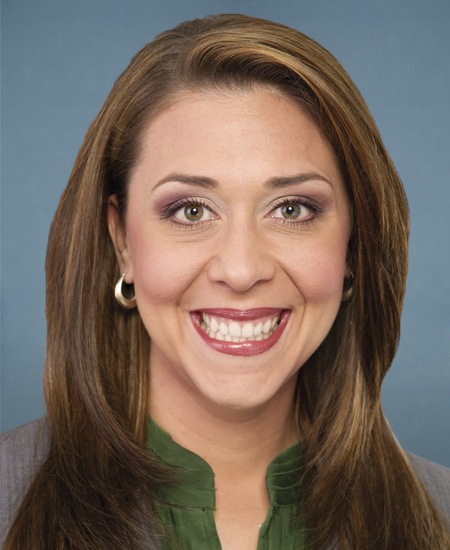
Photo of Jaime Herrera Beutler
R United States House · District 3 · Washington

Rep. Jaime Herrera Beutler

Compare
Total votes
958
all sessions
Attendance
97%
31 missed
Lower than 84% of chamber peers
With party
92%
of cast votes
Lower than 84% of chamber peers
Bipartisan score
4%
crosses aisle rarely
Higher than 83% of chamber peers
Sponsored
251
bills & resolutions
Lower than 77% of chamber peers
Committees
0
assignments
251 bills and resolutions

Sponsored bills

Total
251
Primary
12
Co-sponsor
239
This page
251
matching current filters
Co-sponsor HR 1297
In committee · United States House · Co-sponsor
Air America Act of 2021

Air America Act of 2021 This bill establishes the service of Air America employees as qualifying service for purposes of the Civil Service Retirement System. (Air America was a government-owned airline that provided air transport for certain covert operations in Southeast Asia, including Laos and Vietnam, between 1950 and 1976.) The bill applies to U.S. citizens who were employees of Air America or another affiliated company, as specified, between January 1, 1950 and December 31, 1976. Benefit applications must be filed within two years of the date of enactment of this bill.

In committee May 25, 2021 1 co-sponsor
Co-sponsor HR 3345
In committee · United States House · Co-sponsor
Helping MOMS Act of 2021

Helping Medicaid Offer Maternity Services Act of 2021 or the Helping MOMS Act of 2021 This bill permanently allows states to provide one year of postpartum coverage under Medicaid and temporarily increases the Federal Medical Assistance Percentage (i.e., federal matching rate) for pregnancy-related services in states that choose to do so.

In committee May 20, 2021 1 co-sponsor
Co-sponsor HR 3352
In committee · United States House · Co-sponsor
Midwives for MOMS Act of 2021

Midwives for Maximizing Optimal Maternity Services Act of 2021 or the Midwives for MOMS Act of 2021 This bill establishes grants within the Health Resources and Services Administration (HRSA) for establishing or expanding midwifery programs at institutions of higher education and nursing schools. HRSA may prioritize funding for institutions that focus on increasing the number of midwife professionals from underrepresented groups and that promote practicing in areas with limited access to professional health care.

In committee May 20, 2021 1 co-sponsor
Co-sponsor HR 3337
In committee · United States House · Co-sponsor
BABIES Act

Birth Access Benefiting Improved Essential Facility Services Act or the BABIES Act This bill requires the Centers for Medicare & Medicaid Services (CMS) to establish a Medicaid demonstration program to improve freestanding birth center services for women with low-risk pregnancies. Among other things, the CMS must (1) publish criteria for freestanding birth centers to participate in the program, including specified accreditation, licensure, and service requirements; (2) publish guidance for states to establish prospective payment systems under Medicaid for program participants; and (3) award planning grants for states to develop program proposals. The CMS may choose up to six states to participate in the program.

In committee May 19, 2021 1 co-sponsor
Co-sponsor HR 210
Passed · United States House · Co-sponsor
Rural STEM Education Research Act

Rural STEM Education Research Act This bill specifies federal scientific research and development efforts towards STEM (science, technology, engineering, and mathematics, including computer science) workforce development and rural STEM education. (Sec. 3) The bill amends the objectives of the Manufacturing Extension Partnership program to include the provision to secondary schools of information about the job skills needed in manufacturing companies, and the promotion and expansion of certification systems offered through local high schools. The activities of a manufacturing extension center are expanded to include local high schools in the facilitation of collaborations and partnerships between manufacturing companies and schools to help those entities better understand the specific needs of manufacturers and to help manufacturers better understand the skill sets that students learn in school programs. The National Institute of Standards and Technology (NIST) must award prizes to stimulate research and development of creative technologies in order to deploy affordable and reliable broadband connectivity to underserved rural communities. NIST may award not more than a total of $5 million in prizes. (Sec. 4) The Office of Science and Technology Policy must establish a broadband research and development working group to address national research challenges and opportunities for improving broadband access and adoption across the United States. (Sec. 5) The National Science Foundation (NSF) shall enter into an agreement with the National Academy of Sciences under which the National Academy of Sciences agrees to evaluate aspects of STEM education and workforce development in rural areas. (Sec. 6) The Government Accountability Office shall conduct a study on the engagement of rural populations in federal STEM programs. (Sec. 7) Experimental Program to Stimulate Competitive Research (EPSCoR) programs shall consider modifications to award structures to increase the capacity of rural communities to provide quality STEM education and STEM workforce development programming to students and teachers. (Sec. 8) The NSF must award grants to institutions of higher education or nonprofit organizations for (1) research and development to advance innovative approaches to support and sustain high-quality STEM teaching in rural schools, (2) research and development of programming to identify the barriers rural students face in accessing high-quality STEM education, (3) development of innovative solutions to improve the participation and advancement of rural students in grades Pre-K through 12 in STEM studies, and (4) research on online STEM education courses for rural communities. The NSF may establish a pilot program of regional cohorts in rural areas to provide peer support, mentoring, and hands-on research experiences for rural STEM educators of students in grades Pre-K through 12 in order to build an ecosystem of cooperation among educators, researchers, academia, and local industry.


Passed May 19, 2021 1 co-sponsor
Co-sponsor HRES 404
In committee May 18, 2021 1 co-sponsor
Co-sponsor HR 3321
In committee · United States House · Co-sponsor
Credit for Caring Act of 2021

Credit for Caring Act of 2021 This bill allows an eligible caregiver a tax credit of up to $5,000 for 30% of the cost of long-term care expenses that exceed $2,000 in a taxable year. The bill defines eligible caregiver as an individual who has earned income for the taxable year in excess of $7,500 and pays or incurs expenses for providing care to a spouse or other dependent relative with long-term care needs.

In committee May 18, 2021 1 co-sponsor
Co-sponsor HR 1892
In committee · United States House · Co-sponsor
Violence Against Women Extension Act of 2021

Violence Against Women Extension Act of 2021 This bill reauthorizes for FY2022 various programs and activities authorized by the Violence Against Women Act of 1994 and subsequent legislation and administered by the Office on Violence Against Women within the Department of Justice.

In committee May 18, 2021 1 co-sponsor
Co-sponsor HR 1607
In committee · United States House · Co-sponsor
HACT Act

Homeland and Cyber Threat Act or the HACT Act This bill allows claims in federal or state court against foreign states that conduct or participate in cyberattacks against U.S. nationals.

In committee May 18, 2021 1 co-sponsor
Co-sponsor HR 1065
Passed · United States House · Co-sponsor
Pregnant Workers Fairness Act

Pregnant Workers Fairness Act This bill prohibits employment practices that discriminate against making reasonable accommodations for qualified employees affected by pregnancy, childbirth, or related medical conditions. A qualified employee is an employee or applicant who, with or without reasonable accommodation, can perform the essential functions of the position, with specified exceptions. Specifically, the bill declares that it is an unlawful employment practice to fail to make reasonable accommodations to known limitations of such employees unless the accommodation would impose an undue hardship on an entity's business operation; require a qualified employee affected by such condition to accept an accommodation other than any reasonable accommodation arrived at through an interactive process; deny employment opportunities based on the need of the entity to make such reasonable accommodations to a qualified employee; require such employees to take paid or unpaid leave if another reasonable accommodation can be provided; or take adverse action in terms, conditions, or privileges of employment against a qualified employee requesting or using such reasonable accommodations. The bill sets forth enforcement procedures and remedies that cover different types of employees in relation to such unlawful employment practices. The Equal Employment Opportunity Commission must provide examples of reasonable accommodations that shall be provided to affected employees unless the employer can demonstrate that doing so would impose an undue hardship. The bill prohibits state immunity under the Eleventh Amendment to the Constitution from an action for a violation of this bill.

Passed May 17, 2021 1 co-sponsor
Showing 151 to 160 of 251 bills
Previous 1 … 15 16 17 … 26 Next