

Maddy summaryThis bill (HR 9391) designates the U.S. Postal Service facility at 108 North Main Street in Bucoda, Washington, as the "Mayor Rob Gordan Post Office." It updates all official references to this location to reflect the new name, affecting only the postal facility's official designation. The bill is purely ceremonial and does not change any postal services, policies, or obligations.
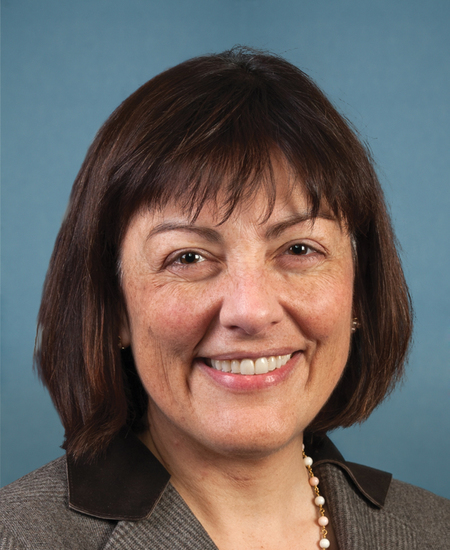
Rep. Suzan K. DelBene
Sponsored bills
Maddy summaryThis bill prohibits retired military members with access to classified information from seeking approval for foreign government employment for 30 months after retirement, with exceptions for the UK, Canada, Australia, and New Zealand. It requires pre-approval from the Secretary of Defense and State Department for such employment, including national security reviews, and mandates annual reporting of foreign employment for five years post-retirement. Violations carry civil penalties up to $100,000 or the compensation received, plus potential five-year bans on federal employment or classified access. The bill also creates a public database tracking all approved foreign employment cases to increase transparency.
Maddy summaryThis bill creates a new program to provide emergency grants to farm worker organizations during covered disasters. It directly affects migrant and seasonal farm workers who lose income or cannot work due to events like hurricanes, wildfires, pandemics, or extreme weather. The grants fund immediate relief (including direct cash or aid), building community resilience, infrastructure support, and emergency services. Funds remain available until spent, and the program requires consultation with eligible organizations, defined as farm worker groups or qualified nonprofits with relevant experience.
Maddy summaryThis resolution (HRES 1405) is a ceremonial recognition of the 165th anniversary (in 2024) of the peaceful resolution to the 1859 Pig War crisis. It commemorates the diplomatic settlement following a dispute over San Juan Island, where a U.S. farmer killed a British-owned pig, nearly sparking conflict between U.S. and British forces. The resolution honors the peaceful resolution through negotiation and arbitration, which established the U.S.-Canada border along the 49th parallel. As a commemorative resolution, it has no policy impact or direct effect on any individuals or groups.
Maddy summaryThis non-binding House resolution expresses the House's support for keeping guns out of schools by stating federal funds should not be used to arm school personnel or provide them firearm training. It references existing laws like the STOP School Violence Act (2018) and research showing arming staff does not improve safety, citing data on failed interventions and disproportionate impacts on students of color. The resolution affirms current policy guidance without creating new legal requirements. It serves as a formal statement of the House's position based on evidence and existing legislative frameworks.
Maddy summaryThe Campus Accountability and Safety Act amends the Clery Act to require colleges and universities to collect and report more detailed statistics about campus incidents of domestic violence, dating violence, sexual assault, sexual harassment, and stalking. It establishes new requirements for institutions to provide confidential support through "sexual and interpersonal violence specialists" who can help victims navigate reporting options and campus resources without triggering investigations. The bill mandates trauma-informed training for staff involved in addressing these incidents and requires institutions to provide clear information about their disciplinary processes and support services. It also creates specific reporting requirements about how many cases were reported to Title IX coordinators, how many victims sought campus disciplinary action, and how many cases were resolved through campus processes. Institutions that fail to comply may face civil penalties of up to 1% of their operating budget.
Maddy summaryHR 9274, the SHAWL Act, establishes two new Smithsonian museums: the National Museum of the American Latino and the American Women’s History Museum. It authorizes both museums to be located within the National Mall’s "Reserve" area, overriding prior restrictions, and requires federal agencies managing potential sites to transfer jurisdiction to the Smithsonian after notifying congressional committees. The bill mandates that both museums accurately represent diverse cultures, histories, and viewpoints within Latino and women’s communities through exhibits and programs, requiring input from a broad range of community experts. It also requires the Smithsonian to submit biennial reports to Congress detailing compliance with these representation requirements.
Maddy summaryThe NO BAN Act (HR 9244) prohibits U.S. immigration authorities from denying visas or entry based on national origin, religion, or sex. It amends immigration law to explicitly ban such discrimination in visa decisions and tightens restrictions on the president’s power to suspend entry of certain groups under Section 212(f). The bill requires specific evidence, narrow tailoring, time limits, and congressional notification for any entry restriction, while mandating public reports on visa denials and waivers. It directly affects nonimmigrant visa applicants (e.g., students, workers) and federal agencies administering immigration policy.
Maddy summaryThis bill makes it a federal crime to steal packages that have been delivered by private carriers (like FedEx or UPS) but not yet received by the recipient. It directly affects package recipients, carriers, and thieves who target unclaimed deliveries left on porches or in mailboxes. The key provision amends federal law to include these delivered-but-unclaimed packages under the same legal protections as mail in transit. This changes the law to treat stolen packages at the delivery stage as a federal offense, similar to theft of postal mail. The bill does not create new penalties but expands existing theft statutes to cover this specific scenario.
Maddy summaryThis bill establishes the Destination Reception Services Program to provide medium-term support to certain immigrants in the U.S., including those granted parole, placed in removal proceedings, or with pending asylum applications. It authorizes $3 billion annually (2025-2028) to fund services like housing assistance, healthcare, job training, legal aid for work authorization/asylum, childcare, and transportation through local government and nonprofit organizations. The program is managed by a federal Board and local community boards that identify high-need areas and allocate funds based on criteria like immigrant population density and service gaps. It explicitly states the program is not an "alternatives to detention" initiative and prioritizes services to help new arrivals achieve self-sufficiency.