

Maddy summaryThis bill amends the Justice for United States Victims of State Sponsored Terrorism Act to establish a fifth round of payments for eligible victims of state-sponsored terrorism, requiring all authorized payments to be distributed by December 31, 2024. It directs specific funds into the Victims of State Sponsored Terrorism Fund, including $898 million from the Binance case settlement and 50% of annual unobligated balances from DOJ and Treasury forfeiture funds starting December 1, 2024. The bill mandates annual payments beginning January 1, 2025, for eligible claimants and requires the Special Master to submit annual reports on fund activity to Congress, including detailed deposit and disbursement records. It directly affects victims of state-sponsored terrorism, the Special Master administering the fund, and federal agencies managing forfeiture funds.
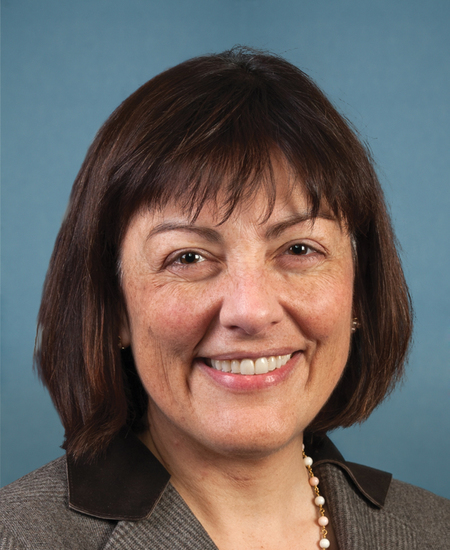
Rep. Suzan K. DelBene
Sponsored bills
Maddy summaryHR 6319 (the 911 SAVES Act of 2023) requires the Office of Management and Budget to reclassify public safety telecommunicators as "Protective Service Occupations" within 30 days of enactment. This change corrects their current misclassification in the federal Standard Occupational Classification (SOC) system, which is used for statistical data on jobs. The bill directly affects how these professionals - critical in emergency calls involving missing children, active threats, and officer safety - are officially categorized in government workforce data. It does not create new benefits or funding but aims to better recognize their lifesaving role through accurate federal job classification.
Maddy summaryThis bill modifies Medicaid and CHIP rules to let eligible out-of-state healthcare providers enroll without extra state screening. It applies to providers already in Medicare or their home state program, with low fraud risk, serving children under 21 with complex medical conditions. Providers would receive 5 years of enrollment under this streamlined process, eliminating state-level barriers. The change directly affects children seeking specialized care across state lines and the providers who serve them.
Maddy summaryHRES 1461 is a symbolic resolution designating September 2024 as "National Voting Rights Month" to raise awareness about voting access. It encourages all U.S. citizens to uphold voting rights, supports existing voting rights legislation like the Freedom to Vote Act, and recommends schools teach about voting history and current restrictions. The resolution specifically aims to highlight efforts to address historical and ongoing barriers affecting historically marginalized groups, including Black, Latino, and disabled voters. It does not create new laws but promotes educational initiatives and media campaigns about registration deadlines and election access.
Maddy summaryHRES 1448 is a non-binding House resolution stating that the House believes every person has the right to emergency health care, including abortion care, during medical emergencies. It specifically addresses concerns that abortion restrictions force medical providers to choose between treating patients in life-threatening situations or risking criminal charges. The resolution highlights that such restrictions disproportionately harm Black, Indigenous, people of color, immigrants, low-income individuals, and LGBTQI+ patients. It does not change existing laws but expresses congressional support for ensuring access to emergency care without legal barriers. The resolution was introduced by multiple House members and referred to the Energy and Commerce Committee.
Maddy summaryThe NO FAKES Act of 2024 establishes legal rights for individuals (living or deceased) to control how their voice and visual likeness are used in digital replicas (highly realistic computer-generated representations that are readily identifiable as the individual). It requires authorization from the individual or their designated right holder for any digital replica, with specific rules for licenses (including 10-year limits for living individuals, 5-year limits for minors, and post-mortem rights for 10 years with possible 5-year renewals). The bill creates civil liability for unauthorized production or distribution of digital replicas, with exceptions for news, documentaries, commentary, and other protected uses. Online services are provided safe harbors if they follow notice-and-takedown procedures for unauthorized digital replicas after receiving proper notifications. The law preempts some state laws but leaves others in place, and applies to conduct occurring after the bill's enactment date.
Maddy summaryThe CREATE AI Act of 2023 establishes a National Artificial Intelligence Research Resource (NAIRR) to improve access to AI research tools, computational resources, data, and educational materials for researchers and students across the United States. The NAIRR will provide computational resources, curated datasets, educational tools, and access to AI testbeds, with special emphasis on supporting groups historically underrepresented in STEM fields. Governed by a Steering Subcommittee chaired by the Director of the Office of Science and Technology Policy and managed by a Program Management Office within the National Science Foundation, the NAIRR includes specific requirements for ethical AI development, privacy protections, and security measures. The resource will be accessible to researchers at U.S. institutions of higher education, nonprofits, government agencies, and certain businesses, with priority given to projects addressing privacy, ethics, civil rights, and AI safety.
Maddy summaryHRES 1423 expresses the U.S. House of Representatives' support for designating the week of September 21-28, 2024, as "National Estuaries Week." The resolution highlights estuaries' economic and ecological importance, noting they support over 3.5 million jobs, contribute $476 billion to the U.S. GDP, and provide critical services like flood control and water filtration. It does not create new laws or funding but aims to raise public awareness about protecting estuaries, which face threats like pollution and habitat loss. The resolution acknowledges ongoing restoration efforts by federal, state, tribal, and community partners.
Maddy summaryThe Equal Pay for Equal Work Act establishes a National Equal Pay Enforcement Task Force to strengthen enforcement of existing equal pay laws. The task force, made up of representatives from the Equal Employment Opportunity Commission, Department of Justice, Department of Labor, and Office of Personnel Management, will coordinate efforts to investigate pay disparities and develop solutions. It will create action plans to address enforcement gaps and improve public education about pay equity. This bill directly affects federal agencies and workers facing wage discrimination by enhancing how equal pay laws are enforced across government.
Maddy summaryThe Summer Meals Act of 2024 amends the National School Lunch Act to improve access to summer meals for children, primarily affecting public schools, community organizations, and low-income families. Key changes include reducing the required integration of summer education and meals from 50% to 40%, expanding meal service to include after-school hours, weekends, and school holidays for non-school sites, and creating a $10 million annual grant program to support mobile meal trucks and transportation in underserved areas. The bill authorizes grants for service institutions that serve both breakfast and lunch or offer educational programs, with priority given to those increasing participation at congregate feeding sites. These provisions aim to simplify program administration and reach more children during summer breaks in hard-to-access communities.